 Save
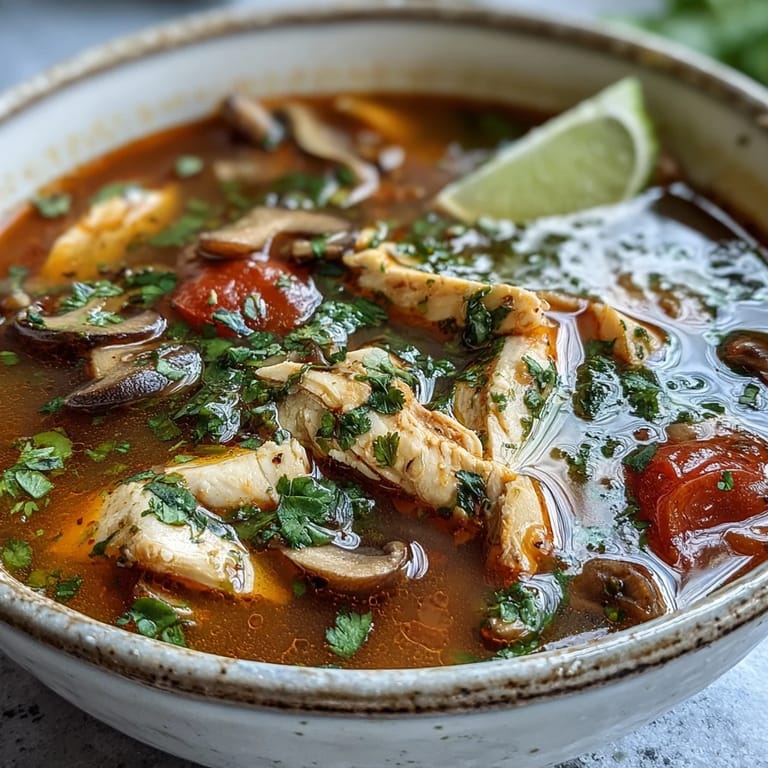
Save The first time I tasted authentic Tom Yum Gai was at a tiny stall in Bangkok during monsoon season, steam rising from the pot mixing with the rain outside. The vendor moved with such casual precision, dropping ingredients into boiling broth like she was painting a picture she'd made a thousand times. What struck me wasn't just the heat or the sourness, but how each spoon somehow balanced all those competing flavors at once—tangy, spicy, aromatic, clean. Years later, I finally understood why: she wasn't fighting those elements against each other, she was letting them dance together.
I made this soup for my partner on a random Tuesday after a brutal day at work, and watching them close their eyes on the first spoonful—that small moment of surrender to something warm and alive—reminded me why cooking matters. It wasn't fancy or Instagram-worthy, just a bowl of soup that said: I know you need this right now.
Ingredients
- Chicken breast or thighs: Thighs stay more tender in broth, but breast works fine if you slice thin and don't overcook—I've learned that the size of your slice matters more than the cut.
- Chicken stock: Use real stock, not bouillon—the difference is subtle but it becomes the backbone of everything, and it deserves quality.
- Lemongrass: That outer layer tastes like paper, so peel it back; the white and pale green parts are what you want, and smashing them releases oils that cheaper versions can't deliver.
- Kaffir lime leaves: These are non-negotiable if you can find them—they add a floral, citrusy note that lime juice alone simply cannot replace.
- Galangal: Fresh ginger is a reasonable swap, but galangal has an almost medicinal complexity that grounds the soup in an earthy way.
- Thai bird's eye chiles: These are small and deceptively potent; start with one if you're heat-sensitive, you can always add more at the table.
- Mushrooms: Oyster mushrooms soak up the broth better and have a subtle sweetness that complements the heat.
- Nam prik pao: This Thai roasted chili paste is the secret weapon—it adds depth and umami that makes people wonder why their homemade version tastes flat by comparison.
- Fish sauce: Yes, it smells funky in the bottle, but it dissolves into the broth and becomes the bridge that connects every flavor together.
- Lime juice: Fresh squeezed, always—bottled tastes like regret.
Tired of Takeout? 🥡
Get 10 meals you can make faster than delivery arrives. Seriously.
One email. No spam. Unsubscribe anytime.
Instructions
- Build the aromatic base:
- Pour your stock into a large saucepan and bring it to a gentle boil—you'll see small bubbles breaking the surface. Add the lemongrass, kaffir lime leaves, smashed galangal, and crushed chiles, then let them steep for 5 minutes while your kitchen fills with that signature haunting aroma that makes you understand why people crave this soup.
- Cook the chicken gently:
- Slide your thinly sliced chicken into the simmering broth and watch it turn opaque—this takes only 3 to 4 minutes if your pieces are thin enough. Skim any foam that rises to the surface; it's not harmful but it makes the broth look clearer and cleaner.
- Add the vegetables:
- Stir in mushrooms, tomato wedges, and onion slices, then let everything simmer for another 3 to 4 minutes until the vegetables are just tender but still hold their shape. This is where timing matters—overcooked mushrooms become sponges, tomatoes dissolve, and you lose the textural contrast that makes the soup interesting.
- Season and balance:
- Stir in nam prik pao, fish sauce, sugar, and salt, then let it all meld for 2 minutes. Taste as you go—this is the moment to adjust heat, saltiness, or richness to match your mood and your mouth.
- Finish with lime:
- Remove from heat and stir in fresh lime juice, which brightens everything and prevents that heavy feeling that can creep in if the soup sits too long. The sourness should feel clean and cutting, not overwhelming.
- Serve and personalize:
- Ladle into bowls while the broth is still steaming, then let people finish it themselves with cilantro, extra chiles, and an extra squeeze of lime if they want it brighter.
 Save
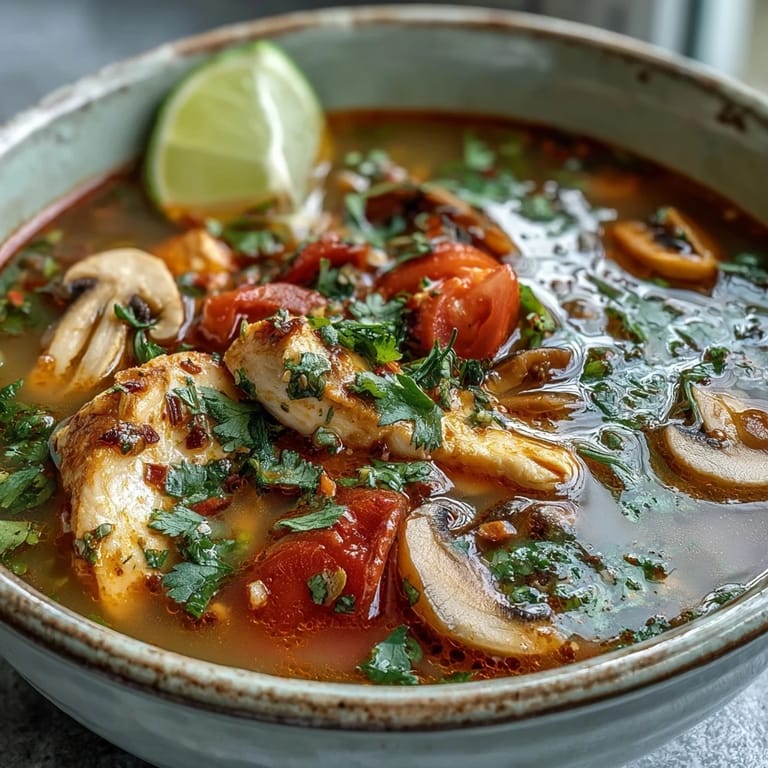
Save There's something about Tom Yum that transcends being just dinner—it's somehow both a hug and a wake-up call at the same time, heat and comfort tangled together in a way that feels necessary. I've served it to friends who swore they didn't like spicy food, and I've watched their resistance crumble somewhere between the second and third spoonful.
The Trick to Getting the Broth Right
Most home cooks either make Tom Yum too timid (barely seasoned, shy on the aromatics) or they overdo it (too much heat, too much fish sauce, too little balance). The secret is understanding that this soup isn't about individual ingredients shouting—it's about building a choir where each voice has space to be heard. The lemongrass and galangal are the foundation, the chiles and fish sauce are the melody, the lime is the bright final note that ties everything together.
What Makes This Different From Tom Yum You've Ordered
Restaurant versions often rely on extra oil or coconut milk to create richness and body, which is fine if you're out and want something indulgent, but homemade Tom Yum can be lighter and more focused. You'll taste the individual aromatics more clearly, feel the heat differently, and notice how much your palate actually matters in the final bowl—because you control every element, there's nowhere to hide, which means there's also nowhere for mediocre ingredients to hide either.
Variations Worth Trying
Once you understand the base, you can riff on it endlessly without losing what makes it recognizable and true. Swap the chicken for shrimp and you've got Tom Yum Goong—add a splash of coconut milk for creaminess, or keep it clear and bright. Some people add a tiny splash of evaporated milk to create a subtle richness that doesn't overwhelm; others stick with pure broth. The aromatics stay the same, the balance stays the same, but everything else is open to interpretation.
- Tom Yum Goong uses shrimp instead of chicken and cooks even faster—just 2 minutes in the broth.
- A splash of evaporated milk creates a pale, creamy version that's still light but feels more luxurious on the tongue.
- Extra vegetable options like bamboo shoots, baby corn, or cauliflower work beautifully if you adjust cooking times based on how delicate they are.
 Save
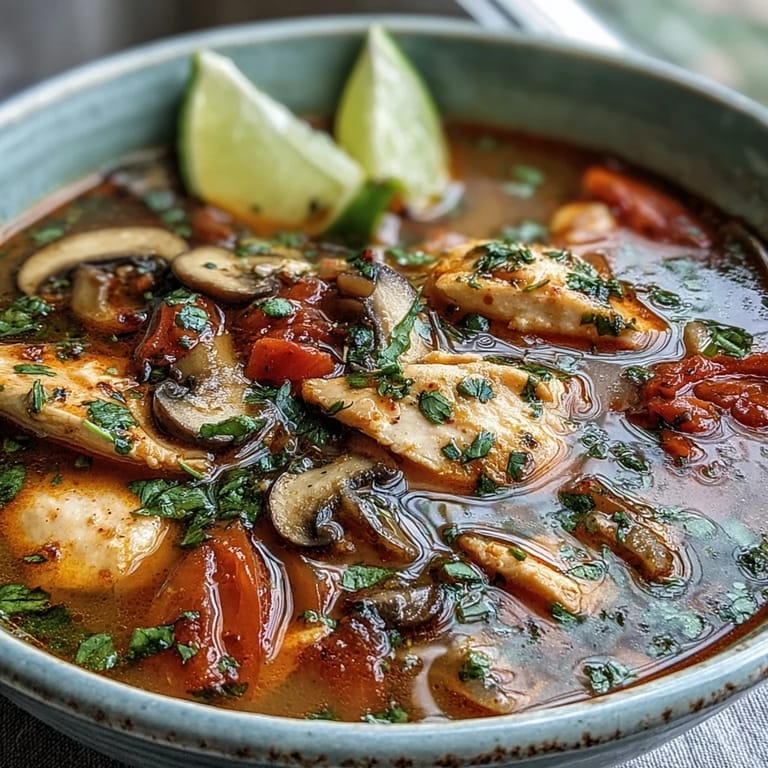
Save Tom Yum asks something of you that most recipes don't: it asks you to taste as you cook and make decisions in the moment. But that's also why it's rewarding—you end up with something that tastes like you made it, not like you followed instructions.
Recipe FAQs
- → What makes Tom Yum Gai authentic?
Authentic Tom Yum Gai requires the holy trinity of Thai aromatics: lemongrass, kaffir lime leaves, and galangal. The distinctive flavor also comes from nam prik pao (roasted chili paste) and fresh lime juice added at the end.
- → How spicy is this soup?
The heat level depends on the Thai birds eye chiles used. Two chiles provide medium spiciness. Adjust by reducing to one chile for milder flavor or increasing to three for extra heat. Remove seeds for less intensity.
- → Can I make this vegetarian?
Yes. Substitute vegetable stock for chicken stock and use tofu or extra mushrooms instead of chicken. Replace fish sauce with soy sauce or a vegetarian fish sauce alternative.
- → What's the difference between Tom Yum Gai and Tom Yum Goong?
Tom Yum Gai features chicken while Tom Yum Goong uses shrimp. The broth base and aromatics remain the same, but cooking times vary slightly as shrimp cooks faster than chicken.
- → Why add lime juice at the end?
Lime juice loses its bright acidity when boiled. Adding it off the heat preserves the fresh citrus flavor and ensures the perfect balance of sour notes that defines this soup.
- → Can I prepare this in advance?
The broth base can be made ahead and refrigerated for up to 2 days. Add the vegetables and chicken when reheating, and finish with fresh lime juice and garnishes just before serving.