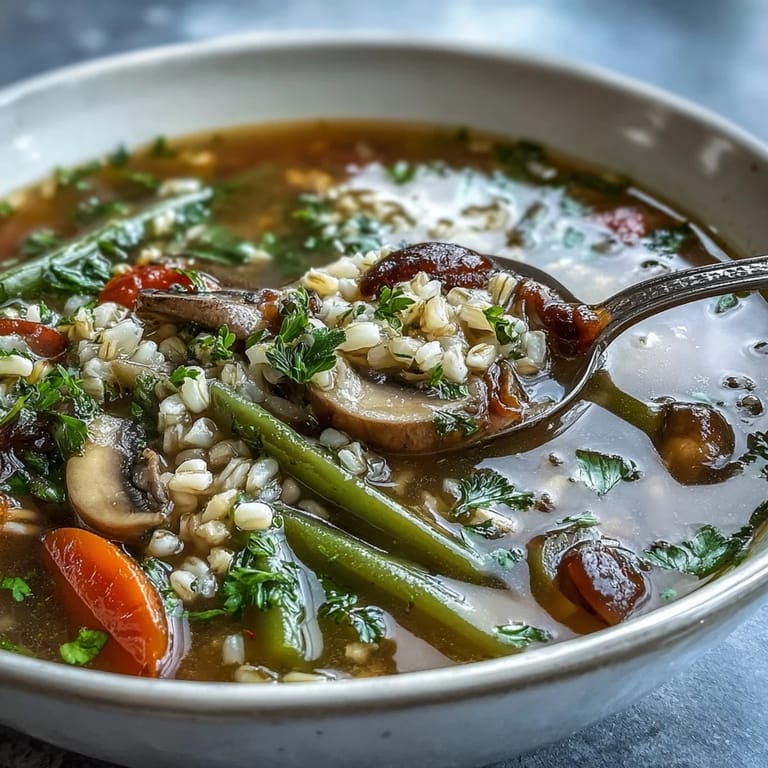
 Save
Save There's something about the smell of mushrooms hitting hot oil that makes a kitchen feel instantly alive. I discovered this soup on a gray November afternoon when my farmer's market haul seemed too scattered to make sense—until I remembered that barley, that humble grain gathering dust in my pantry, was exactly what everything needed. The first spoonful told me I'd stumbled onto something quietly perfect: earthy, warm, and the kind of meal that doesn't demand attention but absolutely deserves it.
My neighbor stopped by on a freezing evening and caught me mid-stir, the kitchen fogged with steam and fragrant enough to stop her mid-sentence. She stayed for a bowl, then asked for the recipe—but more than that, she came back two weeks later wanting to cook it together. Now this soup means more to me than just ingredients; it's become our thing, our excuse to catch up over something that warms you from the inside.
Ingredients
- Pearl barley (3/4 cup, 120 g), rinsed: This grain is your secret weapon—it absorbs all the broth's flavor while staying tender, not mushy. Rinsing removes excess starch that would otherwise cloud your beautiful soup.
- Olive oil (2 tablespoons): Use something you actually like tasting; this isn't the time to use your budget-brand oil, since it's doing real flavor work here.
- Yellow onion, carrots, and celery (1 large onion, 2 medium carrots, 2 stalks): This aromatic trio is your foundation—they're working together, not competing, so don't skip any of them.
- Garlic (3 cloves, minced): Fresh is absolutely non-negotiable; powdered garlic will betray you here and leave a metallic taste.
- Cremini or white mushrooms (8 oz, 225 g), sliced: These earthy fungi are what make this soup feel luxurious on a budget—they release umami that transforms the whole pot.
- Potato (1 large, peeled and diced): Russet works beautifully, lending creaminess without any actual cream involved.
- Zucchini (1 medium, diced): It softens into the background, adding body without asserting its own flavor, which is exactly what you want in a vegetable-forward soup.
- Diced tomatoes (1 can, 14 oz/400 g, with juice): Canned tomatoes are your friend here—they're already cooked and concentrated, giving you instant depth.
- Green beans (1 cup, 150 g, trimmed and cut into 1-inch pieces): They keep their slight snap even after simmering, offering textural contrast against the softer vegetables.
- Vegetable broth (6 cups, 1.5 liters): Quality matters—taste it before you buy, because a thin broth will make a thin soup, no matter what else you do.
- Dried thyme and oregano (1 teaspoon each), bay leaf, black pepper, and salt: These spices build a Mediterranean warmth that makes the soup taste intentional and complete.
- Fresh parsley (2 tablespoons, chopped), for garnish: This isn't decoration—it's the final note of brightness that reminds your palate everything in the bowl is still alive.
Tired of Takeout? 🥡
Get 10 meals you can make faster than delivery arrives. Seriously.
One email. No spam. Unsubscribe anytime.
Instructions
- Build your aromatic base:
- Heat olive oil over medium heat, then add onion, carrots, and celery together. Let them soften for a solid 5 minutes—you want them translucent and smelling sweet, not rushed.
- Wake up the mushrooms:
- Stir in minced garlic and mushroom slices, cooking for another 5 minutes until the mushrooms darken and release their liquid. You'll notice the pot suddenly smelling earthier and more complex.
- Add your vegetables and tomatoes:
- Introduce the potato, zucchini, green beans, and canned tomatoes with their juice, stirring everything together so nothing sticks to the bottom.
- Pour in the broth and barley:
- Add vegetable broth, pearl barley, thyme, oregano, bay leaf, salt, and pepper all at once. Stir well so the barley spreads evenly throughout the pot.
- Let it simmer gently:
- Bring to a boil, then immediately lower the heat and cover with a lid. Simmer for 40–45 minutes, stirring occasionally so nothing settles and burns on the bottom. The barley should be tender and slightly chewy, not crunchy.
- Finish and taste:
- Remove the bay leaf and taste a spoonful of broth—this is where you decide if it needs more salt or pepper. Trust your palate, not the recipe.
- Serve with intention:
- Ladle into bowls and shower each one with fresh parsley, which adds brightness and makes the whole thing feel finished.
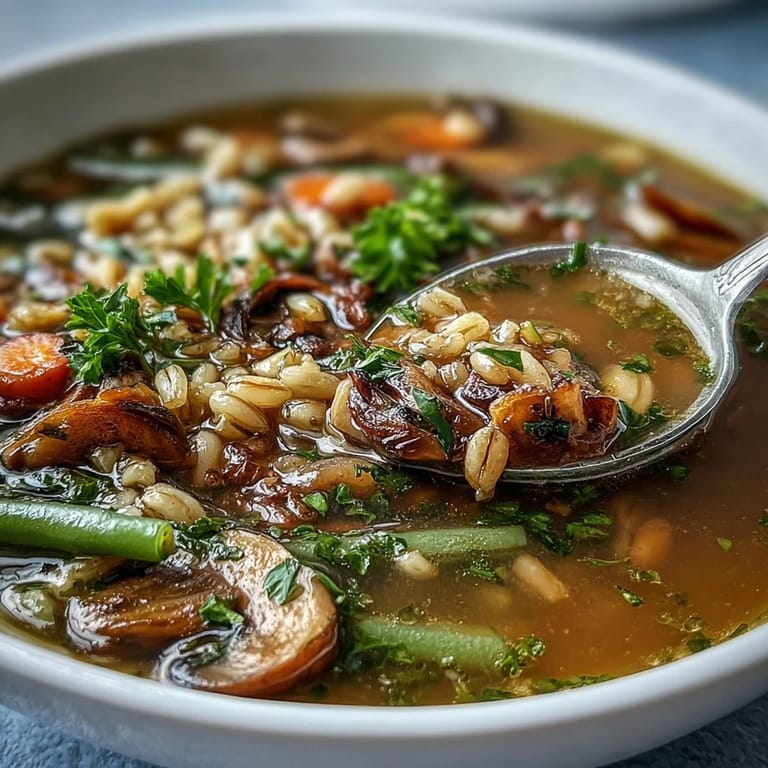 Save
Save I learned to make this soup for myself first, on mornings when everything felt uncertain and I needed something I could control. The ritual of chopping each vegetable, watching them soften, waiting for that first taste—it became my meditation. Somewhere between the barley swelling and the kitchen filling with steam, the soup became less about feeding my body and more about steadying my mind.
Why Barley Is Better Than You Think
Barley doesn't have the glamour of farro or the trendiness of quinoa, but it's been feeding people through long winters for centuries for a reason. In soup, it acts like a little sponge, absorbing every flavor around it while staying structurally sound—it won't turn to mush no matter how long you simmer. The slight chewiness against your teeth is deeply satisfying in a way that rice never quite achieves.
The Vegetable Alchemy of Slow Cooking
Each vegetable in this soup has a job, and over 40 minutes they learn to work together. The potato adds creaminess without cream, the carrots turn sweet as their sugars concentrate, and the zucchini practically disappears—not in a bad way, but in the way that says it's given everything to the pot. What starts as distinct ingredients becomes something unified, something greater than the sum of its parts.
Variations That Actually Work
This soup is forgiving enough to welcome your substitutions, which means it travels with you across seasons and preferences. I've made it with sweet potatoes when regular potatoes felt too heavy, and it shifted into something entirely different—not better or worse, just different. The structure stays solid while your creativity gets to play.
- Swap barley for brown rice or quinoa if you're avoiding gluten, though reduce the cooking time to 25–30 minutes so grains don't turn to porridge.
- Add a drained can of white beans in step 4 for protein that makes this a complete meal without side dishes.
- Serve alongside crusty bread, because there's always extra broth at the bottom of the bowl worth soaking up.
 Save
Save This soup asks so little of you—just patience and presence—and gives back more than you expect. Every time I make it, I remember why simple food, made with attention, is the food that stays with you.
Recipe FAQs
- → What is the best way to prepare the barley for this soup?
Rinse the pearl barley thoroughly before adding it to the pot to remove any debris or excess starch, which helps it cook evenly and improves texture.
- → Can I substitute mushrooms with other vegetables?
Yes, you can swap mushrooms for eggplant or zucchini for a different flavor profile while maintaining the hearty texture.
- → How long should the soup simmer for optimal flavor?
Simmering for about 40 to 45 minutes allows the barley and vegetables to soften fully and the flavors to meld beautifully.
- → Are there gluten-free alternatives to barley in this dish?
Rice or quinoa are excellent gluten-free substitutes that can be used; just adjust the cooking time accordingly.
- → What herbs enhance the flavor of this soup?
Dried thyme, oregano, and a bay leaf provide aromatic depth, while fresh parsley added before serving brightens the dish.