 Save
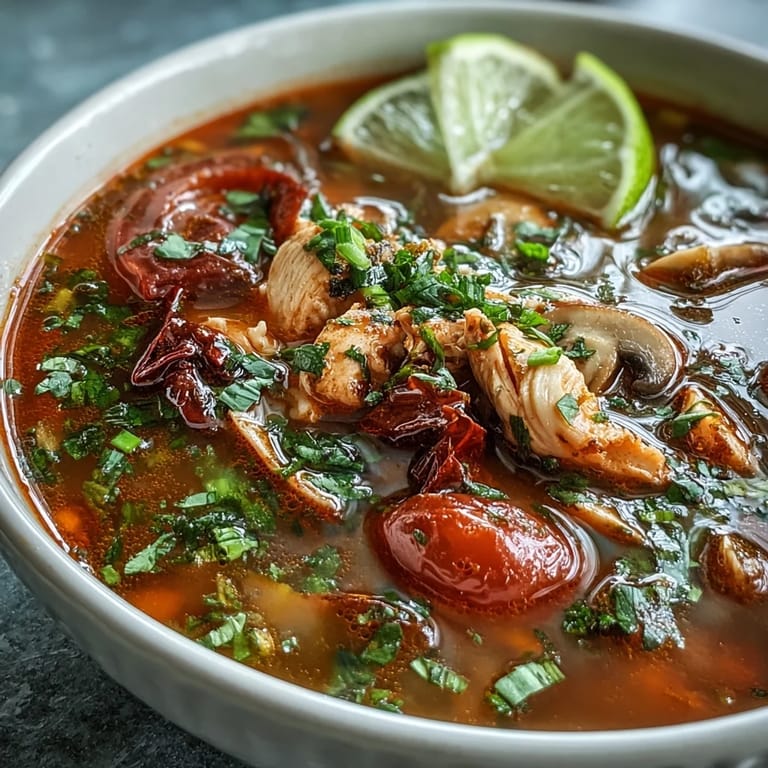
Save I discovered Tom Yum at a cramped Bangkok street stall during monsoon season, watching a vendor work with such speed that the ingredients seemed to blur together. The moment that steaming bowl arrived, fragrant and alive with lemongrass and lime, I understood why this soup feels less like food and more like a warm conversation. Years later, I still chase that same electric balance of sour, spicy, and savory whenever I make it at home. There's something about the way the aromatics infuse the broth that transforms simple chicken and vegetables into something unforgettable. Now it's the soup I turn to when I want the kitchen to smell like somewhere far away.
I made this for a friend who'd just returned from Thailand, nervous that my version wouldn't hold up to her memories of the real thing. She took one spoonful, closed her eyes, and smiled in a way that told me the humble ingredients in my pot had somehow captured something true. That's when I stopped worrying about authenticity and started trusting the process, because the flavors speak for themselves.
Ingredients
- Boneless, skinless chicken thighs or breasts (400 g, thinly sliced): Thighs stay more tender when simmered, but breasts work if you prefer leaner meat and slice them thin so they cook quickly.
- Chicken stock (1.2 liters): Quality matters here since it's the foundation—homemade is best, but a good store-bought broth makes a real difference.
- Lemongrass stalks (2, trimmed and smashed): Fresh lemongrass is non-negotiable; frozen works in a pinch, but dried is a last resort and needs less of it.
- Fresh galangal (4 slices, about 12 g): This root gives the soup its signature warmth and slight piney note, completely different from ginger so don't swap them.
- Makrut lime leaves (5, torn): These fragrant leaves are what make you taste Thailand; buy them fresh or frozen from Asian markets, never dried.
- Birds eye chilies (4, lightly crushed): Keep them whole and just bruise them so you control the heat level, then adjust to your tolerance.
- Mushrooms (150 g, sliced): Oyster or button mushrooms add earthiness and absorb the broth beautifully as they cook.
- Tomatoes (2 medium, cut into wedges): They soften slightly and release acidity that balances the soup, so don't skip them.
- Onion (1 small, sliced): A touch of sweetness that mellows out as it simmers.
- Garlic (3 cloves, smashed): Bruising releases the oils that carry flavor throughout the broth.
- Fish sauce (3 tbsp): The umami backbone that makes everything taste rounded and complete—start with this amount and adjust because it's salty.
- Fresh lime juice (2 tbsp): Always fresh, never bottled; it's the zing that wakes up your palate.
- Sugar (1 tsp) and salt (½ tsp): These balance the heat and sourness, so taste constantly as you season.
- Fresh cilantro (2 tbsp, chopped) and spring onions (1-2, sliced): Last-minute garnishes that add brightness and a slight cooling effect.
Tired of Takeout? 🥡
Get 10 meals you can make faster than delivery arrives. Seriously.
One email. No spam. Unsubscribe anytime.
Instructions
- Bruise your aromatics:
- Lay the lemongrass stalks flat on your cutting board and smack them hard with the side of your knife—you should hear a crack and smell that grassy-citrus burst immediately. Do the same with the galangal slices so every piece releases its hidden oils before the broth even touches them.
- Build the flavor base:
- Bring your chicken stock to a rolling boil, then drop in the lemongrass, galangal, makrut lime leaves, crushed chilies, and garlic all at once. Let it simmer uncovered for five minutes while you watch the broth transform into something golden and aromatic, inhaling deeply so you know what's happening.
- Cook the chicken gently:
- Add your sliced chicken and onion to the simmering broth, stirring occasionally and skimming off any white foam that rises to the surface. This takes eight to ten minutes and you'll know it's done when the chicken is no longer pink and the onion is just beginning to soften.
- Add the vegetables:
- Slide in your mushroom slices and tomato wedges, letting them cook together for five to seven minutes until the mushrooms darken slightly and the tomatoes just start to bleed their juice into the broth. Taste a mushroom—it should be tender but still have a little body.
- Season to perfection:
- Stir in the fish sauce, lime juice, sugar, and salt, then take a spoonful and really taste it on your tongue. This is where the soup either sings or falls flat, so don't rush—adjust the lime juice if you want more pucker, add more fish sauce if it needs depth, or a touch more sugar if the heat is overwhelming.
- Finish and serve:
- Remove from heat and fish out the lemongrass stalks and galangal slices if you prefer (though some people leave them in for continued infusing). Ladle the soup into bowls, scatter cilantro and spring onions over the top, and set lime wedges on the rim so people can squeeze in more brightness to taste.
 Save
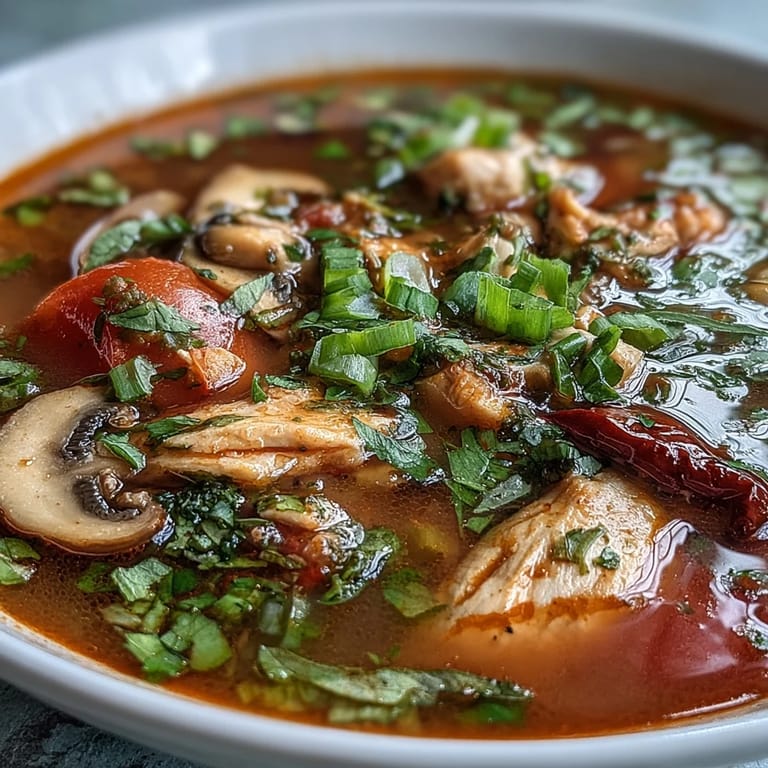
Save My neighbor once came by and said the smell alone made her want to sit down for a bowl, so I ended up ladling extra servings into containers for her whole family. That's when I realized this soup isn't just something you eat—it's something you share, and it carries memory and generosity in every spoonful.
The Magic of Heat and Balance
Tom Yum lives in contrast, and that's what makes it so addictive. The heat from the chilies pushes against the cool brightness of lime, while the fish sauce adds a salty depth that makes you reach for another spoonful before you've even swallowed the last one. Understanding this push and pull is what separates a good Tom Yum from a great one—it's never about one flavor dominating, but about them dancing together. Once you taste that balance, you'll spend the rest of your life chasing it in other dishes too.
Fresh Ingredients Make the Whole Difference
I tried making this with dried galangal and grocery store lime leaves once, thinking convenience mattered more than authenticity. The soup was flat, almost one-dimensional, and I realized immediately that shortcuts on the foundational flavors undermine everything else. Now I plan ahead, visit the Asian market, and know that ten minutes spent finding real lemongrass is ten minutes of flavor investment that pays dividends. Your palate will absolutely notice the difference between fresh and old, and so will anyone eating your soup.
Customizing Heat and Creaminess
The beautiful thing about Tom Yum is how adaptable it is once you understand the base. Some nights I want it fiery with extra chilies and chili oil drizzled over the top, while other times I swirl in a splash of coconut milk about a minute before serving to create something almost silky. I've also subbed shrimp for chicken on lazy Friday nights, and the cooking time barely changes—just two or three minutes in the simmering broth and they're done. Here's what you should keep in mind when playing around with this recipe.
- Add more chilies or serve with chili oil on the side if you like real heat that lingers on your lips.
- Stir in evaporated milk or coconut milk in the last minute if you want richness without losing the bright flavors underneath.
- Shrimp takes the same two to three minutes as chicken, but watch closely because overcooked shrimp turns rubbery and sad.
 Save
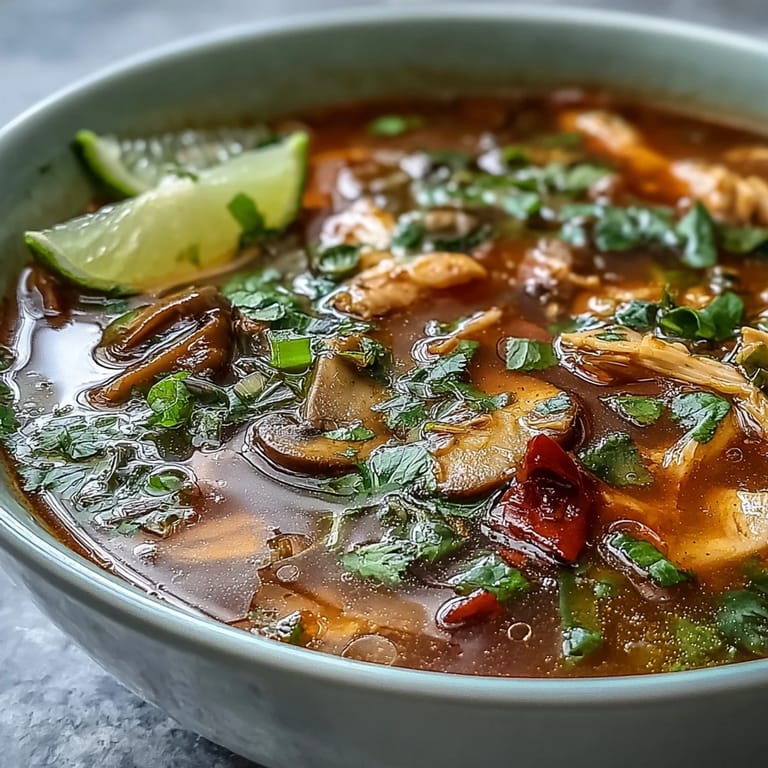
Save This soup reminds me that the simplest dishes often teach the biggest lessons about balance, patience, and the power of good ingredients. Make it often enough that you stop thinking and start feeling your way to the perfect bowl.
Recipe FAQs
- → What makes Tom Yum taste authentic?
The signature flavor comes from the holy trinity of Thai aromatics: lemongrass, galangal, and makrut lime leaves. Bruising these ingredients before simmering releases their essential oils into the broth. The balance of fish sauce for saltiness, fresh lime juice for sourness, and birds eye chilies for heat creates the classic Tom Yum profile.
- → Can I make this less spicy?
Absolutely. Start with fewer chilies—half or even quarter of the amount listed. You can also remove the seeds from the birds eye chilies before adding them, or use milder chili varieties like jalapeño. The heat level is easily adjusted, so taste as you go and add more gradually if needed.
- → What's the difference between clear and creamy Tom Yum?
Clear Tom Yum (Tom Yum Nam Sai) is the traditional version without dairy. Creamy Tom Yum (Tom Yum Nam Khon) includes evaporated milk or coconut milk added just before finishing. The creaminess mellows the heat slightly and adds richness while maintaining the spicy-sour balance.
- → Can I substitute the chicken with other proteins?
Yes, shrimp works beautifully and creates Tom Yum Goong, another Thai classic. Shrimp cook faster—add them during the last 3-4 minutes to prevent overcooking. Firm tofu or mixed seafood also work well. Adjust cooking times accordingly based on your protein choice.
- → How do I store and reheat leftovers?
Store in an airtight container in the refrigerator for up to 3 days. The flavors often develop and improve overnight. Reheat gently over medium-low heat, adding a splash of water or stock if the broth has reduced. Avoid boiling, as this can make the chicken tough. The soup also freezes well for up to 2 months.
- → What should I serve with Tom Yum?
Steamed jasmine rice is the classic accompaniment, helping to balance the intense flavors. You can also serve with rice noodles for a complete meal. Fresh herbs like extra cilantro, basil, or mint on the side add brightness. A cooling cucumber salad makes a nice contrast to the spicy soup.