 Save
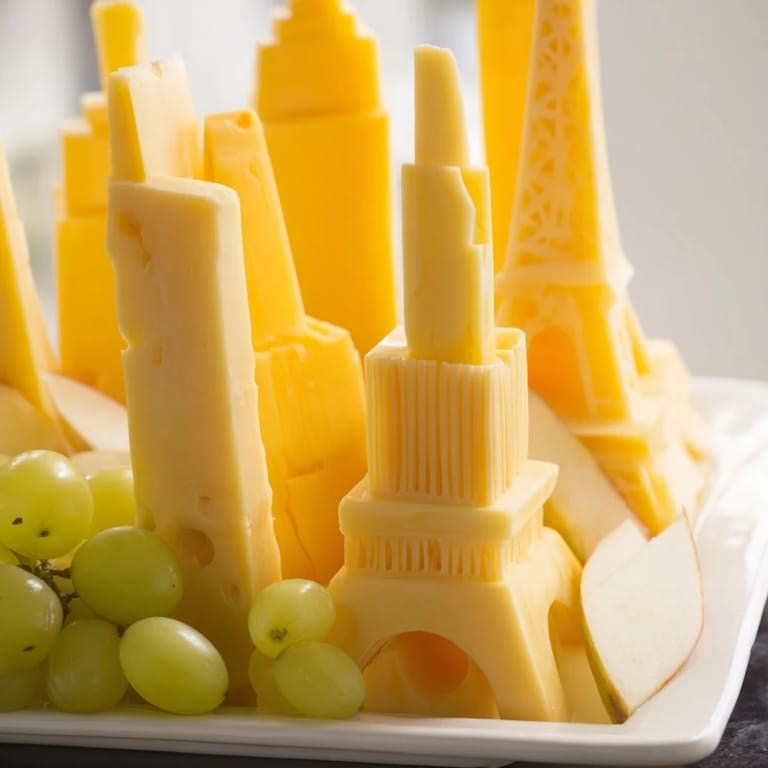
Save I stumbled onto this idea while arranging cheese on a board for a dinner party, when my nephew pointed at a wedge of cheddar and said it looked like a skyscraper. That offhand comment sparked something playful—what if I actually carved cheese into building shapes? After some clumsy attempts with a paring knife and a printed template, it clicked. Now every time I make this, guests do a double-take when they realize the skyline is completely edible.
A friend brought this to a potluck after I'd mentioned the idea, and watching people's faces light up when they realized the buildings were actually made of different cheeses was worth every minute of prep. Someone even asked if they could take a photo before eating it—the ultimate compliment.
Ingredients
- Sharp cheddar, block (120 g): The bold flavor anchors your skyline, offering a deep golden color that reads as classic architecture.
- Gruyère, block (120 g): Nutty and rich, this cheese cuts cleanly and adds sophisticated contrast to the platter.
- Emmental, block (120 g): Its pale color and mild sweetness provide visual relief between darker cheeses.
- Havarti, block (120 g): Creamy with subtle tang, it slices beautifully without crumbling and adds another texture dimension.
- Gouda, block (120 g): The caramel undertones make it visually warm, and it holds its shape through carving better than softer varieties.
- Seedless grapes (1 small bunch, washed): These become your city parks and green spaces, offering refreshing bursts between the cheese buildings.
- Apple (1 small, sliced): A slight tartness that cleanses the palate and adds another color layer to your edible skyline.
- Pear (1 small, sliced): Softer and sweeter than apple, it bridges the gap between fruit and cheese flavors beautifully.
- Assorted crackers (12–16, gluten-free if desired): Your foundation for building bites, choose sturdy ones that won't crumble under the weight of cheese.
- Honey or fig jam (2 tbsp): The final touch that ties everything together, adding sweetness and a reason to circle back to the platter.
Tired of Takeout? 🥡
Get 10 meals you can make faster than delivery arrives. Seriously.
One email. No spam. Unsubscribe anytime.
Instructions
- Chill your cheeses for clarity:
- Pop each block in the fridge for 15 to 20 minutes before you start slicing. Cold cheese holds crisp edges and doesn't crumble, making the difference between beautiful architecture and sad chunks.
- Slice into thin vertical pieces:
- Using your sharpest knife, cut each cheese block into slices roughly 1 cm thick, keeping them standing tall. Think of each slice as the canvas for a building.
- Carve your skyline:
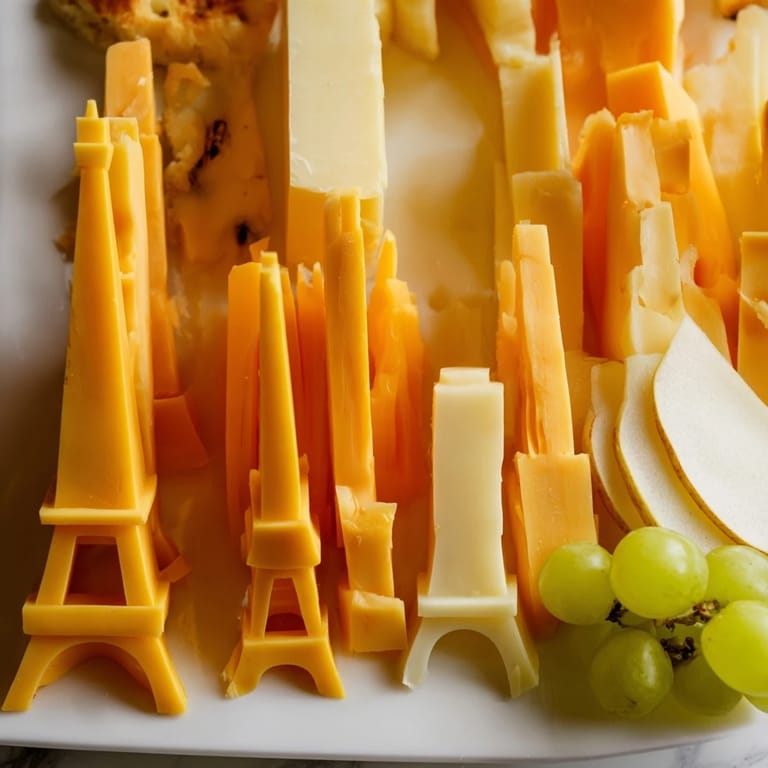
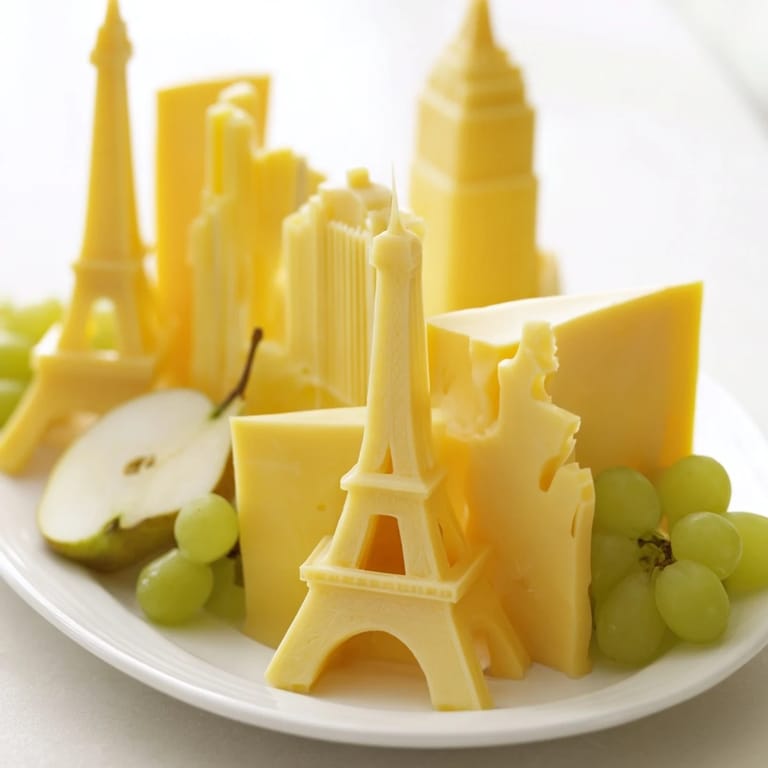
- This is where creativity happens—use your paring knife to etch building silhouettes into each slice, or lay a paper template underneath as a guide. The Empire State Building's pointy top, the Eiffel Tower's lattice, Big Ben's clock face—whatever calls to you.
- Arrange into a cityscape:
- Stand your carved cheeses upright on a large platter, varying heights and spacing them like a real skyline. Step back and adjust until it feels intentional.
- Add the landscape:
- Tuck grapes and fruit slices around the base of your cheese buildings to suggest parks and greenery, filling in gaps with color and freshness.
- Serve with intention:
- Set crackers alongside and place a small ramekin of honey or fig jam nearby for dipping. Your edible skyline is ready.
 Save
Save The memory that stuck with me wasn't the applause or the photos—it was my ten-year-old cousin carefully selecting which cracker to pair with which cheese building, asking questions about where each cheese came from. Food that makes people curious and playful is food worth making.
Choosing Your Cheeses Wisely
The five cheeses here aren't random—each one was picked because it slices without shattering, holds its shape under a paring knife, and brings a different flavor story. Cheddar is bold and familiar, Gruyère feels fancy, Emmental stays neutral, Havarti is creamy-forward, and Gouda wraps it all up with warmth. If you swap them out, stick with firm to semi-firm varieties; soft cheeses will collapse the moment you try to carve them. I learned this the expensive way with a wheel of brie that became fondue whether I wanted it to or not.
Making It Thematic and Personal
The real magic happens when you pick buildings that mean something—a cityscape your guests recognize, or a hometown skyline that sparks conversation. I've done the Paris version with exaggerated Eiffel Tower proportions, a New York tribute complete with a tilted One World Trade Center, and even a fantasy skyline of buildings my friend described from her dreams. The cheese shapes don't need to be photorealistic; the impression is what counts.
Timing and Presentation Secrets
Assemble this no more than two hours before serving—any longer and the cheese begins to weep slightly, fruit oxidizes, and the whole thing starts looking tired. If you're prepping ahead, slice and arrange the cheeses on parchment, cover loosely with plastic wrap, and add the fruit just before guests arrive. The crackers and honey go out last, kept separate until the final reveal. It sounds fussy, but the payoff is a platter that looks intentional and fresh, not like something that's been sitting around.
- Use a printed template under your platter to guide your carving, then remove it once the arrangement is set.
- Keep a damp cloth nearby while carving—cheese dust on your hands makes everything slippery.
- If a building slice breaks, use the paring knife to clean up the edge, or lean it against an intact neighbor for support.
 Save
Save This platter has become my go-to for gatherings where I want to feel creative without stress. It's proof that the most memorable food isn't about complexity—it's about a moment of playfulness and care.