 Save
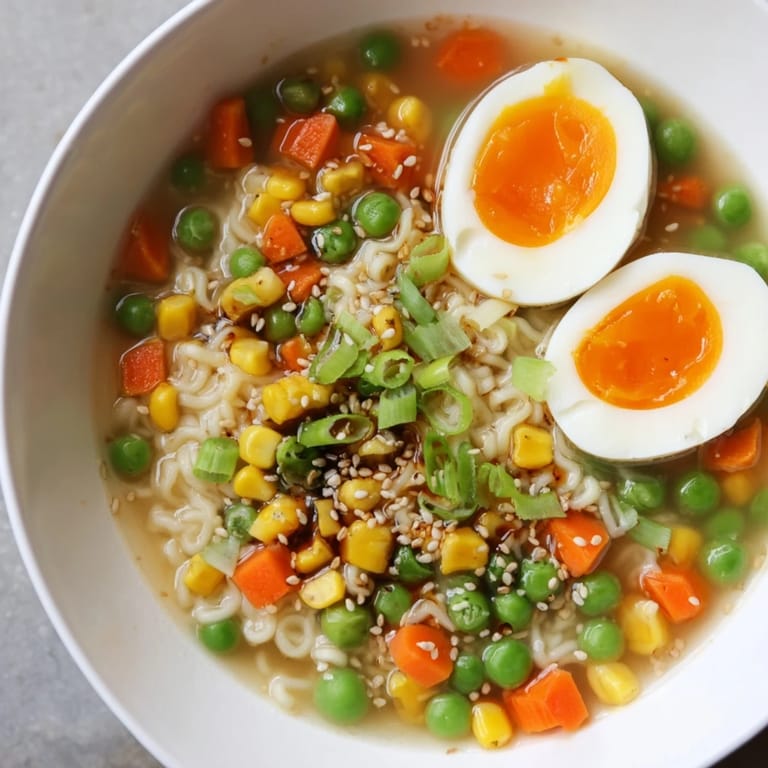
Save There's something about a rainy afternoon when you're standing in front of an empty fridge that makes instant ramen feel like possibility instead of defeat. I'd thrown together basic noodles a hundred times, but one day I spotted a bag of frozen peas in the freezer and thought: why not? That one small addition—bright green, a little sweet, actually filling—transformed what I expected to be another forgettable bowl into something I actually looked forward to eating. Now I can't make ramen without them.
I made this for my roommate once when they came home sick and tired of their own cooking rotation. They sat at the kitchen counter watching me work, and when I handed them the bowl steaming with bright peas floating on top, they looked genuinely surprised that something so simple could taste intentional. That's the moment I realized this wasn't just a quick fix—it was actually comforting food.
Ingredients
- Instant ramen noodles (2 packs): The foundation, whether you choose seasoned or plain depends on your mood that day—seasoned gives you a head start on flavor, plain lets you control everything.
- Frozen peas (1 cup): These little nuggets of sweetness stay firm enough to matter, unlike some vegetables that turn to mush; they're the unsung hero of this dish.
- Frozen mixed vegetables (1 cup, optional): Carrots, corn, and green beans add color and varied texture, making your bowl feel more complete than it has any right to.
- Green onions (2, sliced): Half goes into the broth, half onto the top; they give you freshness both hidden and visible.
- Garlic (2 cloves, minced): Even 30 seconds of cooking releases something aromatic that changes the whole mood of your broth.
- Low-sodium vegetable broth (4 cups): Better than water because it actually tastes like something, and low-sodium means you control the salt level entirely.
- Soy sauce (2 tablespoons): The flavor anchor—use tamari if you need it gluten-free, but this is where umami lives.
- Sesame oil (1 teaspoon): A little goes a long way; it adds warmth and nuttiness that makes people ask what your secret is.
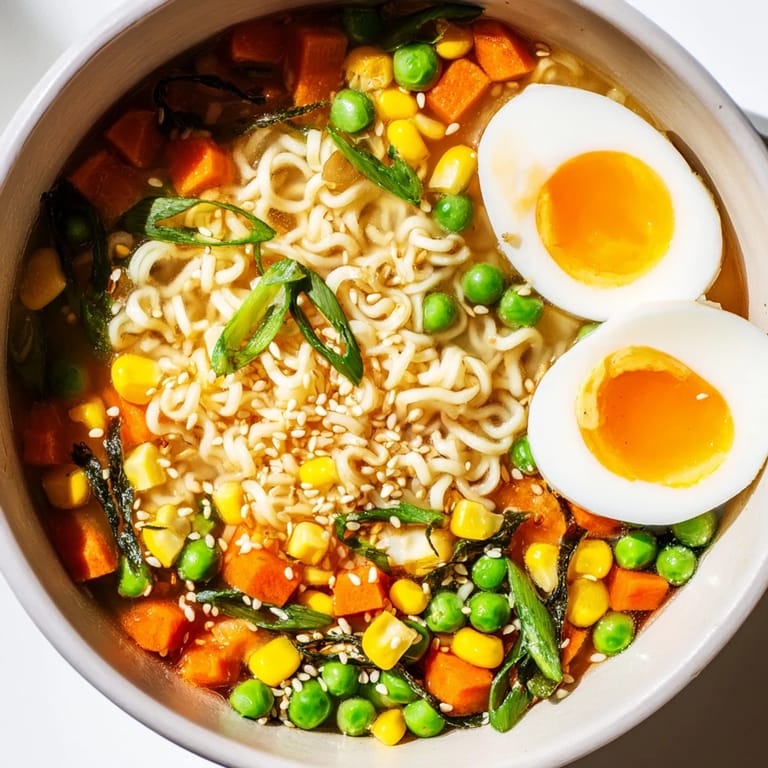
- Soft-boiled eggs (2, optional): If you add them, they're not optional anymore—the yolk breaking into the broth is the whole reason.
- Toasted sesame seeds (1 tablespoon): Crunch and richness in one tiny sprinkle; never skip this if you can help it.
- Chili flakes or sriracha (to taste): Heat is personal, so add what feels right in the moment.
Tired of Takeout? 🥡
Get 10 meals you can make faster than delivery arrives. Seriously.
One email. No spam. Unsubscribe anytime.
Instructions
- Wake up the broth:
- Heat sesame oil in your saucepan over medium heat until you smell that warm, toasted aroma. Add your minced garlic and let it sizzle for just 30 seconds—you want fragrant, not brown.
- Build your base:
- Pour in the vegetable broth and soy sauce, then bring everything to a gentle boil. This is where your bowl's personality starts forming.
- Add color and nutrition:
- Scatter in your frozen peas and mixed vegetables. Let them simmer for 2 to 3 minutes until they're heated through and the broth turns a little greener from their presence.
- Cook the noodles:
- Add your ramen noodles straight from the package (decide on the seasoning packet based on how much flavor you want competing with your broth). Follow the package timing, usually 2 to 3 minutes, until they're tender but still have a little resistance.
- Layer in the green onions:
- Stir in half of your sliced green onions, then taste. If you want more salt, this is the moment to add another splash of soy sauce before you commit it to bowls.
- Finish and serve:
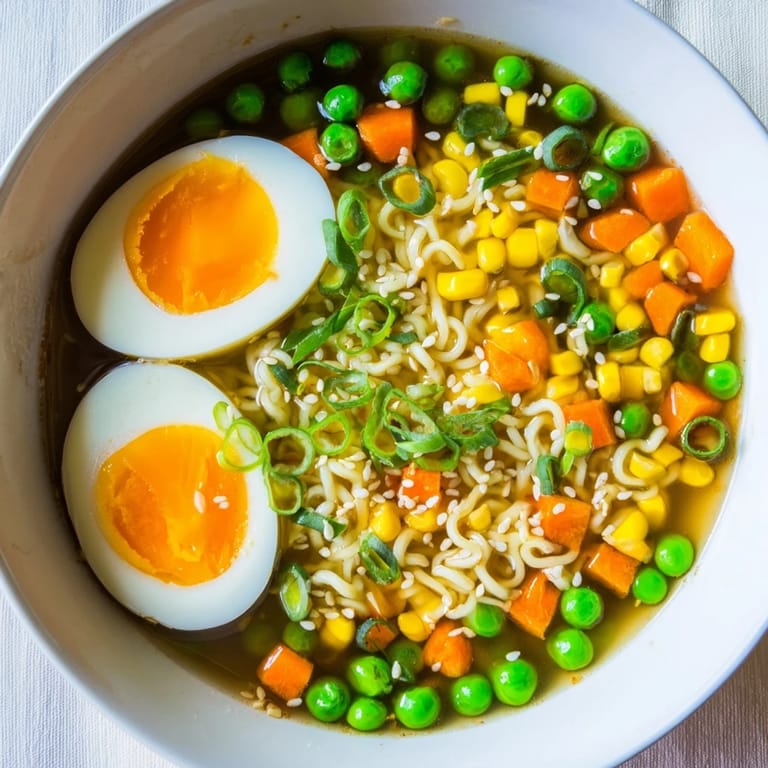
- Divide everything between two bowls, cradling the noodles and vegetables in the broth. Top each bowl with your soft-boiled egg (if using), the reserved green onions, a scatter of sesame seeds, and as much heat as you want.
 Save
Save The best part of this recipe is how it proved to me that you don't need fancy ingredients or complicated techniques to make something that tastes like care. A simple bowl of ramen, upgraded with a few thoughtful additions, somehow says more than a lot of fancier dishes ever could.
Why Frozen Really Works Here
I used to feel like frozen vegetables were a compromise, something you grabbed when fresh wasn't available. Then I realized that for something this quick, frozen is actually the smarter choice. Those peas and carrots were picked and frozen at peak ripeness, so they're locked in nutrition and flavor that fresh ones sitting in your fridge for three days can't compete with. They also thaw in the exact time your broth takes to simmer, so there's no separate prep work stealing your evening away.
The Egg Question
A soft-boiled egg is technically optional, but once you've had one sliding into your ramen, the bowl feels incomplete without it. The yolk breaks open and creates this silky richness that spreads through each bite. If soft-boiling feels intimidating, remember: 6 to 7 minutes in boiling water gives you that golden, runny yolk that makes this dish feel indulgent instead of budget-conscious.
Making It Your Own
This is a framework, not a rule book. Some nights I add spinach instead of the mixed vegetables because it wilts into the broth and disappears nutritionally. Other times I'll crumble tofu in or use leftover shredded chicken if I need more protein staying power. The sesame oil, garlic, and broth are your anchors—everything else flexes depending on what's in your freezer and what your body needs that day.
- Swap the mixed vegetables for edamame, spinach, or even broccoli florets if you want different texture or flavor.
- Use tamari instead of soy sauce if you're avoiding gluten, and grab gluten-free ramen noodles to keep it fully safe.
- Add a splash of rice vinegar or a squeeze of lime at the very end if you want brightness cutting through the richness.
 Save
Save This recipe reminds me that comfort food doesn't require time or money, just attention. A bowl of upgraded ramen is the kind of meal that feeds you when you need feeding most.
Recipe FAQs
- → Can I use fresh peas instead of frozen?
Yes, fresh peas work well and can be added at the same stage as frozen peas, adjusting cooking times slightly for tenderness.
- → What are good alternatives to the suggested vegetables?
Edamame, spinach, or even shredded cabbage can be used for variety and added texture in this dish.
- → How can I make this dish vegan-friendly?
Simply omit the eggs and ensure the noodles and broth ingredients contain no animal products.
- → Is it possible to prepare this gluten-free?
Yes, substitute regular noodles with gluten-free varieties and use tamari instead of soy sauce.
- → What toppings add extra flavor and texture?
Soft-boiled eggs, toasted sesame seeds, sliced green onions, and chili flakes provide depth and a spicy kick.