 Save
Save I discovered this dish during a misty autumn morning hiking through the Oregon forest with my grandmother. She taught me to spot the telltale golden glow of chanterelles beneath the moss, and how to listen for the quiet crunch of hazelnuts underfoot. Years later, when I wanted to capture that forest magic on a plate, this recipe was born—a edible memory of those walks, where every mushroom, nut, and berry tells the story of what grows wild and honest in the Pacific Northwest.
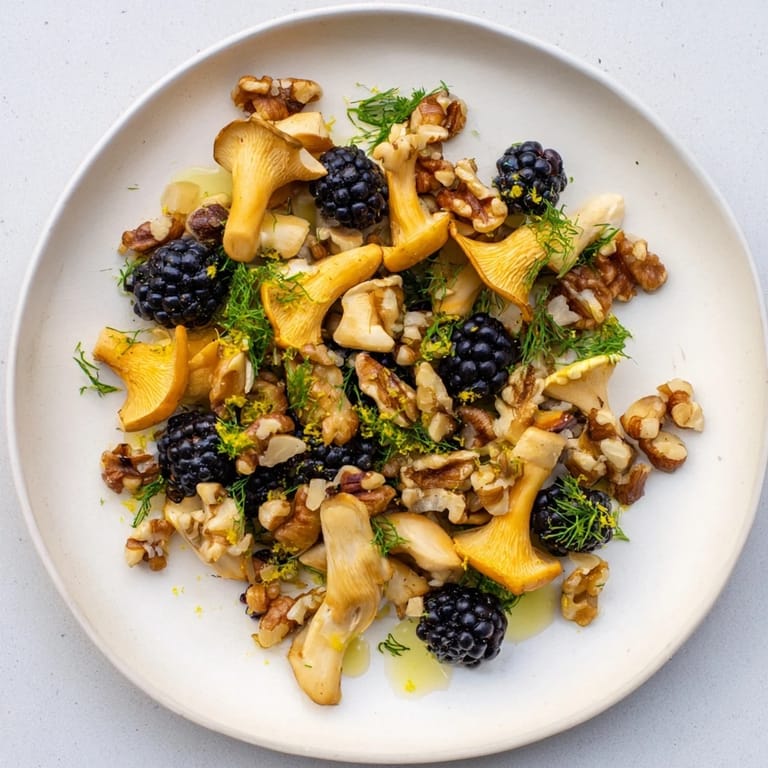
I'll never forget my dinner party when my neighbor took one look at this and asked if I'd foraged it myself. The way the herb moss caught the candlelight, the deep burgundy berries against pale cream plates—it transformed a simple appetizer into something people still talk about. That's when I knew this wasn't just food; it was a conversation starter.
Ingredients
- Mixed wild mushrooms (chanterelle, shiitake, oyster), 200 g: The true soul of this dish. Wild mushrooms carry an earthy depth that regular button mushrooms simply cannot match. Buy them fresh if you can, and clean them gently with a damp cloth rather than washing—they absorb water like tiny sponges.
- Olive oil and unsalted butter, 1 tbsp each: This combination gives you the perfect sizzle and golden color. The butter adds a richness that oil alone misses, but unsalted lets you control the salt.
- Garlic clove, 1 minced: Just enough to whisper through the mushrooms without overpowering them.
- Salt and freshly ground black pepper: Always fresh pepper. Always. Ground pepper tastes like dust compared to what a good grinder can do.
- Toasted hazelnuts and walnuts, 50 g and 30 g: The crunch that makes this dish sing. Toasting them yourself fills your kitchen with a warm, nutty aroma that no store-bought version can replicate.
- Fresh blackberries and blueberries, 80 g and 60 g: These aren't just garnish—they're bursts of tartness and sweetness that balance the earthiness. The darker the berries, the more intense the flavor.
- Fresh herbs for the moss (parsley, dill, chervil, chives), about 40 g total: This is where the magic happens. The combination feels fresh and alive, like you've tucked a piece of the forest onto the plate. Don't skip the chervil if you can find it—it has a subtle anise note that makes people wonder what they're tasting.
- Lemon zest and flaky sea salt: The zest brightens everything, while flaky salt adds little moments of mineral crunch.
Tired of Takeout? 🥡
Get 10 meals you can make faster than delivery arrives. Seriously.
One email. No spam. Unsubscribe anytime.
Instructions
- Prepare your mushrooms with care:
- Gently clean each mushroom with a damp cloth, brushing away any forest debris. Slice them at a slight angle—this creates more surface area and helps them cook evenly. When you heat the oil and butter in your skillet, listen for that gentle sizzle when you add the garlic. After just 30 seconds, when the aroma hits you, add your mushrooms all at once. They'll seem crowded at first, but they'll release their moisture and shrink down beautifully. Cook them until they're golden brown and the edges curl slightly, about 6 to 8 minutes. This is where patience pays off—rushing them means they'll steam instead of sear.
- Create the herb moss:
- Finely chop all your fresh herbs by hand if you have time; a knife connects you to the ingredient in a way a food processor never will. The herbs should be minced into tiny, vibrant pieces. Toss them with olive oil, lemon zest, and flaky salt in a bowl. Use your fingers to gently squeeze the herbs so they start to release their oils and cling together slightly. This is the herb moss—it should feel alive and aromatic, almost fuzzy like real moss.
- Toast your nuts to golden perfection:
- If you haven't already toasted them, spread them on a baking tray and slide them into a 180°C (350°F) oven. Set a timer for 8 to 10 minutes, but here's the trick—walk by the oven around the 6-minute mark and breathe in. When your kitchen smells like toasted hazelnuts and warmth, they're done. Remove them immediately. That exact moment between golden and burnt is narrow, and a minute too long changes everything. Let them cool before you chop them, then break them into rough, uneven pieces.
- Arrange your woodland floor:
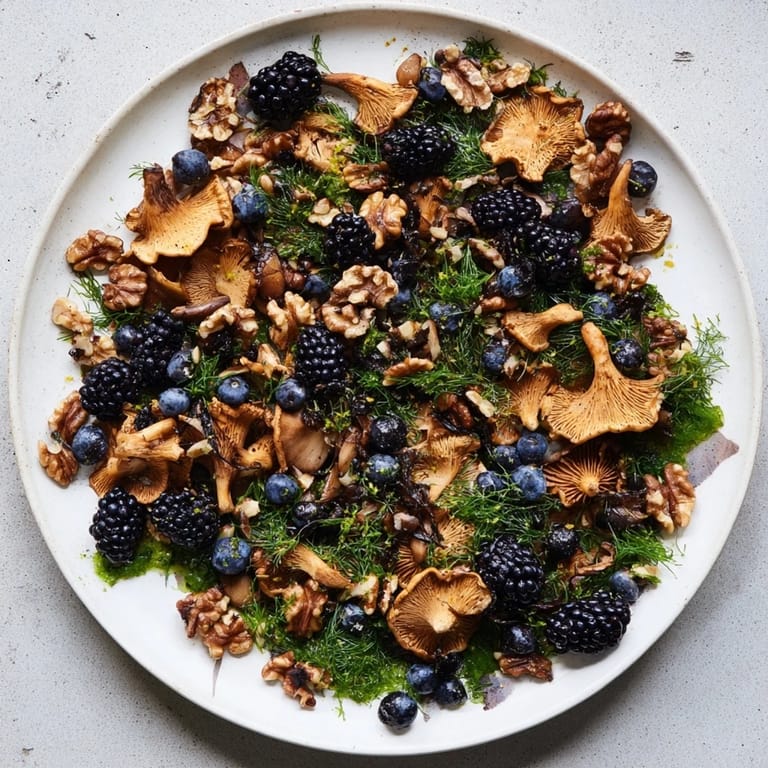
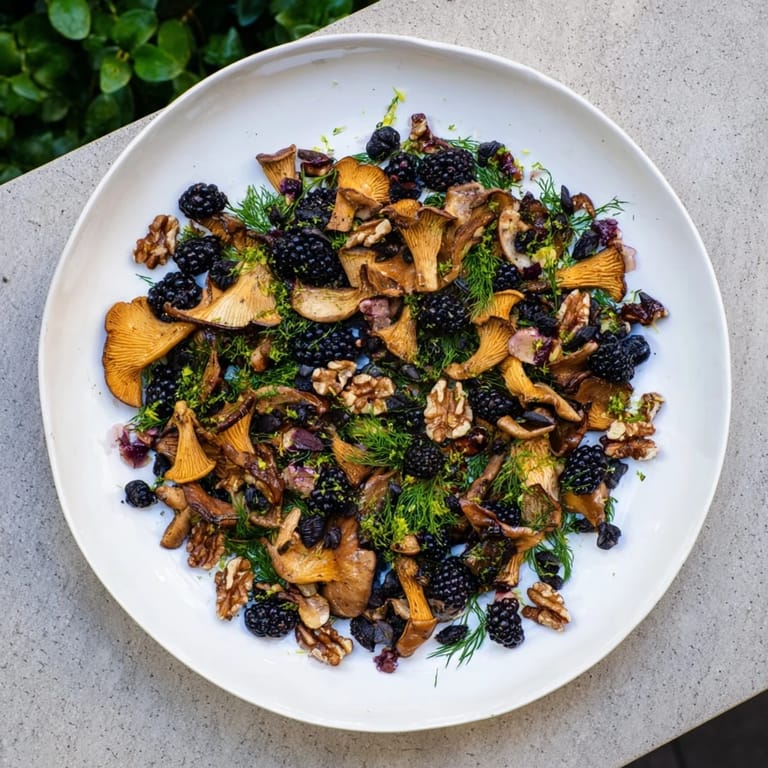
- This is where you become an artist. Take a large platter or individual plates and start placing clusters of mushrooms, nuts, and berries as if you're recreating a forest floor. Don't spread them evenly—create dense, organic groupings. Let a blackberry nestle against a cluster of hazelnuts. Let walnuts peek out from underneath mushroom slices. Then, generously spoon the herb moss around and between these clusters, filling the spaces like you're tucking green moss between rocks and fallen leaves. The whole composition should feel natural and slightly wild, not precisely arranged.
- Add the finishing touches:
- If you have edible flowers or microgreens, scatter them across the top just before serving. These add color and a final whisper of elegance. Serve the dish at room temperature, when all the flavors have had time to become acquainted with each other.
 Save
Save There's a moment that happens at every table when this dish is served—a pause before anyone eats, where everyone just looks at it. Someone always says it's too beautiful to eat. Then someone takes the first bite, and the conversation becomes about flavors, about that surprising earthiness, about how textures matter. That's when you know you've created something that transcends being just another appetizer.
The Science of Searing Mushrooms
Mushrooms are about 90 percent water. When you cook them, you're essentially evaporating that water to concentrate their flavor and develop their color. This is why the high heat matters so much. When oil and butter hit a hot pan and the mushrooms meet that heat, something called the Maillard reaction begins—amino acids and sugars break down and recombine to create hundreds of new flavor compounds. This is what turns a raw mushroom into something savory, complex, and deeply satisfying. It's why those first few minutes of sizzling and browning matter more than any other step in this recipe.
Building Your Foraged Plate at Home
You don't actually need to forage in a forest to create this dish, though if you have access to farmers markets or specialty grocers with wild mushroom sections, you'll find ingredients that capture that authentic forest spirit. The key is treating each ingredient like it matters individually. When you arrange the plate, think about color contrast—the dark purple-black of berries against the golden mushrooms, the bright green of herbs scattered throughout. Think about negative space too. A plate that's too crowded loses its visual impact. Give each ingredient room to be seen, touched, and tasted on its own terms before the flavors mingle together in your mouth.
Pairing and Serving Suggestions
This dish sings with a light Pinot Noir, whose silky tannins won't overpower the delicate vegetables. If you prefer non-alcoholic options, a crisp dry cider brings similar complexity. Serve it at room temperature—cold diminishes flavor, but warm mushrooms can become mushy. For variations, try adding roasted root vegetables like beets or parsnips for additional earthiness, or tangy pickled shallots for a bright contrast. You can also swap hazelnuts for pecans if that's what you have on hand, or add pine nuts for a more traditional woodland feel.
- Always taste your herb moss before plating—sometimes it needs just a pinch more salt or lemon zest to really sing.
- Prepare everything ahead except the final arrangement, which takes just a few minutes and keeps all elements fresh and crisp.
- The beauty of this dish is that it's almost impossible to get wrong once you understand the principle—celebrate what grows, arrange it honestly, and let the ingredients speak for themselves.
 Save
Save This recipe is my way of keeping those forest walks alive, of sharing the feeling of discovery with everyone who tastes it. Every time someone's eyes widen at the sight of it, I'm reminded that the best cooking is about celebrating what already exists in nature, just arranged with intention and love.
Recipe FAQs
- → What types of mushrooms work best?
Mixed wild mushrooms like chanterelle, shiitake, and oyster offer varied textures and earthiness essential to the dish.
- → How should the nuts be prepared?
Toasting hazelnuts and walnuts enhances their flavor and adds a crunchy contrast to the soft mushrooms.
- → Can I substitute the herb moss ingredients?
Yes, fresh herbs with similar bright flavors such as tarragon or chervil can replace part of the mix to suit your taste.
- → What is the purpose of the herb moss?
The herb moss adds fresh, fragrant notes and a vivid green color, tying all the earthy elements together visually and in flavor.
- → How can this dish be adapted for a vegan diet?
Replace butter with plant-based alternatives and ensure no animal products are used in preparation.