 Save
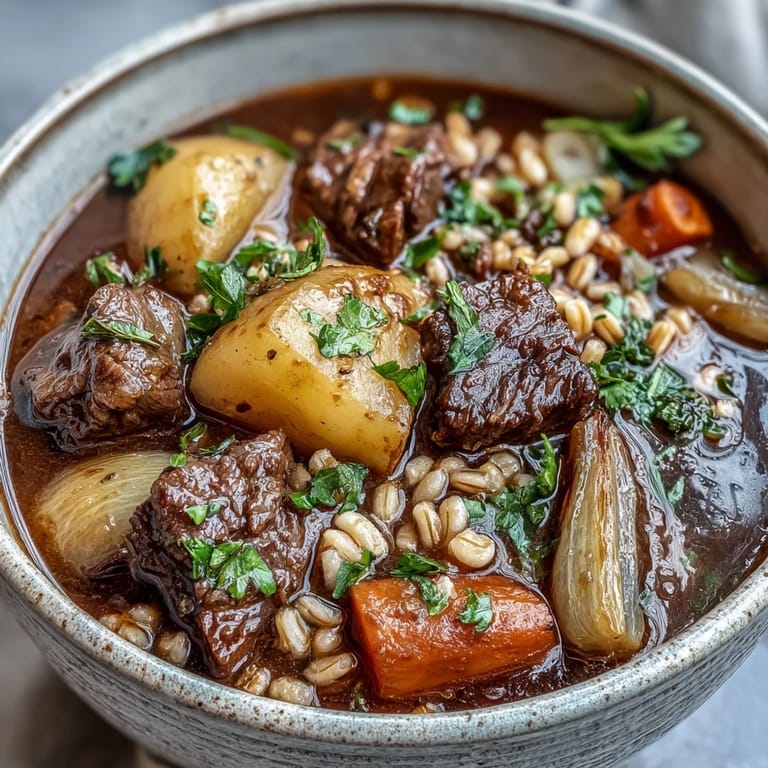
Save There's something about watching a pot of Guinness stew simmer on a gray afternoon that makes everything feel slower and warmer. My neighbor mentioned casually that she'd started using stout in her beef stew, and I was skeptical until that first spoonful—the beer mellowed into the broth, adding depth I couldn't quite name. Now I make it whenever the weather turns, and somehow the house smells like an Irish pub crossed with my grandmother's kitchen. It's the kind of dish that fills more than your stomach.
I made this for my sister's book club one October, and everyone assumed I'd been cooking all day—but it was just two hours of mostly hands-off simmering. She texted me the next morning asking for the recipe because apparently her husband had eaten the leftovers for breakfast. That's when I knew I'd stumbled onto something special.
Ingredients
- Beef chuck (2 lbs, cut into 1-inch cubes): This cut has fat running through it that breaks down into silky tenderness during the long simmer—don't use lean cuts or you'll end up with tough, stringy meat.
- Olive oil (2 tablespoons): Just enough to get the pan hot without overwhelming the beef's natural flavors.
- Yellow onion, garlic, carrots, parsnips, celery (1 large onion, 3 cloves, 3 carrots, 2 parsnips, 2 stalks): This is your flavor foundation, the aromatics that make the whole pot sing.
- Potatoes and rutabaga (2 medium potatoes, 1 small rutabaga): Potatoes keep things familiar while rutabaga adds an earthy sweetness that feels almost buttery when cooked down.
- Tomato paste (1 tablespoon): A spoonful of this concentrates into savory depth without making the stew taste like tomatoes.
- Pearl barley, rinsed (3/4 cup): Rinsing removes the starch so it doesn't cloud your broth, and barley adds chewiness and a nutty character that makes this feel substantial.
- Guinness stout (one 440 ml can): The star of the show—it sounds like an affectation until you taste it, then you understand.
- Beef broth and water (4 cups broth, 1 cup water): The ratio matters because straight broth can become too salty after hours of simmering, while water balances it out.
- Salt, pepper, thyme, rosemary, bay leaves, Worcestershire sauce: Bay leaves lend a subtle bitterness that rounds out the sweetness, while Worcestershire adds umami without announcing itself.
- Fresh parsley for garnish: A bright finish that cuts through the richness and looks intentional on the plate.
Tired of Takeout? 🥡
Get 10 meals you can make faster than delivery arrives. Seriously.
One email. No spam. Unsubscribe anytime.
Instructions
- Get your pan screaming hot:
- Place your Dutch oven over medium-high heat and add olive oil—it should shimmer and move easily across the bottom. This matters because you're building flavor through browning, not just cooking the beef.
- Brown the beef in batches without crowding:
- Season your cubes with salt and pepper, then lay them out so they touch the pan surface, not each other—crowding steams the meat instead of browning it. You'll hear a satisfying sizzle, and each batch needs about five minutes, turning occasionally, until it's dark golden on most sides. Transfer to a plate as each batch finishes.
- Soften the aromatics:
- In the same pot, add diced onion and let it turn translucent and fragrant, about three to four minutes. The fond (those brown bits stuck to the bottom) is flavor gold, so stir them up as the onion cooks.
- Add your vegetables and sauté briefly:
- Toss in minced garlic, then carrots, parsnips, celery, potatoes, and rutabaga—about five minutes of stirring until everything softens slightly and starts releasing moisture. You want them cooked partway through, not raw, but not falling apart either.
- Bloom the tomato paste:
- Stir in tomato paste and cook it for a full minute, letting the heat deepen its color from bright red to rusty brown. This step concentrates its flavor instead of leaving it tasting watery and raw.
- Bring everything back together:
- Return the browned beef to the pot, scatter in the rinsed barley, then pour in the Guinness first, listening to it hiss slightly against the hot pan. Follow with beef broth, water, dried herbs, bay leaves, and Worcestershire sauce, stirring everything to ensure the barley isn't settled in clumps.
- Simmer low and slow:
- Bring the whole thing to a boil—you'll see steam and rolling bubbles—then reduce heat to low, cover with the lid slightly ajar, and let it bubble gently for an hour and a half to two hours. Stir occasionally, mostly to make sure nothing's sticking to the bottom, and you'll notice the beef becoming tender enough to break apart with a spoon.
- Finish and taste:
- Fish out the bay leaves, then taste a spoonful and adjust salt and pepper as needed—the flavors should taste harmonious, with the beef, barley, and vegetables all equally present.
 Save
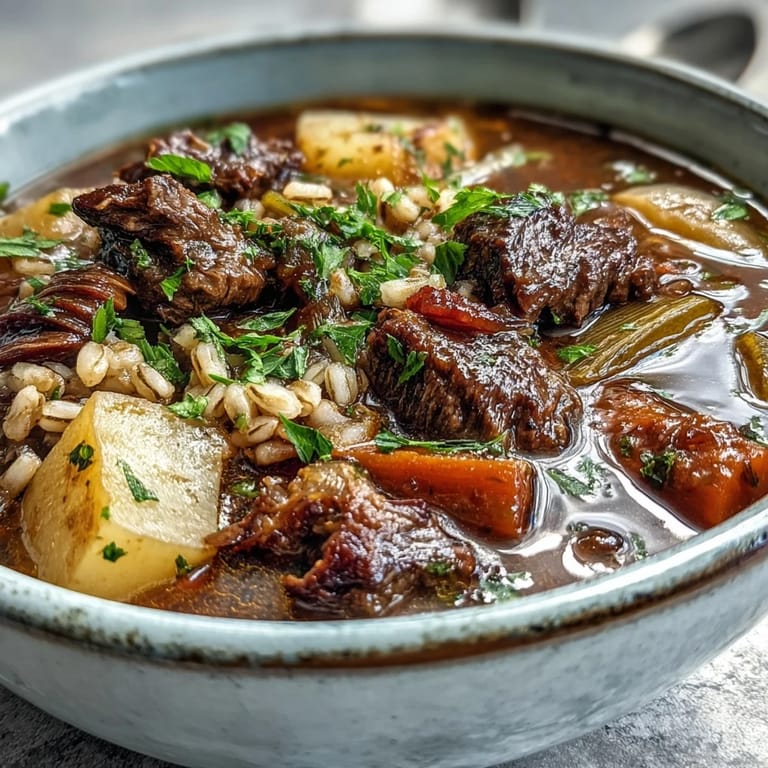
Save Last winter, my partner came home from work sick and miserable, and I had this stew warming on the stove. He ate two bowls and didn't say much, just sat there with his hands wrapped around the mug of broth, and gradually his shoulders dropped from his ears. That's when I realized this isn't just dinner—it's comfort in a pot.
The Guinness Question
People ask if you can taste the beer, and the honest answer is no and yes simultaneously. You don't taste stout—you taste something deeper and more complex than beef and broth alone could create. The alcohol cooks off completely, leaving behind only the richness. I tried making it with extra beef broth once to avoid alcohol, and it tasted fine but flatter, like the dish was humming in a minor key. The Guinness is what puts it in major.
Texture and Thickness
Some people like their stew brothier, some like it nearly thick enough to stand a spoon in. This recipe lands somewhere in the middle, but you control it completely. If you want it thicker after cooking, mash a few of the softer vegetables against the side of the pot with the back of your spoon—the potato and rutabaga break down naturally and thicken everything without flour or cornstarch.
Serving and Storage
Serve this hot in bowls with a torn piece of crusty bread for soaking up broth. The stew keeps beautifully in the refrigerator for four days and actually tastes better on day two when all the flavors have gotten to know each other. You can freeze it for up to three months, though the barley will soften further upon thawing, which isn't bad—just slightly mushier texture.
- If reheating from frozen, thaw overnight in the refrigerator and warm on the stovetop over medium heat, stirring occasionally and adding a splash of water if it seems too thick.
- Garnish with fresh parsley only when serving, as it loses its bright color if you add it too early.
- This feeds six generously but can stretch to eight servings if you serve it alongside a big salad or crusty bread.
 Save
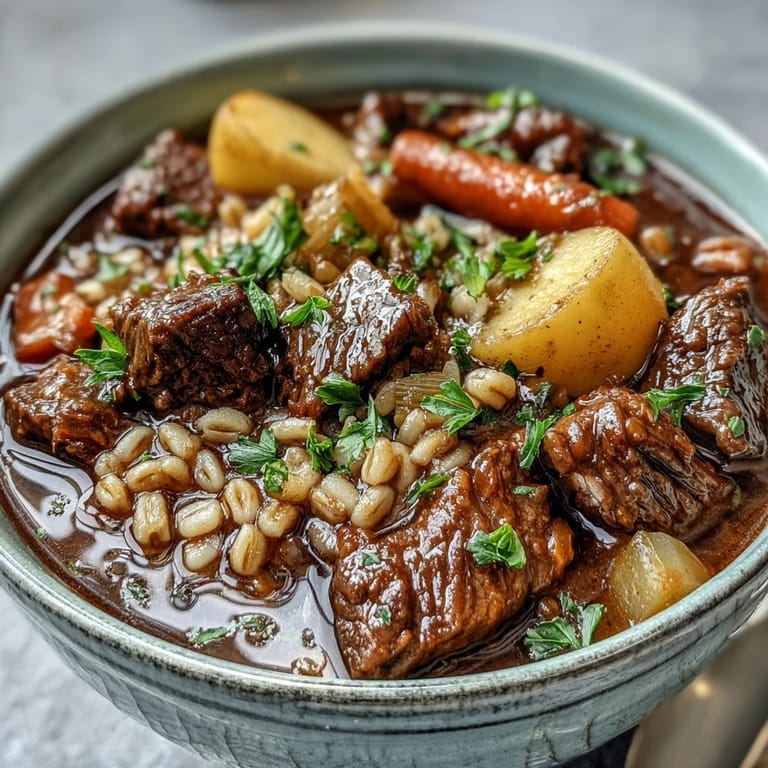
Save This stew has become my answer to everything: gray weather, tired bones, homesickness, or just a regular Tuesday when the kitchen needs to smell like someplace warm. Once you've made it, you'll understand why.
Recipe FAQs
- → What cut of beef works best for this stew?
Beef chuck is ideal because it becomes tender and flavorful after long, slow cooking.
- → Can I substitute the Guinness stout?
Yes, you can replace Guinness with another dark stout or use extra beef broth to avoid alcohol.
- → How do I thicken the stew if desired?
Mash some of the potatoes and vegetables against the pot’s side before serving to add thickness.
- → Which root vegetables complement this dish?
Carrots, parsnips, potatoes, celery, and rutabaga provide a hearty, earthy balance to the stew.
- → Any garnish suggestions for serving?
Fresh chopped parsley adds brightness and color when sprinkled just before serving.