 Save
Save My first encounter with proper French onion soup happened on a gray Paris afternoon when I ducked into a cramped bistro to escape the rain. The owner, Madame Colette, ladled a steaming bowl in front of me, and as I lifted the spoon, strands of melted Gruyère stretched like golden ribbons between the bread and broth. That first taste—the deep, almost sweet intensity of the onions against the savory beef stock and the crispy-edged cheese—made me understand why this humble soup had survived centuries. I've been chasing that exact moment ever since, learning that true French onion soup isn't fancy, just honest and patient.
I made this for my neighbor Tom the winter his furnace broke, and he still talks about sitting on my kitchen stool with a bowl cradled in both hands, the cheese stretching on every spoonful. That soup did more than fill his stomach—it became a quiet moment of comfort in a stressful week. Now whenever I see him, he asks when I'm making it again, and I always smile because food has this strange power to anchor itself in people's memories.
Ingredients
- 6 large yellow onions, thinly sliced: Yellow onions are your foundation because they caramelize better than sweet onions and have the right balance of sweetness and depth, though Spanish onions work beautifully too.
- 2 tablespoons unsalted butter and 1 tablespoon olive oil: The combination matters—butter gives richness and flavor while olive oil keeps the temperature stable so the onions caramelize rather than burn.
- 6 cups beef broth: Use homemade if you can, but good quality store-bought broth means the difference between good soup and extraordinary soup; don't skimp here.
- 1/2 cup dry white wine (optional): It sounds fancy but it really does add brightness and depth, though if you skip it, add an extra tablespoon of broth and you'll still have something wonderful.
- 2 cloves garlic, minced: Added late in cooking so it doesn't overpower, just a whisper of garlic that rounds out the flavors.
- 1 teaspoon sugar and 1 teaspoon salt: The sugar jumpstarts the caramelization and balances the deep flavors while salt pulls everything into focus.
- 2 sprigs fresh thyme (or 1/2 teaspoon dried): Fresh is noticeably better but dried works when fresh isn't available, and either way, remove it before serving.
- 1 bay leaf: One is perfect; two would be overkill and you'll taste only bay, which I learned the hard way.
- 4 slices crusty French bread about 1 inch thick: Thick slices hold their structure under the weight of cheese and heat, thin slices get soggy too quickly.
- 2 cups grated Gruyère cheese: Don't use pre-shredded; it contains anti-caking agents that prevent smooth melting—freshly grated makes all the difference.
Tired of Takeout? 🥡
Get 10 meals you can make faster than delivery arrives. Seriously.
One email. No spam. Unsubscribe anytime.
Instructions
- Melt butter and oil, then soften the onions:
- In a large heavy-bottomed pot over medium heat, let the butter and olive oil mingle until foamy, then add your sliced onions. You're looking for them to become translucent and soft, which takes about 15 minutes of occasional stirring—don't rush this or skip the stirring because uneven cooking creates tough spots.
- Begin the caramelization magic:
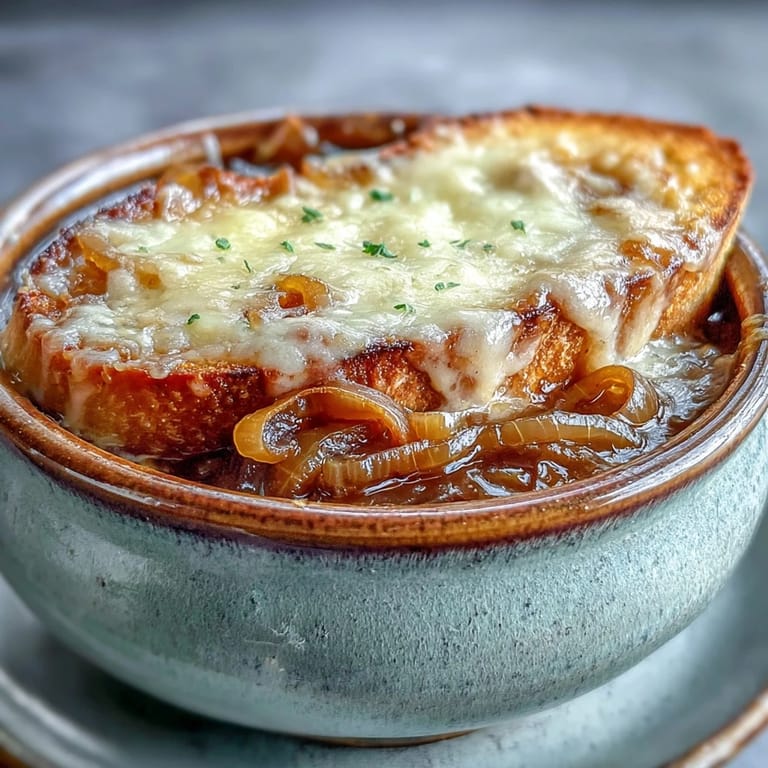
- Sprinkle the sugar and salt over the onions and continue cooking, stirring more frequently now, for 30 to 40 minutes until they're a deep golden brown. You'll notice the pot becoming less crowded as the onions release their water and collapse; the smell changes from raw-onion sharp to sweet and almost caramel-like.
- Add garlic and breathe in:
- Stir in the minced garlic and cook for just one minute until fragrant—this timing prevents the garlic from turning bitter.
- Deglaze with wine:
- Pour in the white wine if using and immediately scrape the bottom of the pot with your wooden spoon to release all those caramelized bits stuck there. Simmer for 2 to 3 minutes and watch how the liquid becomes glossy and concentrated.
- Build the broth foundation:
- Pour in the beef broth, add the thyme sprigs and bay leaf, season with black pepper, then bring everything to a boil. Once it's bubbling, reduce the heat and let it simmer gently uncovered for 30 minutes—this is when the flavors marry and deepen.
- Toast the bread while soup simmers:
- Preheat your broiler and arrange bread slices on a baking sheet, toasting them under the high heat just until golden on both sides, a few minutes total. Watch them closely because they go from perfect to burnt quickly.
- Assemble and finish:
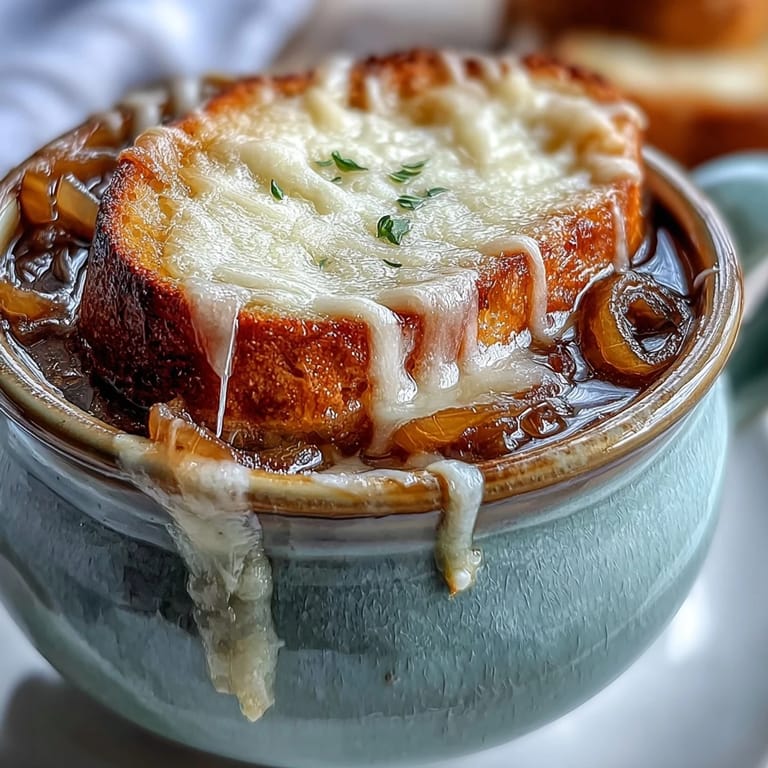
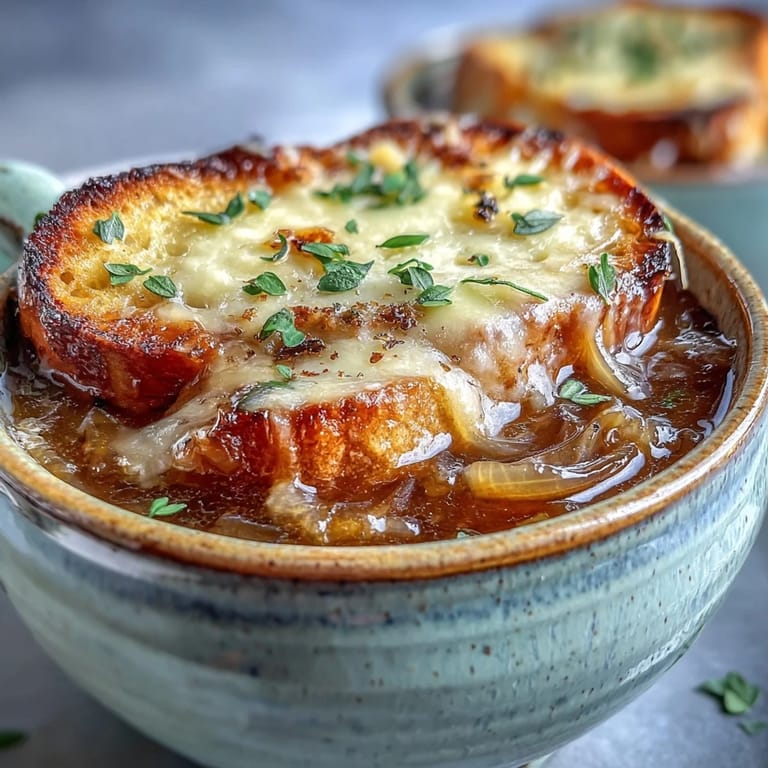
- Fish out and discard the thyme sprigs and bay leaf, then ladle the hot soup into oven-safe bowls. Top each with one slice of toasted bread and a generous handful of grated Gruyère, then slide the bowls under the broiler for 2 to 3 minutes until the cheese melts and bubbles at the edges.
- Serve immediately:
- Pull the bowls from the broiler carefully—they're extremely hot—and bring them straight to the table while the cheese is still molten and the bread is still firm.
 Save
Save The first time my daughter helped me make this, she complained about the long cooking time until we tasted the final soup, and then she understood why patience mattered in the kitchen. That lesson stayed with her longer than any lecture I could have given about cooking.
The Science of Caramelization
Caramelization isn't magic, it's chemistry—the natural sugars in the onions slowly break down and recombine into hundreds of new flavor compounds that taste both sweet and savory at once. This takes time and patience because it happens gradually over heat, and each time you see those onions darken a shade deeper, new flavors are actually developing. Once you understand this, you'll never rush the process again because you're literally watching flavor being created in front of you.
Bread and Cheese Pairing Secrets
The bread needs to be thick and crusty enough to support the weight of melting cheese without immediately disintegrating into the broth, which is why day-old baguettes are actually better than fresh ones. Gruyère has a slightly nutty flavor that deepens when melted and becomes almost crystalline in texture, which is why it's so perfect here—other cheeses like Emmental or Swiss will work but bring different characteristics. The broiler method of melting the cheese on top creates a slightly crispy, blistered surface that contrasts beautifully with the soft onions underneath.
Building Your Perfect Bowl
Balance matters in the final assembly—too much cheese and you lose the soup, too little and it feels incomplete. Each component deserves attention: the broth should be steaming hot so the bread warms through, the bread should be firm enough to hold together, and the cheese should melt into every crack and crevice. Here are the final touches that complete the experience.
- Rub the toasted bread with a cut garlic clove before adding cheese for an extra flavor layer that stays subtle rather than overwhelming.
- Serve with a glass of dry white wine or light-bodied red to complement the deep onion flavors without competing for attention.
- If you prefer, place oven-safe bowls under the broiler a minute before serving to warm them, which keeps the soup at the perfect temperature longer.
 Save
Save This soup belongs at the table with people you want to linger with, where the bowls empty slowly and conversation stretches late into the evening. Once you make it, you'll understand why it's lasted this long and why you'll keep making it.
Recipe FAQs
- → How do I get the onions properly caramelized?
Cook sliced onions over medium heat with butter and olive oil for 15 minutes until softened. Sprinkle with sugar and salt, then continue cooking for 30–40 minutes, stirring frequently. The onions should turn deep golden brown with a rich, sweet flavor.
- → Can I make this vegetarian?
Absolutely. Substitute the beef broth with vegetable broth. The result remains deeply flavorful thanks to the caramelized onions, wine, and aromatics. Many actually prefer the lighter vegetable-based version.
- → What cheese works best for topping?
Gruyère is traditional and ideal for its nutty flavor and excellent melting properties. Emmental or Swiss cheese make fine substitutes. Avoid pre-shredded cheese—freshly grated melts more smoothly and tastes better.
- → Why is my soup too sweet?
The sugar helps caramelization but should be used sparingly. If your soup tastes overly sweet, balance it with additional salt or a splash of acid like white wine or balsamic vinegar. Properly caramelized onions develop complex savory notes beyond just sweetness.
- → Can I freeze this soup?
Freeze the soup base (onions and broth) for up to 3 months. Thaw and reheat gently before adding the bread and cheese topping. The crispy elements should always be added fresh before serving for the best texture.
- → What type of bread should I use?
A crusty French bread or baguette sliced about 1 inch thick works perfectly. The bread needs enough structure to hold up when floated in hot liquid and support the cheese topping without becoming soggy too quickly.