 Save
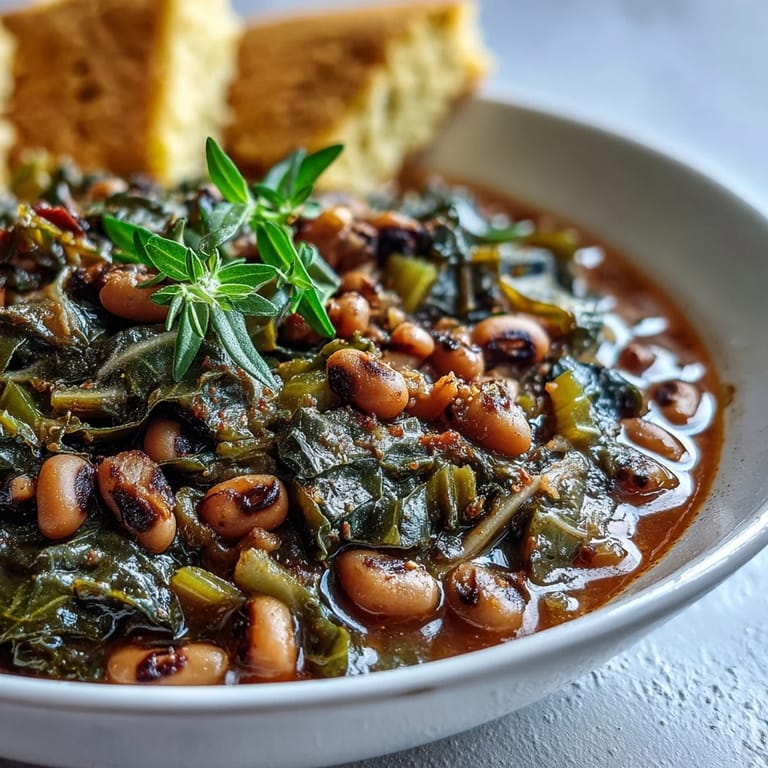
Save My grandmother used to say that black-eyed peas and collard greens were insurance against a dull year, and I didn't fully understand until I tasted them simmering in her kitchen on New Year's Eve. The smell alone felt like tradition—earthy, warm, alive with garlic and thyme. Years later, I realized she wasn't just following superstition; she was teaching me that some dishes matter because they connect us to something bigger than the meal itself. This version is mine now, though I swear I can still taste hers in every spoonful.
I made this for my best friend the winter she moved into a new house, and we sat at her bare kitchen table with mismatched bowls and a bottle of hot sauce between us. She'd been stressed about the move, and somehow watching the peas soften and the greens wilt down seemed to calm her more than any conversation could. We didn't talk much, just ate, and that felt like exactly what was needed.
Ingredients
- Dried black-eyed peas (2 cups) or canned (3 cans, drained): Dried ones need overnight soaking but develop a deeper flavor; canned are your shortcut without guilt.
- Collard greens (1 large bunch, about 1 lb): Strip the thick center stems—they're tough and bitter—and chop the tender leaves roughly so they cook into silky ribbons.
- Onion, garlic, celery, carrot: This is your flavor base, and taking time to chop them evenly means they soften at the same rate and build a gentle sweetness.
- Bay leaf, smoked paprika, dried thyme: The bay leaf adds subtle depth; the paprika brings smokiness without any heat; thyme ties everything together.
- Crushed red pepper flakes: Start small because you can always add more heat, but you can't take it back.
- Vegetable or chicken broth (6 cups): Quality matters here since it becomes the soul of the dish—taste it before you use it.
- Apple cider vinegar (1 tablespoon): This brightens the whole pot at the end, cutting through the richness and waking up your palate.
- Smoked ham hock or turkey (optional, 4 oz): Adds incredible savory depth, but the dish sings on its own without it.
Tired of Takeout? 🥡
Get 10 meals you can make faster than delivery arrives. Seriously.
One email. No spam. Unsubscribe anytime.
Instructions
- Soak your peas the night before (if using dried):
- Rinse them under cold water, pick out any wrinkled ones or stray stones, then cover with water and let them sit overnight. They'll plump up and cook faster the next day, which honestly feels like a small miracle.
- Build your flavor foundation:
- Heat oil in a large Dutch oven over medium heat, then add chopped onion, celery, and carrot. Listen for the gentle sizzle and cook until the vegetables are soft and the kitchen smells sweet—about 5 minutes.
- Wake up the aromatics:
- Stir in minced garlic and cook for just 1 minute until it becomes fragrant but before it browns. Brown garlic tastes bitter, and you want it mellow here.
- Toast your spices and proteins:
- Add the ham hock if using and cook for 2 minutes, then add black-eyed peas, bay leaf, smoked paprika, thyme, and red pepper flakes. Stir everything together so the spices coat the peas—this toasting step builds flavor.
- Simmer the peas to tenderness:
- Pour in broth and bring to a boil, then reduce heat to low, cover, and simmer for 45 minutes if using dried peas or 20 minutes if using canned. The peas should be tender enough to break between your tongue and the roof of your mouth.
- Wilt in the greens for the final stretch:
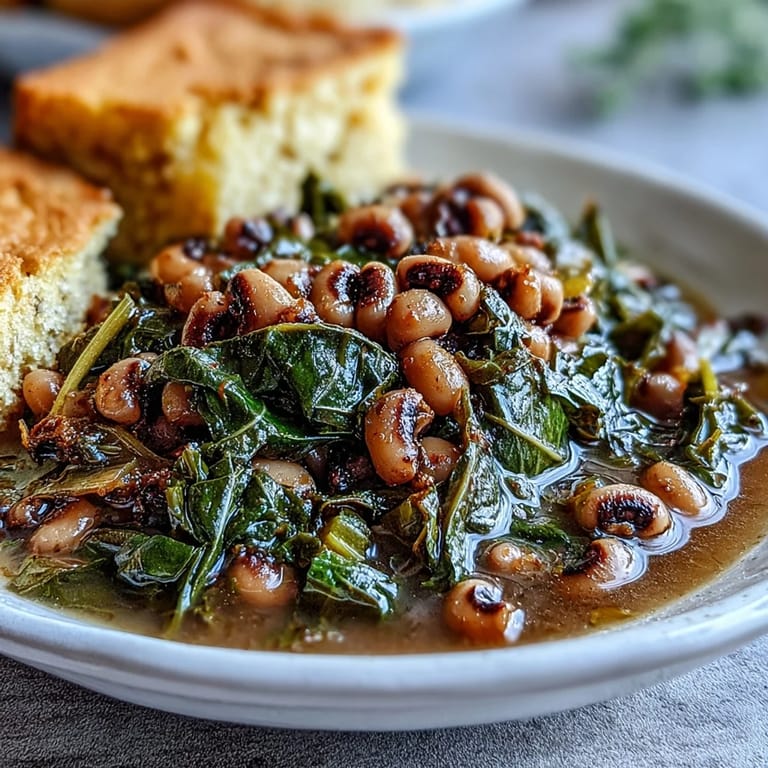
- Add chopped collard greens and simmer uncovered for another 30 minutes. Watch how they transform from sharp and leafy to silky and dark, absorbing all the pea broth.
- Finish with brightness and seasoning:
- Stir in apple cider vinegar, remove the bay leaf and ham hock, shred any meat from the hock and return it to the pot. Taste and adjust salt and pepper—you might be surprised how much you need.
 Save
Save I served this at a dinner party once where someone mentioned they'd never had collard greens before, and watching them taste it was like witnessing a small awakening. They went back for seconds and asked for the recipe, and I realized that food becomes meaningful when it connects someone to something new instead of just familiar.
Why This Dish Speaks to Winter Cooking
There's something about long, slow cooking in winter that feels like both nourishment and meditation. The house fills with warmth and smell, the pot bubbles gently on the stove, and you're not rushed because the peas will take their own time. Winter food doesn't hurry; it teaches you patience by example.
The Cornbread Pairing Matters More Than You Think
Cornbread isn't just a side here—it's meant to soak up the broth and provide a different texture against the soft peas and silky greens. Warm wedges with a little butter melt into the bowl, and suddenly you have layers of flavor instead of just one dimension. I've tried serving this over rice or with plain bread, and they're fine, but cornbread feels like it was written into the recipe by someone who understood balance.
Make It Your Own
This recipe is sturdy enough to handle changes, which means you can make it fit your kitchen and your preferences. Some people swap in mustard greens if collards aren't available, and the dish shifts slightly but stays true. Others add a little hot sauce during cooking instead of on the side, or stir in fresh kale at the very end for a texture contrast.
- Try adding a splash of bourbon or a spoonful of molasses if you want deeper richness.
- Collard greens are traditional, but kale or mustard greens work beautifully if that's what's in your garden.
- Leave the ham out entirely for vegetarian, or use smoked paprika and a pinch more vinegar to maintain that depth.
 Save
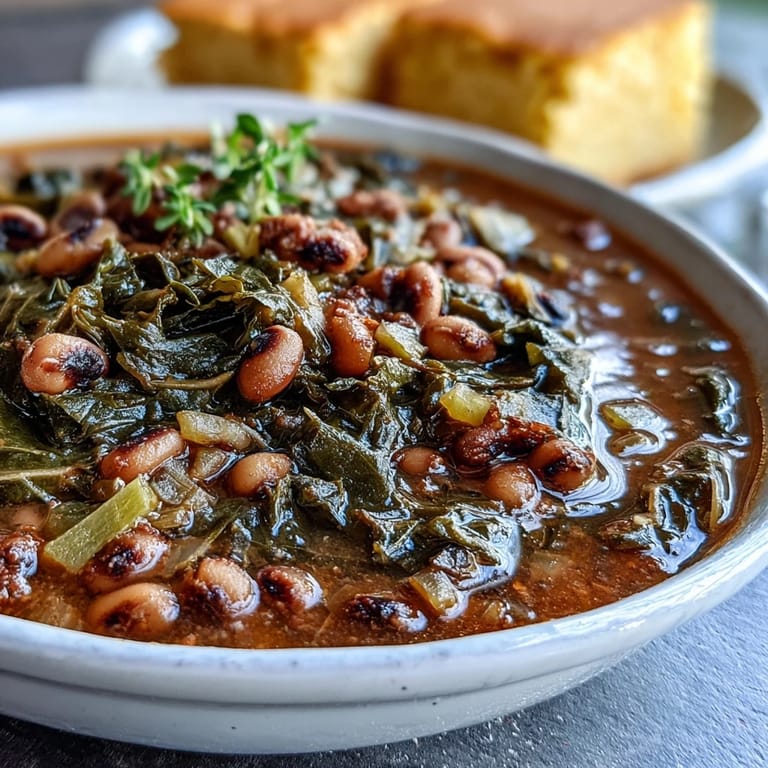
Save This is the kind of dish that fills your kitchen with generosity, whether you're cooking for celebration or comfort. Serve it warm with cornbread, a bottle of hot sauce, and the knowledge that you're making something that matters.
Recipe FAQs
- → Should I use dried or canned black-eyed peas?
Dried black-eyed peas offer better texture and flavor but require overnight soaking and longer cooking time. Canned peas work well for a quicker version—reduce the simmering time to 20 minutes and add them with the collard greens.
- → How do I remove bitterness from collard greens?
Simmering collard greens for the full 30 minutes helps mellow their natural bitterness. The apple cider vinegar added at the end also helps balance flavors. For less bitter greens, you can blanch them in boiling water for 5 minutes before adding to the pot.
- → Can I make this vegetarian?
Absolutely. Simply omit the ham hock or smoked turkey and use vegetable broth instead of chicken broth. The smoked paprika provides a subtle smoky flavor that helps compensate for the missing meat.
- → What other greens can I substitute?
Kale, mustard greens, or turnip greens work well as substitutes. Mustard greens have a peppery bite, while kale is slightly milder. Adjust cooking time—kale needs less time, while turnip and mustard greens may need a bit more.
- → Why is this dish traditionally eaten on New Year's?
In Southern folklore, black-eyed peas represent coins and collard greens represent paper money, making this combination believed to bring prosperity and luck in the coming year. This tradition dates back to the Civil War era and remains a cherished custom today.
- → How long do leftovers keep?
Leftovers store beautifully in the refrigerator for up to 5 days. The flavors actually improve after a day or two as the ingredients meld together. Reheat gently on the stovetop, adding a splash of broth or water if needed.