 Save
Save The first time I served white asparagus, I honestly wasn't sure what I was doing. A friend had brought back a bundle from a market in Belgium, pale and almost ghostly compared to the green spears I'd grown up with, and I remember standing in my kitchen thinking this delicate vegetable needed something equally refined. That's when the idea came—what if I built around its whisper-quiet elegance with creamy cheeses and the deep perfume of black truffle? The dish practically assembled itself from there.
I made this for a dinner party on the first cool evening of autumn, when everyone was desperate to feel a little fancy again. Someone asked if I'd trained as a chef, and I had to laugh—I was just following my instincts, layering flavors the way I thought they might speak to each other. By the end of the meal, three people asked for the recipe, which told me everything I needed to know about whether it worked.
Ingredients
- White asparagus, 500 g: Milder and more delicate than green, these peeled spears become silky when cooked just right—don't skip the ice bath, as it sets that perfect tender texture.
- Burrata or buffalo mozzarella, 75 g: The creamy heart of this dish; burrata especially adds a luxurious creaminess that balances the earthiness of truffle.
- Aged Comté cheese, 75 g: Shaved thin, it brings a subtle nuttiness and structural elegance; if you can't find it, Gruyère works beautifully.
- Parmigiano-Reggiano, 50 g: Just enough to add salt and umami without overwhelming the other flavors.
- Fresh black truffle, 15 g: The star ingredient—if fresh isn't available or affordable, a spoonful of truffle paste works and tastes nearly as good.
- Extra-virgin olive oil, 2 tbsp: Choose something you'd drink on its own; it's the final flourish here.
- Fresh lemon juice, 1 tbsp: A whisper of brightness that keeps the richness from becoming heavy.
- Flaky sea salt and white pepper: Sea salt on its own has character; white pepper stays invisible but adds warmth.
Tired of Takeout? 🥡
Get 10 meals you can make faster than delivery arrives. Seriously.
One email. No spam. Unsubscribe anytime.
Instructions
- Cook the asparagus gently:
- Bring salted water to a simmer—boiling too hard bruises these tender spears. Cook for 8–10 minutes until they yield slightly to a fork but still have backbone. The ice bath stops them dead and locks in that pale, almost translucent beauty.
- Arrange with intention:
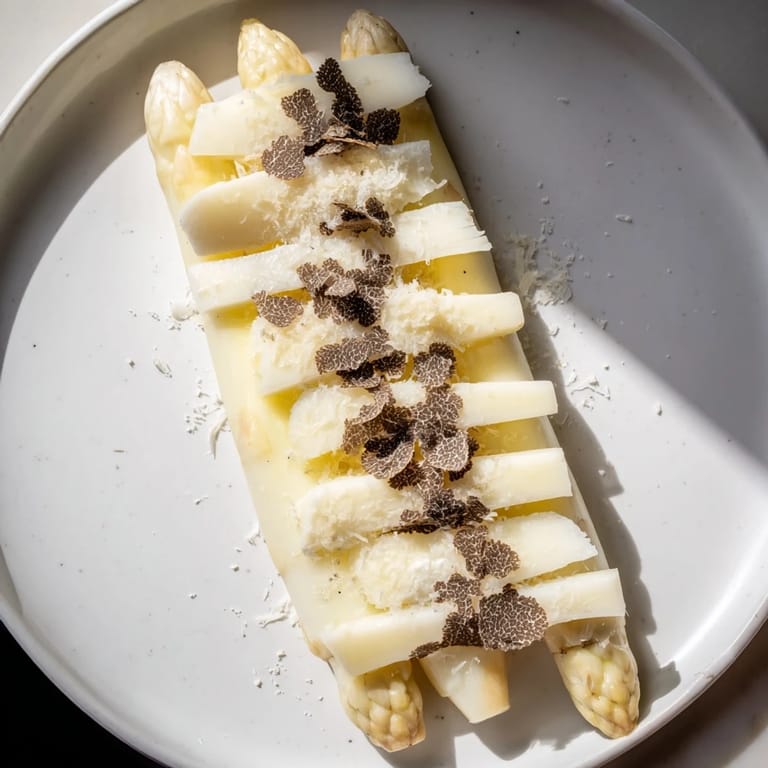
- Slice the asparagus lengthwise and lay the halves on cold plates—there's something about the visual parallel lines that makes this feel intentional and composed.
- Layer the cheeses:
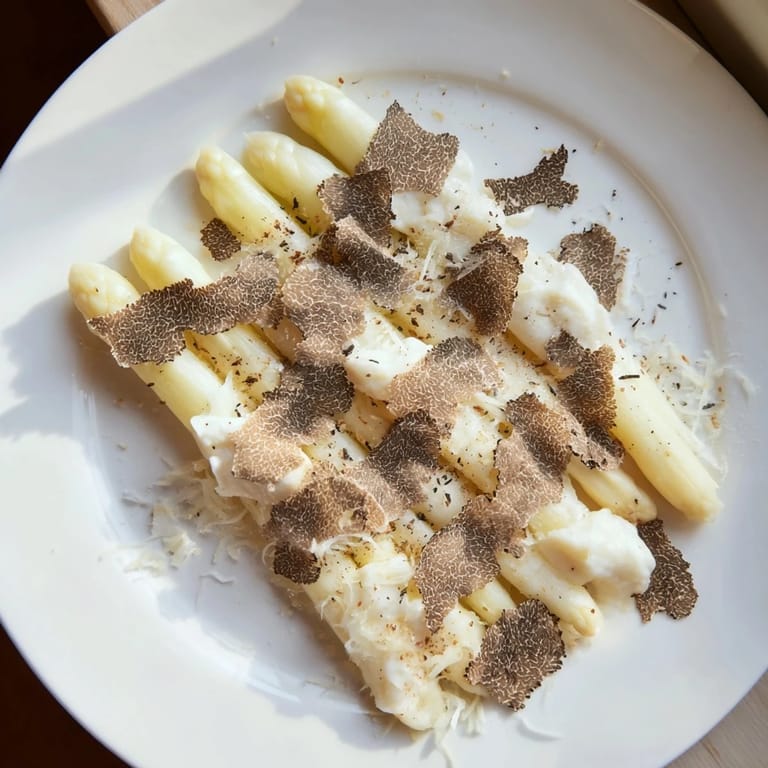
- Tear the burrata into irregular pieces, scatter them over the asparagus, then add shavings of Comté and a final snowfall of Parmigiano-Reggiano. Each cheese has its own personality and they should feel like they're playing together, not competing.
- Add the truffle:
- If using fresh, a truffle slicer or sharp peeler creates those dramatic dark stripes that give the dish its name. If using paste, drizzle it in thin lines like you're drawing on the plate—precision matters here because a little goes a long way.
- Make the dressing:
- Whisk oil, lemon juice, salt, and white pepper together—nothing complicated, just a clean dressing that lets the other flavors breathe. Drizzle evenly right before serving so nothing gets soggy.
- Finish and serve:
- A pinch of microgreens or fresh chervil adds a final whisper of green if you want it, though the dish is stunning without. Serve immediately while the plate is still cool.
 Save
Save I remember my grandmother tasting this and saying, "You know, there's no pretense here—it's just good ingredients saying hello to each other." That stuck with me. This dish isn't about showing off; it's about understanding that sometimes the most elegant thing you can do is get out of the way and let white asparagus, creamy cheese, and black truffle do their work.
Why White Asparagus Matters
Green asparagus grows above ground in the sun, which turns it green and gives it an almost grassy intensity. White asparagus is grown underground, kept from light until harvest, which keeps it pale and mild. The flavor is subtly different—less assertive, more delicate—and that quietness is exactly why it pairs so well with refined cheeses and the bold perfume of truffle. Once you cook it properly, the texture becomes almost buttery, which is the whole point of this dish.
The Cheese Architecture
There's a reason I chose three different cheeses instead of just one. Burrata brings the creamy, luxurious element; Comté adds structure and a subtle nuttiness; Parmigiano-Reggiano provides salt and umami that ties everything together. They're not competing—they're building something. If one felt out of place, I'd remove it, but together they create a cheese experience rather than just cheese on a plate.
Wine Pairing and Serving
This dish sings with a dry white wine—something clean and mineral-driven like Sancerre or Grüner Veltliner cuts through the richness and echoes the delicate nature of the asparagus. Serve it as a starter to something simple; don't follow it with anything heavy. It's also elegant as a light lunch on its own, especially in late spring or early summer when white asparagus is at the market.
- Always serve on chilled plates so the cheeses don't melt.
- For a vegetarian menu, double-check that the Parmigiano-Reggiano was made without animal rennet if that matters to your guests.
- If fresh truffle isn't available, high-quality truffle paste is a genuine option, not a compromise.
 Save
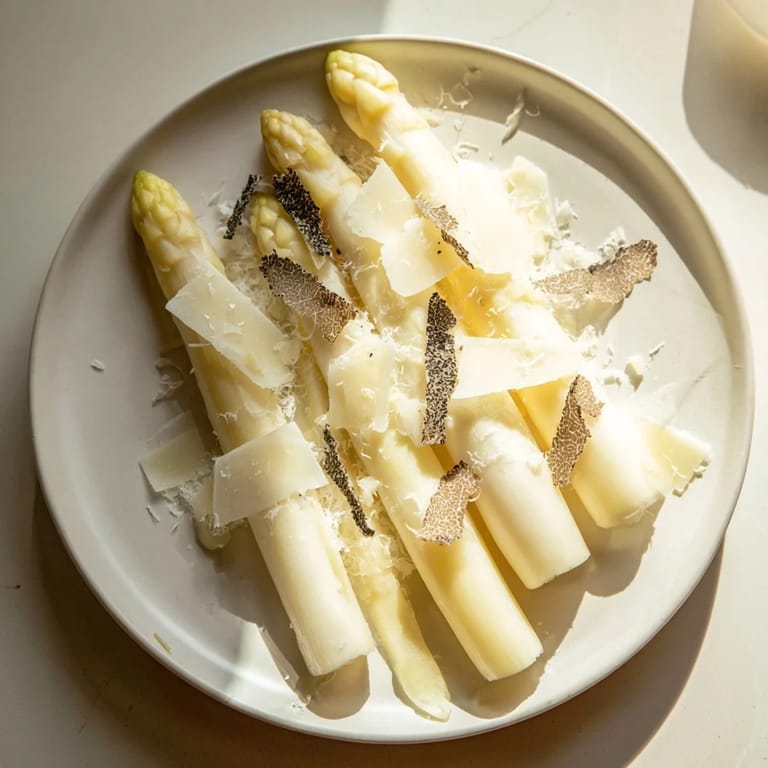
Save This is a dish that asks you to slow down and notice what's on your plate—the pale elegance of the asparagus, the creaminess of the cheese, the earthy luxury of the truffle. It's refined without being difficult, and that's where real cooking lives.
Recipe FAQs
- → How should the white asparagus be prepared for this dish?
White asparagus should be trimmed, peeled, then gently cooked in salted water until tender but firm, roughly 8–10 minutes, then cooled quickly in an ice bath.
- → Can I substitute the cheeses used in this dish?
Yes, you can replace Comté with Gruyère or a mild goat cheese; the burrata can also be swapped with buffalo mozzarella depending on availability.
- → What is the purpose of the lemon juice in the dressing?
Lemon juice adds a bright acidity that balances the richness of the cheeses and enhances the overall freshness of the dish.
- → How do I apply the black truffle for best flavor?
Use a truffle slicer or sharp vegetable peeler to shave thin slices over the plate or drizzle truffle paste in fine lines to evenly distribute its aromatic flavor.
- → What garnishes complement this preparation well?
Microgreens or fresh chervil add a subtle herbal note and visual appeal, perfect for finishing this elegant dish.
- → Is there a recommended beverage pairing?
Dry white wines such as Sancerre or Grüner Veltliner pair beautifully, enhancing the delicate flavors.