 Save
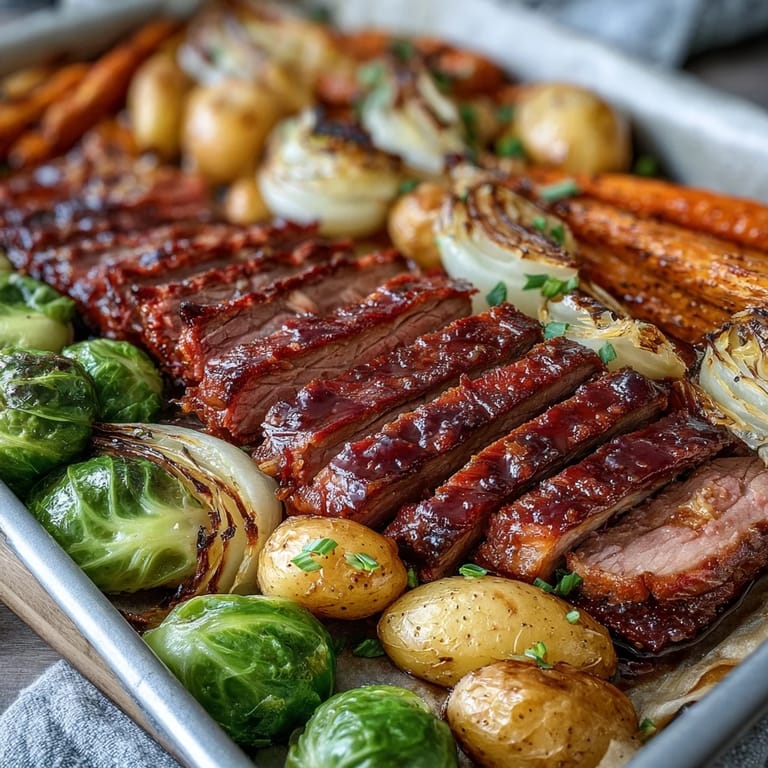
Save My neighbor stopped by on a random Tuesday evening with leftover corned beef from a family gathering, and I suddenly had that familiar cooking puzzle on my hands—what to do with it before it went bad? I remembered my grandmother's boiled dinner but couldn't face the steam and pots, so I tossed everything onto a sheet pan instead, thinking it might work. Forty-five minutes later, the house smelled incredible, and what emerged was somehow better than the traditional version—crispy cabbage edges, caramelized carrots, potatoes you could actually get excited about. My neighbor ended up staying for dinner, and that improvised sheet pan became the new way I think about this dish.
My daughter came home from school asking what smelled so good, and when I explained it was corned beef but roasted, she was skeptical—fair enough, since boiled corned beef had never won her over. But something about the caramelized edges and the way the cabbage charred just slightly made her ask for seconds, which genuinely surprised both of us. It became the meal she actually requests now instead of the one she tolerates, and that shift meant everything.
Ingredients
- Cooked corned beef, sliced thick: Use quality corned beef you've made yourself or a good deli counter version—the slices need to be sturdy enough to nestle among vegetables without falling apart, and thicker slices stay more tender than thin ones.
- Green cabbage, cut into wedges: Cut them thick enough to hold together during roasting, about an inch or so, and the outer leaves will char beautifully while the inside stays sweet and tender.
- Baby potatoes, halved: Halving them helps them cook evenly with the carrots, and leaving the skin on adds texture that feels more alive than peeled potatoes.
- Carrots, chunked generously: Bite-sized pieces work better than matchsticks here since they'll roast long enough to develop real sweetness without burning.
- Yellow onion, thick wedges: These practically melt into the vegetables, adding sweetness that balances the salty corned beef perfectly.
- Olive oil: Don't hold back here—it's what creates those caramelized edges that make the whole dish sing.
- Kosher salt and fresh pepper: This is your base flavor, so taste and adjust freely depending on how salty your corned beef already is.
- Dried thyme and parsley: These dried herbs actually work beautifully in roasting because heat brings out their earthiness instead of fading them like it might with fresh.
- Garlic powder: Fresh garlic burns in high heat, but powder distributes evenly and stays mellow in the background.
- Whole grain mustard for serving: The tangy graininess cuts through the richness and adds a little something unexpected at the end.
Tired of Takeout? 🥡
Get 10 meals you can make faster than delivery arrives. Seriously.
One email. No spam. Unsubscribe anytime.
Instructions
- Heat your oven hot and prep your pan:
- Get that oven to 220°C (425°F) while you work—you want it truly hot when the vegetables hit the pan so they start caramelizing right away instead of steaming. Line your sheet pan with parchment or foil so you're not stuck scrubbing later when the edges have stuck.
- Coat everything evenly in seasoning:
- Toss your potatoes, carrots, onion, and cabbage in a big bowl with the oil and all those seasonings, making sure every piece gets touched—this is where the flavor happens. Don't be shy; vegetables need enough oil to actually brown, not just heat through.
- Spread and let them roast first:
- Nestle in the corned beef halfway through:
- After 25 minutes when the vegetables are starting to soften and the edges are turning golden, push them aside gently and tuck the corned beef slices right into the gaps. It only needs 15 more minutes since it's already cooked, but this time in the oven will warm it through and crisp the edges slightly.
- Check for doneness and serve:
- The vegetables should be tender enough to cut with the edge of your fork, and the cabbage should have these beautiful charred spots. If something's still too firm, give it another few minutes—every oven runs different.
 Save
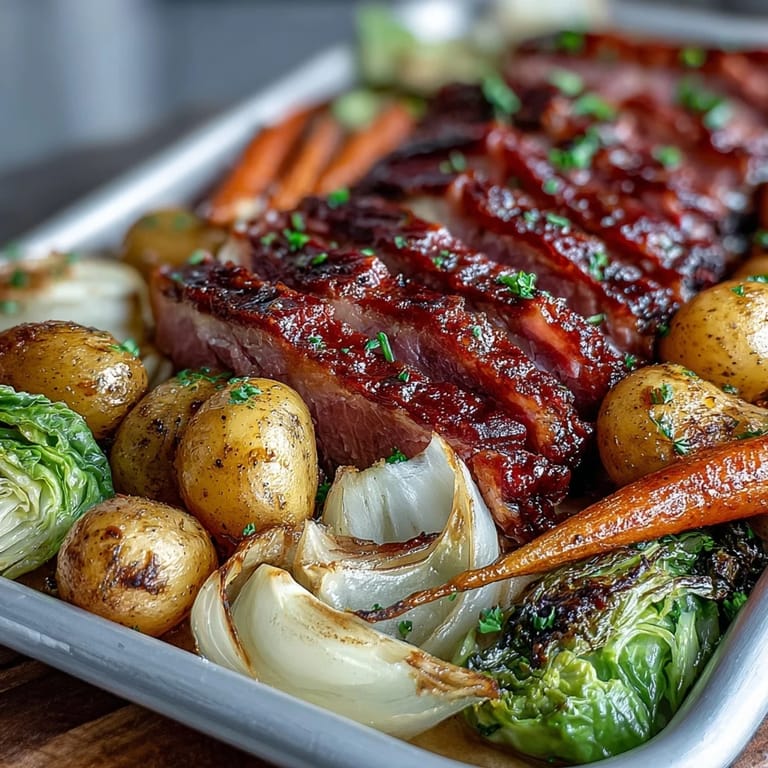
Save There's a moment when you pull this pan out of the oven and the smell hits you fully, and you realize this isn't just corned beef and cabbage anymore—it's become something that feels both comforting and new at the same time. That's when it stops being a recipe and starts being something you'll come back to.
Why Roasting Changes Everything
Boiling corned beef and cabbage is traditional for a reason, but roasting brings out flavors that water simply can't touch. The dry heat of the oven caramelizes the natural sugars in the vegetables, creating depth and complexity that a pot of boiling water flattens right out. When vegetables roast, they concentrate instead of dilute, and that difference is honestly the whole story here.
Making Leftovers Even Better
If you somehow have leftovers, they're actually better the next morning chopped and fried in a skillet until everything gets crispy and golden again. The flavors have melded overnight, and when you break up those roasted pieces and let them hit a hot pan with a little butter, you get something that tastes like intentional leftovers instead of sad reheats. It's honestly become the real reason I make this in larger batches.
Flexibility and Variations
This recipe is forgiving in the best way—if you're feeling adventurous, a pinch of crushed red pepper scattered over before roasting adds a whisper of heat that doesn't scream but definitely lingers. Sweet potatoes swap in beautifully for the regular ones if you want something slightly sweeter and more autumnal. The mustard on the side feels optional until you try it, and then it becomes the thing that ties everything together.
- Add crushed red pepper for subtle heat without overpowering the other flavors.
- Swap sweet potatoes for baby potatoes to shift the whole mood of the meal slightly sweeter.
- Always taste before serving and adjust salt since corned beef is already fairly salty depending on the brand.
 Save
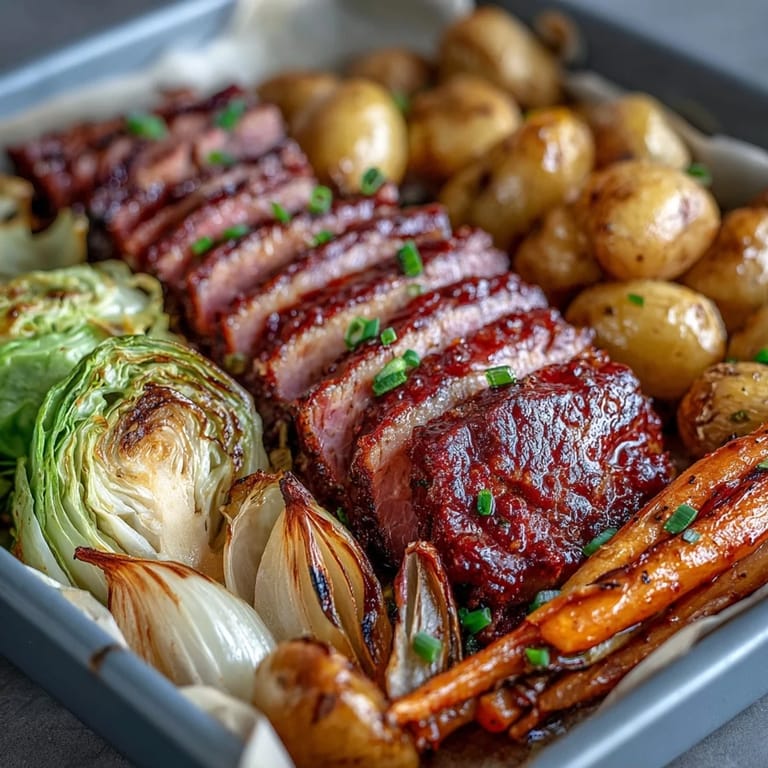
Save This sheet pan dinner has become the answer to those evenings when you want something that feels substantial and connected to tradition but doesn't require hours of attention. Make it once and it'll likely become something you reach for again and again.
Recipe FAQs
- → What is the best way to roast the vegetables evenly?
Toss vegetables thoroughly with oil and seasonings, spread them in a single layer on the pan, and stir halfway during roasting for uniform cooking.
- → Can I substitute the baby potatoes with other types?
Yes, sweet potatoes or fingerling potatoes can be used for a different texture and flavor profile while maintaining roasting times.
- → How can I add extra flavor to this dish?
Adding crushed red pepper before roasting or serving with whole grain mustard can enhance the dish’s flavor complexity.
- → Is this dish suitable for a gluten-free diet?
Yes, as long as all ingredients, especially corned beef and mustard, are verified gluten-free, this meal fits gluten-sensitive needs.
- → What is an easy way to repurpose leftovers?
Leftover corned beef and vegetables can be chopped and fried in a skillet to create a delicious morning hash.