 Save
Save I still remember the summer I spent in Tuscany, staying in a small farmhouse just outside of Siena. Every evening, as the sun dipped behind the rolling hills, my host would pull out a weathered wooden board and begin assembling what she called simply "the board." There were no recipes, no measurements—just her hands, moving with the ease of someone who had done this a thousand times, arranging chunks of cheese, draping cured meats, tearing bread. I watched her that first night, mesmerized, and realized this wasn't just dinner. It was an invitation to slow down, to taste, to share stories across a table. When I came home, I couldn't stop thinking about that board, and I've been recreating it ever since.
I made this board for my best friend's birthday a few years back, and what struck me most wasn't the food—though the flavors were gorgeous—but how everyone gathered around it without being asked. No one sat down formally. Instead, we all stood, reaching, tasting, talking, laughing. That board became the heart of the evening, and I realized that's when food does its real magic: when it creates permission to linger together.
Ingredients
- Parmigiano-Reggiano, 200 g, broken into large chunks: The king of Italian cheeses—salty, crystalline, and deeply savory. Break it by hand rather than cutting; the rough edges catch the light beautifully and feel more authentic. The irregular pieces also give you crunchy little shards to nibble on their own.
- Pecorino Toscano, 200 g, cut into wedges: Sharper and more aggressive than Parmigiano, this sheep's milk cheese brings a peppery bite that wakes up your palate. Cut it into wedges so it's easy to grab and easy to admire.
- Taleggio, 150 g, torn into rustic pieces: This is your soft, creamy player—slightly pungent with a washed rind that melts on your tongue. Tear it with your fingers to keep that rustic, unmanicured feeling the board demands.
- Prosciutto di Parma, 150 g, loosely piled: The real stuff, sliced paper-thin. Pile it gently—it bruises easily and loses its delicate texture when crammed. The looseness also lets air reach it, keeping it from sweating into a clump.
- Finocchiana salami, 120 g, thickly sliced: Fennel-studded and deeply porky, this is the salami that makes you close your eyes when you taste it. Slice it thick, about a quarter-inch, so it has presence on the board and doesn't disappear into the Prosciutto.
- Coppa, 120 g, arranged in rustic folds: Marble-veined and rich, Coppa is forgiving and beautiful. Fold it, don't lay it flat. Let gravity and the board shape it into natural waves.
- Rustic Italian loaf (ciabatta), 1 large, torn into rough pieces: Avoid slicing this neatly. The unevenness is part of the aesthetic and the pleasure—some pieces toasted and crispy, others soft and absorbent.
- Castelvetrano olives, 1 cup: Buttery and bright, these are the gentle olives that don't push too hard. They work with everything instead of demanding attention.
- Sun-dried tomatoes in olive oil, 1 cup, drained: Drain them well so they don't turn your bread to mush, but a little of that oil clinging to them adds richness. The sweetness cuts against the salt of the meat.
- Marinated artichoke hearts, 1 cup, quartered: These offer a subtle herbaceous note and a tender bite that brings another dimension. Quartering them makes them easier to eat off the board.
- Fresh grapes or figs, 1 small bunch, halved: The fresh fruit is essential—it cleans your palate between bites of rich cheese and meat, and it adds a pop of color that makes the whole board sing.
- Extra-virgin olive oil, 1/4 cup, for drizzling: This is finishing oil, not cooking oil. It should smell grassy and peppery. Use something you love enough to drink straight from the bottle.
- Fresh rosemary sprigs: These aren't just for show—their piney aromatics drift up while you eat, becoming part of the experience. A few needles scattered on the bread add an herbal grace note.
- Coarse sea salt and cracked black pepper: These should be visible and generous. They're not buried in the food; they're scattered on top, catching the light like tiny jewels.
Tired of Takeout? 🥡
Get 10 meals you can make faster than delivery arrives. Seriously.
One email. No spam. Unsubscribe anytime.
Instructions
- Set your stage:
- Pull out your largest wooden board or platter—this is where the magic happens. If it's a beautiful board you love, even better. Cleanliness matters more than perfection; a lightly damp cloth does wonders. Gather all your ingredients and arrange them where you can reach them without fumbling. This is more about flow than process.
- Begin with the cheeses:
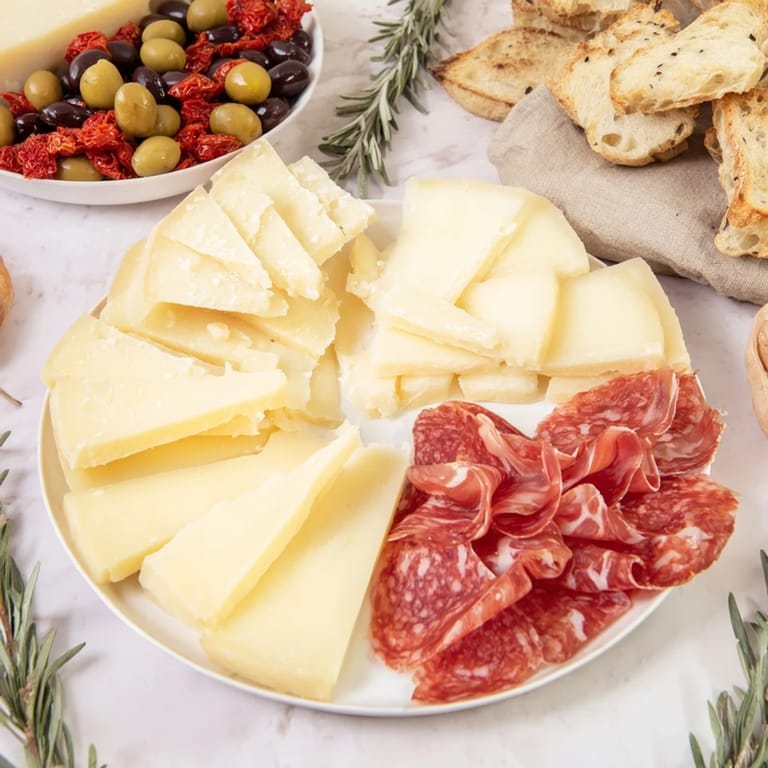
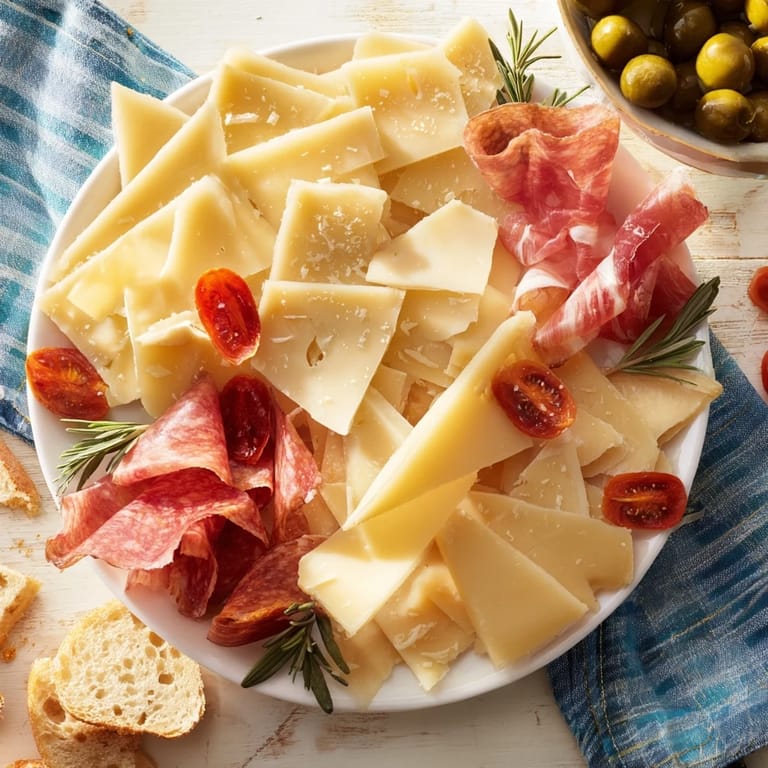
- Start placing your cheese chunks and wedges across the board, leaving space between them. This isn't a puzzle; trust your eye. The Parmigiano's pale gold should anchor one section, the Pecorino's more amber tones another, and the Taleggio's creamy texture somewhere it catches the light. Think about color and shadow as much as flavor.
- Drape in the meats:
- Now comes the fun part. Loosely pile the Prosciutto—let it create waves and folds naturally. Layer the Finocchiana slices in an overlapping pattern, like roof tiles. Fold the Coppa and let it fall where it wants to. These meats should look generous and abundant, never pinched or crowded. You're building texture with your eyes before anyone tastes.
- Scatter the bread:
- Tear your Italian loaf into rough, uneven pieces and nestle them into the gaps. Some pieces will lean against the cheese, some will stand alone. This organic arrangement is what makes the board feel farmhouse-authentic rather than fussy.
- Fill the spaces with brightness:
- Now add your olives, sun-dried tomatoes, artichoke hearts, and fruit in generous piles. Don't distribute them evenly—bunch them together so the board has pockets of color and flavor waiting to be discovered. These aren't afterthoughts; they're essential actors.
- Finish with oil, herbs, and seasoning:
- Drizzle the extra-virgin olive oil over the bread and some of the cheeses—it will pool slightly and glisten in the light. Scatter rosemary sprigs across the top, tucking them between the cheeses and meats. Finally, sprinkle coarse sea salt and cracked black pepper generously where they'll be visible and accessible. This is your final garnish; make it count.
- Step back and breathe:
- Before you serve, take a moment. A good board tells a story of abundance and care. If something feels off, trust that feeling and adjust. Then bring it to the table and watch people's faces light up.
 Save
Save Years later, I was hosting my niece for the first time in my apartment, and I made this board without even thinking about it. She was quiet for a moment when she saw it, and then she looked up at me with this soft smile and said, "This is how you say 'I'm so glad you're here.'" I've never forgotten that. A board is never just food.
The Art of Arrangement
There's a philosophy to building a board that goes beyond the ingredients themselves. The best boards feel both carefully considered and completely effortless. The trick is understanding that rustic doesn't mean careless—it means intentional casualness. When you place your cheeses, think about how the colors and textures speak to each other. The pale, crystalline Parmigiano needs a neighbor in the Pecorino's warmer amber. The Taleggio's soft creaminess looks stunning next to the structured geometry of cheese wedges. And when you drape the meats, remember that Prosciutto is delicate and forgiving, while Coppa is bold and can anchor a section. The bread isn't filler—it's a canvas. Every element should earn its place on the board through both flavor and visual contribution.
Pairing and Serving Wisdom
A Rustic Italian Farmhouse Board isn't meant to be a formal first course. It's meant to be the heart of gathering. Serve it with wines that match its generous spirit—a robust Chianti with its earthy tannins plays beautifully against the salty meats and rich cheese. Sangiovese, if you can find a good one, offers similar depth. The beauty of the board is that it works with almost any wine because there's such variety on the board itself that each sip and each bite find their conversation naturally. As for timing, bring it to the table and let people graze. There's no rush, no order, no expectation. This is food that asks you to slow down.
Variations and Personal Touches
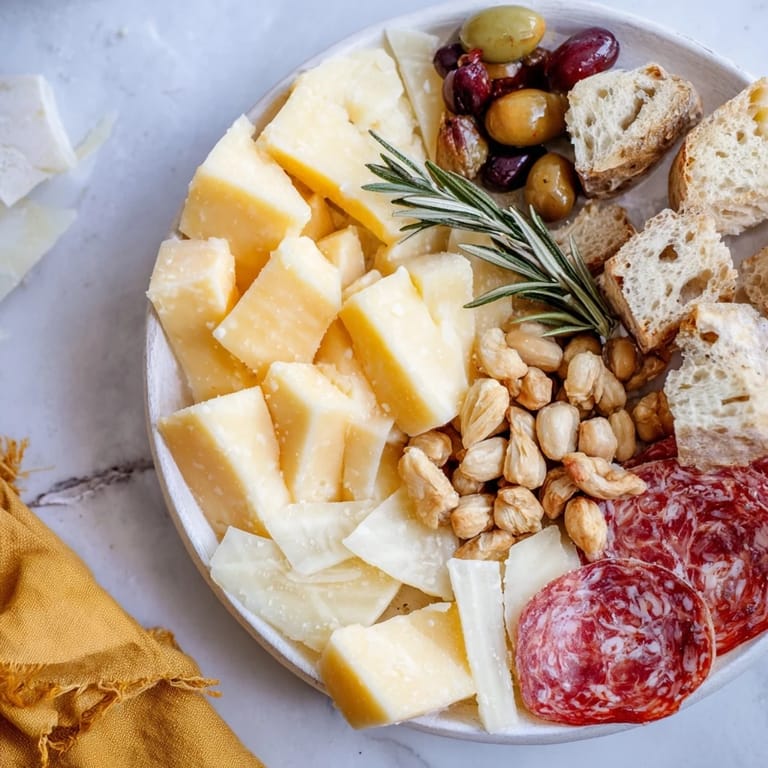
Once you understand the formula, this board becomes a conversation with your pantry and your mood. Missing Taleggio? Fontina brings similar creaminess with a slightly nuttier tone. Want something sharper? A wedge of aged Asiago will cut through the richness beautifully. The cured meats are flexible too—Speck brings a smoky dimension, Guanciale offers pure decadence, and Soppressata adds a peppery kick if Finocchiana isn't available. I've added roasted marcona almonds for crunch, sliced pears for freshness instead of grapes, and even a small bowl of hot honey on the side for drizzling over creamy cheese. Each variation tells a different story, but the heart remains the same: abundance, quality, and the invitation to linger.
- Roasted nuts—marcona almonds, hazelnuts, or walnuts—add a satisfying crunch and earthiness that brings another layer.
- Pickled vegetables like hot peppers, pearl onions, or radishes bring acidity and snap if you want to cut against the richness.
- A small dish of honey or hot honey on the side transforms everything it touches, especially when spooned over creamy Taleggio.
 Save
Save This board is a love letter to Italy and to the people you share it with. Make it with whatever you have, trust your instincts, and know that the best boards are always the ones made with genuine care.
Recipe FAQs
- → What cheeses are used on the board?
Parmigiano-Reggiano, Pecorino Toscano, and Taleggio are featured, each torn or cut into rustic pieces for texture and flavor variety.
- → How should the cured meats be arranged?
Prosciutto and coppa are loosely piled while Finocchiona salami slices are laid in overlapping layers to create an inviting presentation.
- → What breads pair well with this board?
A large rustic Italian loaf, like ciabatta, torn into rough, uneven pieces complements the cheeses and meats perfectly.
- → Which accompaniments balance the flavors?
Castelvetrano olives, sun-dried tomatoes, marinated artichoke hearts, and fresh grapes or figs add bright, savory, and sweet contrast.
- → Can this board be customized?
Absolutely. Cheeses can be swapped for varieties like Gorgonzola or Asiago and extras such as roasted nuts or pickled vegetables can be added for texture.
- → What garnishes enhance the flavors?
Fresh rosemary sprigs, a drizzle of extra-virgin olive oil, and a sprinkle of coarse sea salt and cracked black pepper contribute aromatic and savory notes.