 Save
Save I still remember the first time I assembled a Mediterranean mezza platter for a dinner party—I was nervous about whether I had "enough" food, unsure if people would enjoy such a simple, unbaked spread. But as my guests arrived and began picking at the hummus, tearing into the warm pita, and discovering the creamy baba ganoush hidden beneath a drizzle of golden olive oil, something clicked. This wasn't about cooking in the traditional sense; it was about creating a moment where people could linger, taste, and connect. That evening, I learned that sometimes the most memorable meals aren't the ones that require hours of work, but the ones that celebrate fresh, honest ingredients arranged with care.
The moment I knew this platter had become my signature dish was when my friend Maya came to my kitchen before a summer gathering and said, "Please tell me you're making that mezza thing." She didn't know the name of it, but she knew the feeling—that sense of abundance without pretense, that everything tasted like care.
Ingredients
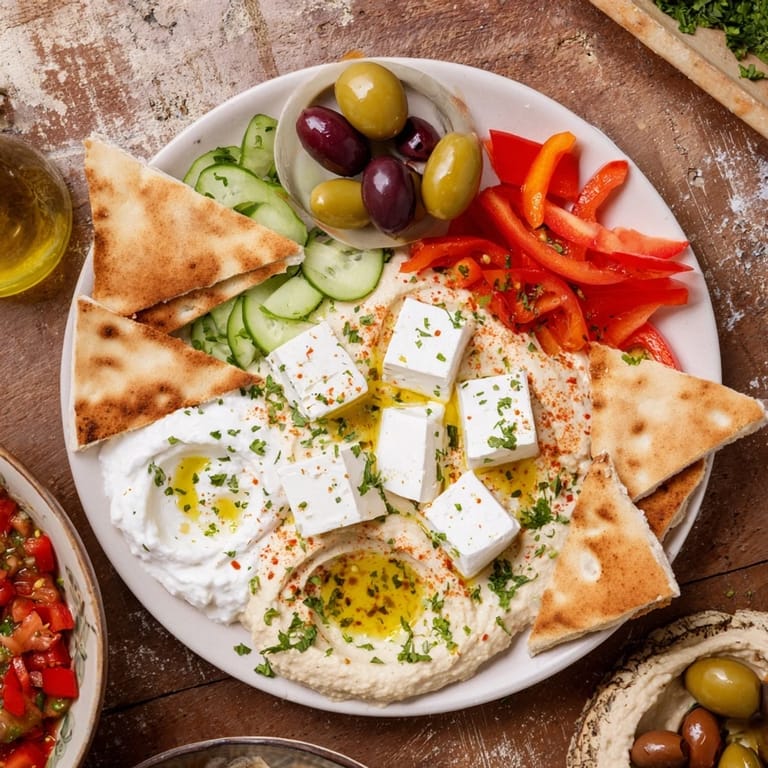
- Classic hummus: The creamy anchor of the platter—it's where people start, so make sure it's good. I learned to taste it before serving and always drizzle a little extra olive oil on top to keep it from drying out
- Baba ganoush: The smoky, earthy counterpoint to hummus. It's the ingredient that makes people pause and ask, "What is this?" You'll be proud to tell them
- Tzatziki: Cool, herbaceous, and essential. It bridges the gap between the rich dips and the fresh vegetables beautifully
- Feta cheese, cut into rustic cubes: Don't slice it thin and precise—rough, uneven cubes look more inviting and taste better because of the irregular edges
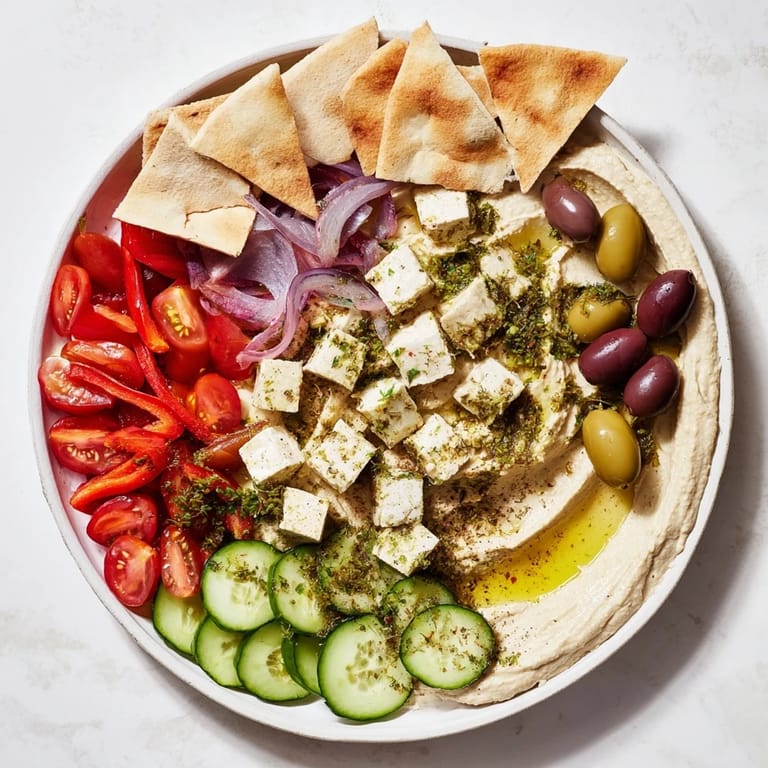
- Cherry tomatoes, halved: Choose the sweetest ones you can find. The halves release a little juice that mingles with the olive oil and salt, creating a natural vinaigrette
- Cucumber, sliced into rounds: Keep the skin on for color and texture. Cut them just before assembling so they stay crisp
- Assorted olives (Kalamata, green, Castelvetrano): The variety of flavors and colors matters here. Each type brings something different to the bite
- Roasted red bell pepper, sliced: If you're buying jarred, that's perfectly fine—it saves time and tastes wonderful. If roasting fresh, let them cool completely before slicing
- Red onion, thinly sliced: I learned to slice these thin and let them sit for a few minutes before adding to the platter; they soften slightly and become less harsh
- Pita breads, cut into triangles: Toast them lightly if you have time—just 2 minutes in a warm oven makes them crispier and more delicious for dipping
- Fresh parsley and mint: Tear these by hand rather than chopping; it keeps them bright and releases their oils more gently
- Extra-virgin olive oil: This isn't hidden; it's a star ingredient. Use something you actually like tasting, something that smells like summer
- Sumac or zaatar: Both are optional but transformative. A light sprinkle adds complexity and a beautiful color contrast
Tired of Takeout? 🥡
Get 10 meals you can make faster than delivery arrives. Seriously.
One email. No spam. Unsubscribe anytime.
Instructions
- Create anchor points with the dips:
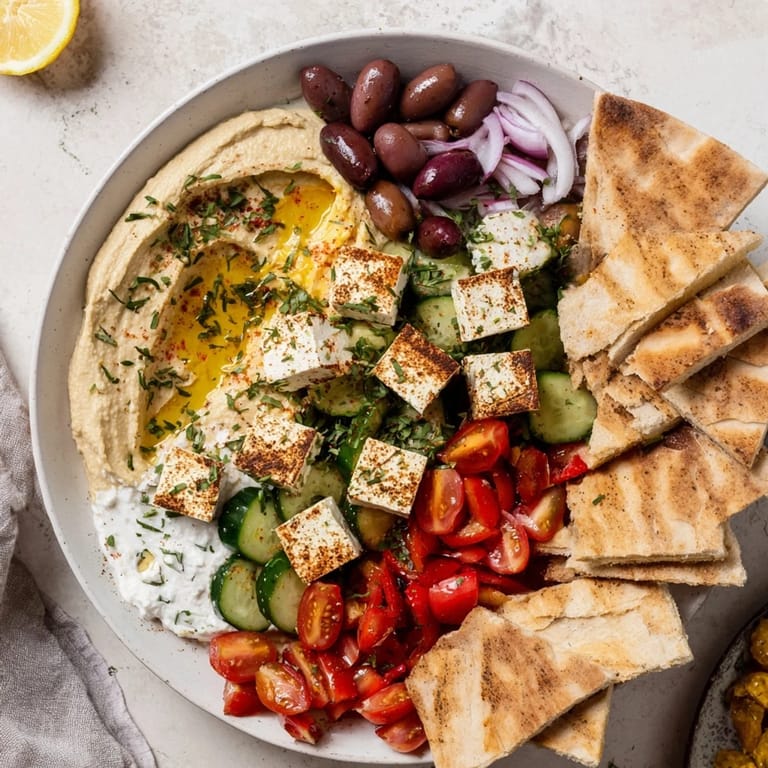
- Start by placing three small mounds of hummus, baba ganoush, and tzatziki around your platter—think of them as the compass points that guide everything else. Use the back of a spoon to create a shallow well in each dip, which gives it elegance and a little pocket for oil
- Build clusters of contrast:
- Arrange the feta cubes in one area, the olives in another, the tomatoes and cucumbers in loose piles. Don't overthink it; organic, natural-looking groupings are more inviting than rigid rows
- Add the roasted pepper and red onion:
- Scatter these between the vegetables and dips. The red onion should weave through the platter, creating threads of color
- Pile the bread thoughtfully:
- Either stack the pita triangles in a neat pyramid off to one side, or fan them around the edge of the platter like petals. This gives guests a clear signal about where to start
- Fill any remaining gaps:
- This is where artichoke hearts, dolmas, and pine nuts come in. Scatter them in small clusters, filling the empty spaces and adding dimension
- Anoint with olive oil:
- Pour that beautiful olive oil generously over the dips and let it cascade slightly onto the cheese and vegetables. This is where the platter becomes luminous
- Season and garnish:
- Tear the mint and parsley over the top, sprinkle sumac or zaatar if using, and finish with sea salt and pepper. Taste a piece of pita with a small spoonful of dip and adjust seasoning if needed
- Serve with joy:
- Bring it to the table while the herbs are still fragrant and the oil is still glistening. Step back for a moment and let people admire it before diving in
 Save
Save Last summer, my eight-year-old nephew came into the kitchen while I was assembling this platter and asked if he could help. I let him place the olives and arrange the cucumber slices, and when his parents arrived, he pointed proudly at "his" section. They asked him what was his favorite part, and he said, "The whole thing," which somehow felt like the highest compliment a dish could receive.
The Art of Assembly
Making a mezza platter taught me something unexpected about cooking: it's as much about negative space as it is about abundance. The empty areas of the platter are just as important as the food, because they give your eye a place to rest and they let each component shine. When I first started making this, I crammed every inch with ingredients, thinking more was better. But a platter with breathing room looks more generous, not less. It invites lingering and exploration rather than grabbing. Now I arrange with intention, leaving subtle gaps that feel natural, almost like the platter is a landscape rather than a puzzle to complete.
Wine Pairings and Timing
I've learned through trial and error what drinks make this platter feel like a celebration. A crisp white wine like Assyrtiko or a light rosé from Provence complements the salty cheese and briny olives beautifully. If you're not serving wine, sparkling water with fresh lemon works wonderfully, and iced ouzo or raki if you want something with a bit more spirit. The timing has become part of my ritual too—I assemble the platter in the 30 minutes before guests arrive, which gives me just enough time to set everything out and light a candle before the doorbell rings. This dish thrives in the transition between the day's work and the evening's ease.
Making It Your Own
One of the beautiful things about a mezza platter is that it's infinitely adaptable. For a vegan gathering, I swap the feta for marinated tofu or cashew cheese, and use hummus and baba ganoush as the protein anchors. For people who want something heartier, I've added grilled halloumi that's still warm, crispy falafel from a good frozen brand, or even some spiced lamb kofta from a local Mediterranean restaurant. I once added whipped labneh instead of tzatziki and scattered pomegranate seeds across the top—everyone asked for that recipe separately. The point isn't to follow this exactly, but to understand the balance: creamy and bright, salty and fresh, soft and crisp. Once you understand that, you can build your own story with it.
- Try adding labneh, whipped feta, or cream cheese as a variation on the dips
- Roast your own vegetables the day before to save time on assembly day
- Keep small bowls on hand for guests who prefer not to double-dip, and set them out without being asked—it's a small gesture that shows thoughtfulness
 Save
Save This platter has become my answer to "what should I bring?" and "how do I host without stress." It's taught me that sometimes the best cooking is about honoring good ingredients and trusting that people will find their own joy in choosing what to eat.
Recipe FAQs
- → What are the main dips included in the platter?
The platter features classic hummus, baba ganoush, and tzatziki, each offering distinct creamy textures and flavors.
- → Can this platter be made gluten-free?
Yes, by substituting pita bread with gluten-free flatbread, the platter suits gluten-free diets without compromising taste.
- → What garnishes enhance the platter’s flavor?
Fresh parsley, torn mint leaves, a drizzle of extra-virgin olive oil, and optional sumac or zaatar provide aromatic and flavorful accents.
- → Are there options to make this platter vegan-friendly?
To adapt for a vegan diet, omit tzatziki and feta or replace them with plant-based alternatives while keeping other ingredients intact.
- → What beverages pair well with this Mediterranean selection?
Light white wines or rosés complement the fresh and savory notes of the platter, enhancing the overall dining experience.