 Save
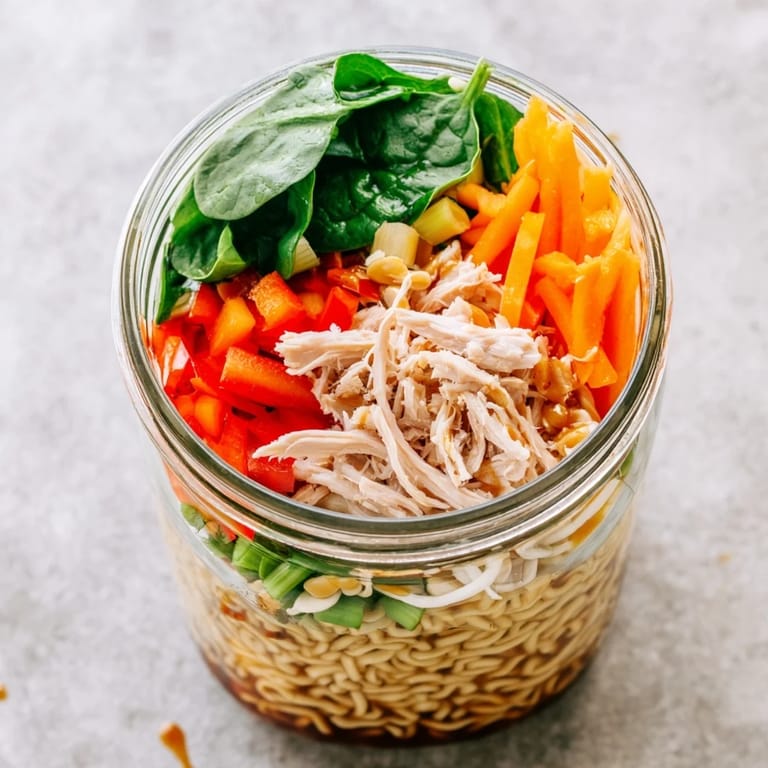
Save Sunday afternoons in my tiny apartment kitchen used to mean cooking for the week ahead. The first time I layered noodles in a jar, I wondered if they'd turn into a soggy mess by lunch on Tuesday. But when I shook that jar at my desk and everything came out perfectly crisp and flavorful, I was hooked. Now my fridge line-up of colorful jars has become a ritual I genuinely look forward to.
My sister called me midweek, exhausted from another expensive lunch run. I handed her one of these jars through her car window, and she texted me two hours later asking for the recipe. Something about eating restaurant-quality food from a simple jar makes the whole workday feel less overwhelming.
Ingredients
- 200 g dried ramen or rice noodles: These absorb the sauce beautifully while keeping their texture—rice noodles stay firm longer than wheat
- 200 g cooked chicken breast, tofu, or cooked shrimp: Already cooked protein means no microwave explosion at work, plus it stays tender in the acidic sauce
- 1 cup shredded carrots: These sweet crunch powerhouses never get soggy and add incredible color to every layer
- 1 cup thinly sliced bell peppers: Red or yellow peppers bring sweetness and stay crisp for days, unlike softer vegetables
- 1 cup baby spinach or kale: These sturdy greens won't wilt as quickly as delicate lettuce, holding up beautifully until mealtime
- 1/2 cup thinly sliced scallions: Their mild onion flavor permeates the whole jar as it sits, making everything taste better
- 1/2 cup bean sprouts: These maintain their incredible crunch even after days in the fridge, adding fresh texture to every bite
- 4 tbsp soy sauce: Use tamari if you need gluten-free—this provides the deep salty umami base that ties everything together
- 2 tbsp rice vinegar: Adds brightness and helps preserve the vegetables while keeping flavors fresh and lively
- 2 tbsp sesame oil: This aromatic oil is non-negotiable for that authentic Asian flavor we all crave
- 1 tbsp honey or maple syrup: Balances the salty and acidic elements while helping the sauce cling to the noodles
- 2 tsp Sriracha or chili sauce: Optional but recommended—builds a gentle heat that develops as the jar sits
- 1 clove garlic, minced: Fresh garlic mellows beautifully over time, infusing the whole jar without being harsh
- 1 tsp fresh ginger, grated: This adds a warm zesty note that cuts through the rich elements and wakes up your palate
- 2 tbsp chopped cilantro: Add these right before serving for fresh herbal brightness that transforms the whole dish
- 2 tbsp roasted peanuts or cashews: The crunch factor—these make each bite interesting and satisfying in a way soft toppings never can
- 1 tbsp sesame seeds: Tiny but mighty, these add nuttiness and make everything look restaurant-worthy
- Lime wedges: A final squeeze of acid right before eating brings all the flavors into sharp, delicious focus
Tired of Takeout? 🥡
Get 10 meals you can make faster than delivery arrives. Seriously.
One email. No spam. Unsubscribe anytime.
Instructions
- Cook your noodles perfectly:
- Boil according to package directions, then immediately rinse under cold water to stop cooking. Drain thoroughly so they don't get waterlogged in the jar.
- Whisk together your sauce:
- Combine soy sauce, rice vinegar, sesame oil, honey, Sriracha, garlic, and ginger until smooth. Taste and adjust heat or sweetness now—it's harder later.
- Start with the sauce foundation:
- Pour about 1 tablespoon of sauce into the bottom of each mason jar. This goes in first so it can marinate everything from the bottom up.
- Layer protein first:
- Add your diced chicken, tofu, or shrimp directly on top of the sauce. These heavy ingredients stay put at the bottom where they can soak up all that flavor.
- Build the vegetable layers:
- Add carrots, peppers, spinach, scallions, and bean sprouts in that order. Pack them gently but firmly to minimize air pockets.
- Finish with noodles on top:
- The cooked noodles go last so they stay dry until you're ready to eat. This prevents them from getting mushy or absorbing too much sauce.
- Seal and store properly:
- Tighten those lids and refrigerate immediately. These beauties stay fresh for up to four days, though mine rarely last past day two.
- Transform into your meal:
- When hunger strikes, pour in about 1/2 cup hot water and let it work its magic for 2-3 minutes. Shake well and eat straight from the jar.
 Save
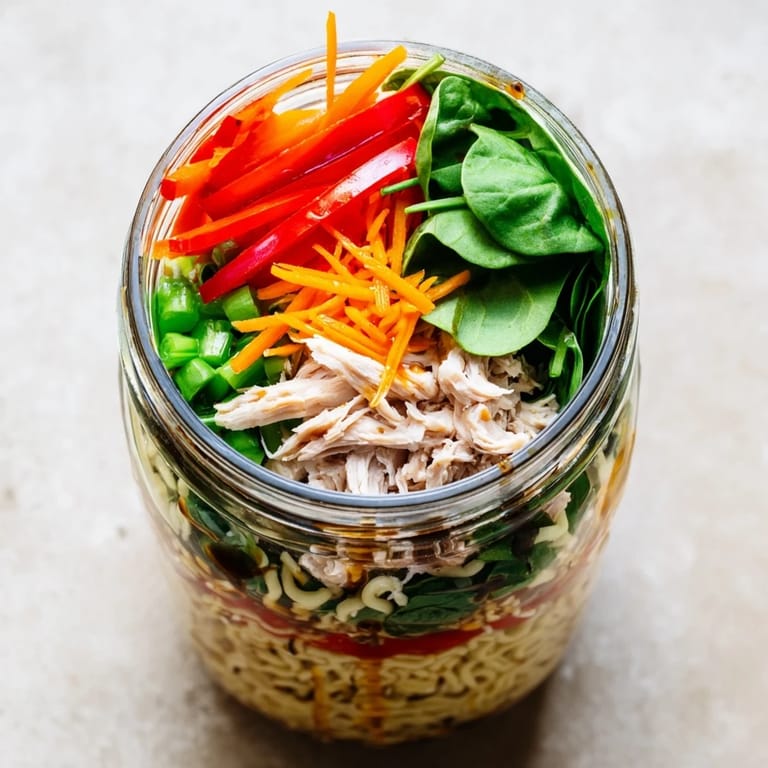
Save Last week my coworker asked why I was smiling at my desk. I'd just taken my first bite after the water had done its work, and honestly, it tasted better than the ramen place down the street. Now she's hooked too, and we compare jar combinations every Monday morning like it's the most normal thing in the world.
Make It Your Own
I've tried spiralized zucchini when I wanted something lighter, and shirataki noodles when I was watching carbs. Both worked surprisingly well, though I always come back to regular noodles for that comfort food satisfaction. The best part is discovering what you actually prefer through experimentation.
Timing Is Everything
Monday's jar tastes different from Thursday's, and that's not a bad thing. The flavors develop and meld over time, creating something deeper and more complex. Some days I prefer the fresh, bright taste of day one, other days I love how everything has marinated into something entirely new.
Jar Selection And Storage
Wide-mouth jars make assembly and eating so much easier. I learned this the hard way after spending twenty minutes fishing noodles out of a regular-mouth jar. Also, let your jars cool completely before refrigerating to avoid condensation that could make things soggy.
- Invest in good quality jars with tight-sealing lids
- Label with the date so you know which jar to eat first
- Keep jars upright at all times—once I learned this the hard way on a bumpy bus ride
 Save
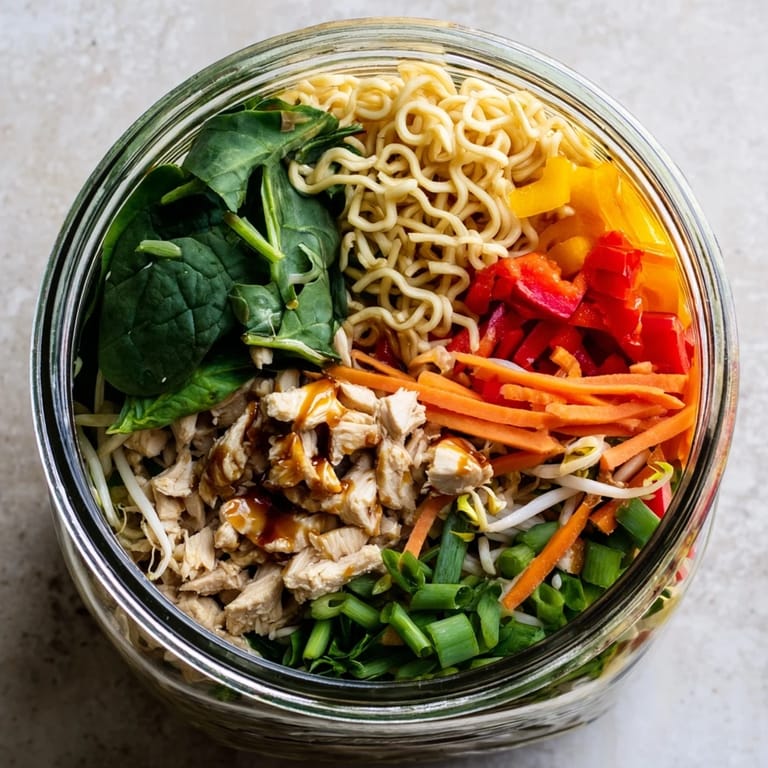
Save There's something deeply satisfying about opening the fridge to see those colorful jars lined up, ready for whatever the week throws at you. Good food shouldn't be complicated, and neither should taking care of yourself.
Recipe FAQs
- → How long do mason jar noodles keep in the refrigerator?
These layered noodle jars stay fresh for up to 4 days when stored properly in the refrigerator. Keep the jars tightly sealed and maintain the recommended layering order with sauce at the bottom and noodles on top to prevent sogginess.
- → Can I make these noodle jars vegetarian or vegan?
Absolutely. Substitute tofu for the chicken or shrimp, and use maple syrup instead of honey in the sauce. Ensure your noodles are egg-free and choose tamari instead of regular soy sauce if needed for a completely plant-based version.
- → What's the correct order for layering ingredients?
Start with sauce at the bottom, followed by protein, then firm vegetables like carrots and bell peppers, leafy greens like spinach, and finish with noodles on top. This order prevents the noodles from becoming soggy and keeps everything crisp until you're ready to eat.
- → Do I need to heat these before eating?
Not necessarily. You can eat them cold, but adding about 1/2 cup of hot water and letting it sit for 2-3 minutes warms the noodles and creates a more traditional soup-like consistency. Alternatively, transfer contents to a bowl and microwave briefly.
- → Can I use different types of noodles?
Yes, ramen, rice noodles, soba, or even spiralized vegetables work well. For lower carb options, try shirataki noodles or zucchini noodles. Just adjust cooking time according to package instructions and rinse thoroughly with cold water to stop the cooking process.
- → How do I prevent the vegetables from getting soggy?
The key is proper layering with moisture-resistant vegetables like carrots and bell peppers closer to the sauce, and delicate greens like spinach near the top. The noodles should always be the final layer. Keep jars upright and sealed until ready to eat.