 Save
Save There's something about spring that makes me want to throw everything colorful onto a sheet pan and let the oven do the heavy lifting. One Tuesday evening, I'd grabbed whatever vegetables looked fresh at the market—asparagus, snap peas, cherry tomatoes—and paired them with chicken breasts I'd had thawing all day. What started as a simple dinner turned into something so bright and clean-tasting that my partner asked for it again the very next week. Now it's become my go-to when I want something that tastes like I've actually cooked, but feels effortless enough to make on a worknight.
I made this for my sister's family on a Saturday in May when everyone was tired of takeout but nobody wanted to spend hours cooking. Their seven-year-old, who usually picks vegetables off her plate with the concentration of a surgeon, actually asked for seconds of the asparagus. That moment—when picky eating suddenly stops being a battle—that's when I knew this recipe had staying power.
Ingredients
- Boneless, skinless chicken breasts (4 breasts, about 1.5 lbs): The leanest option, though thighs work beautifully if you prefer juicier meat and don't mind slightly higher fat content.
- Asparagus: Trimmed and cut into 2-inch pieces; the tender tips get crispy at the edges, which is the best part.
- Cherry tomatoes (1 cup, halved): They burst slightly during roasting and create little pools of sweet, tangy juice.
- Sugar snap peas (1 cup): These stay slightly snappy rather than soft, adding textural contrast that keeps each bite interesting.
- Baby carrots (1 cup, halved lengthwise): The flat cut helps them cook faster and caramelize on the cut side.
- Red onion (1 small, sliced into wedges): The sharpness mellows as it roasts, becoming almost jammy.
- Yellow bell pepper: Any color works, but yellow or orange adds visual warmth and subtle sweetness.
- Olive oil (3 tbsp): This is your emulsion base; don't skimp on decent quality here because you'll taste it.
- Fresh lemon juice (2 tbsp): Use fresh, never bottled; the difference is something your palate will notice immediately.
- Garlic cloves (2, minced): Mince them small so they infuse the marinade without overpowering it.
- Dijon mustard (1 tsp): This acts as an emulsifier and adds subtle tang that rounds out the flavors.
- Honey (1 tsp): Just enough to balance the acid and help the marinade cling to everything.
- Dried oregano (1 tsp): Oregano and lemon are a classic pairing; if you have fresh, use three times the amount.
- Dried thyme (½ tsp): Earthy and understated, it lets the lemon shine without competing.
- Salt and black pepper (½ tsp salt, ¼ tsp pepper): Season generously; the vegetables absorb more salt than you'd expect.
- Fresh parsley (2 tbsp, chopped): A finishing touch that adds brightness and a pop of color.
Tired of Takeout? 🥡
Get 10 meals you can make faster than delivery arrives. Seriously.
One email. No spam. Unsubscribe anytime.
Instructions
- Heat your oven and prep the pan:
- Preheat to 425°F and line a large sheet pan with parchment paper; this isn't just for easier cleanup but also ensures even heat distribution and prevents sticking. If you don't have parchment, a light coating of oil works fine.
- Build your marinade:
- Whisk together the olive oil, lemon juice, minced garlic, Dijon mustard, honey, oregano, thyme, salt, and pepper in a small bowl until the honey dissolves and everything looks emulsified. This only takes about a minute, and you'll know it's ready when it smells bright and herbaceous.
- Coat the chicken:
- Arrange the chicken breasts on your prepared sheet pan and brush both sides generously with half the marinade. Don't be shy here; let the marinade pool slightly underneath the chicken so it creates a little flavor bath as it roasts.
- Dress the vegetables:
- Toss all your vegetables in a large bowl with the remaining marinade until every piece glistens and is coated evenly. This step ensures that nothing roasts dry and everything picks up those herbal, lemony notes.
- Arrange on the pan:
- Scatter the vegetables around the chicken in as close to a single layer as you can manage, leaving a tiny bit of breathing room between pieces. The vegetables need direct heat contact to caramelize properly rather than steam.
- Roast until golden:
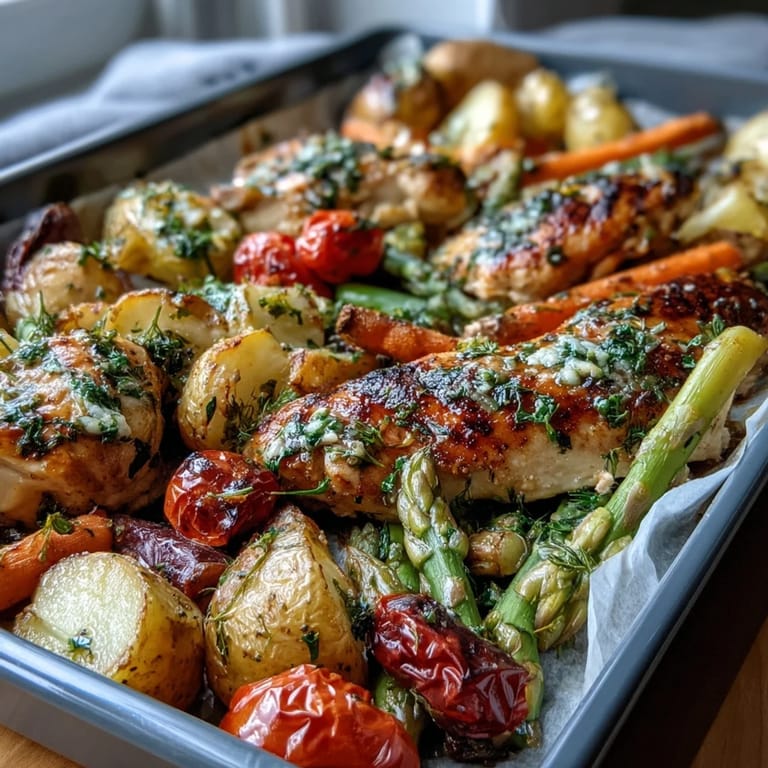
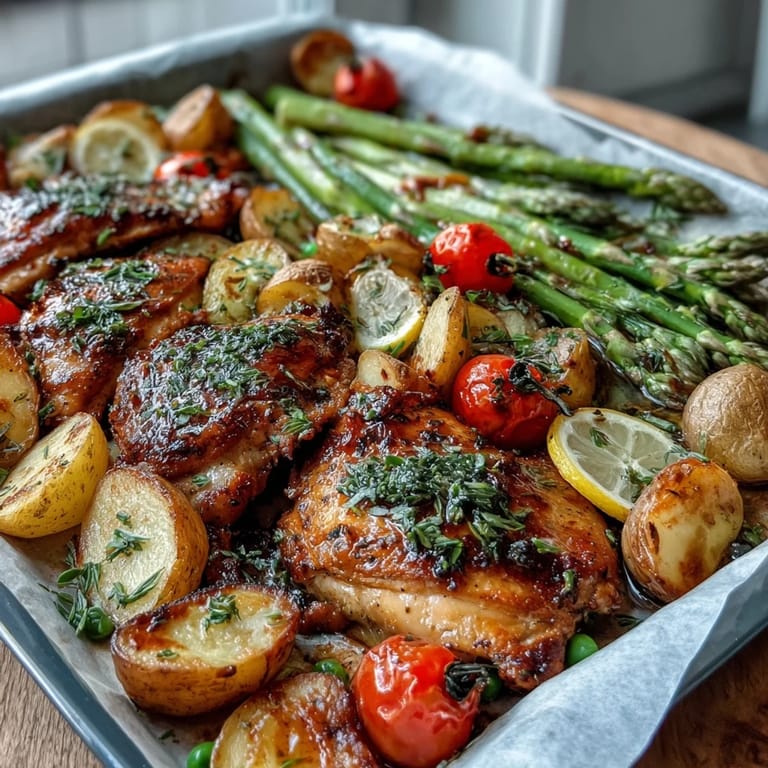
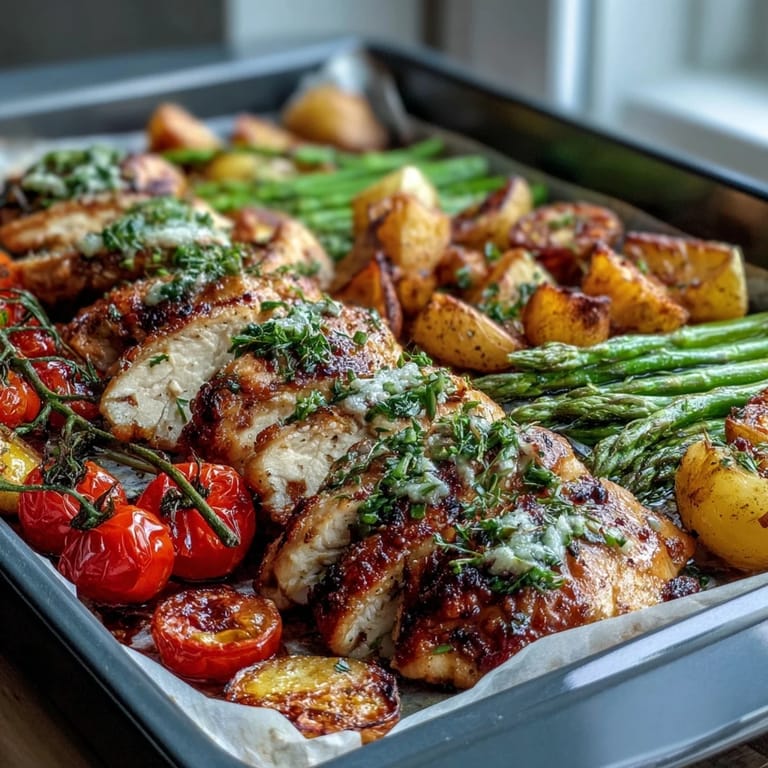
- Slide everything into the oven for 25 to 30 minutes, keeping an eye out for the chicken to reach an internal temperature of 165°F at its thickest point. The vegetables should be tender with slightly charred edges, looking almost jewel-like when you pull the pan out.
- Rest and garnish:
- Let the chicken rest for five minutes before slicing; this keeps the juices locked inside rather than spilling onto the plate. Scatter fresh parsley over everything and serve with lemon wedges so people can adjust the brightness to their preference.
 Save
Save What strikes me most about this dish is how it transformed the way I think about sheet pan cooking. I used to view it as purely convenient, something to reach for when I was too tired for real cooking, but this recipe proved that convenience and deliciousness aren't mutually exclusive.
Why This Becomes a Weeknight Staple
The beauty of this meal is that it collapses the gap between "I'm too tired to cook" and "I want something special." You spend maybe fifteen minutes prepping, then the oven becomes your cooking partner while you pour a drink, set the table, or catch up on the day. By the time everything is roasted, you've created a meal that looks intentional and tastes sophisticated, but you've barely broken a sweat.
Adaptations I've Loved
This recipe's flexibility is part of why I keep making it. In summer, I swap asparagus for zucchini rounds and add fresh basil instead of parsley. When I'm feeling indulgent, I crumble feta cheese over everything just before serving—the salty tang against the bright lemon is almost unreasonable. I've even experimented with swapping the Dijon for whole grain mustard when I want more texture and earthiness.
Serving and Pairing Ideas
This sheet pan dinner stands confidently on its own, but it also plays well with others. I usually serve it as-is, but sometimes I'll add a grain on the side—quinoa or wild rice soaks up the pan juices beautifully. For wine, a crisp Sauvignon Blanc or light rosé cuts through the richness of the olive oil and echoes the brightness of the lemon. If you want something non-alcoholic, sparkling water with fresh lemon is just as refreshing.
- Leftovers keep for three days in the fridge and taste even better as the flavors meld together.
- This dish travels well for lunches—the flavors don't fade when it's cold or at room temperature.
- If you're cooking for one or two, the recipe halves easily without losing any of its magic.
 Save
Save This recipe has become my answer to the question I ask myself almost every evening: what can I make that feels good to eat and doesn't feel like a chore to cook? It's the kind of dish that reminds you why you love cooking in the first place.
Recipe FAQs
- → Can I use chicken thighs instead of breasts?
Yes, boneless skinless chicken thighs can be used as a substitute. Adjust cooking time as needed for optimal doneness.
- → What vegetables pair well with this sheet pan dinner?
Spring vegetables like asparagus, cherry tomatoes, sugar snap peas, carrots, red onion, and bell peppers complement the chicken perfectly.
- → How do I know when the chicken is cooked through?
Chicken is done when its internal temperature reaches 165°F (74°C) and juices run clear.
- → Can I prepare this dish ahead of time?
You can marinate the chicken and vegetables a few hours before roasting to enhance flavor, but roast just before serving.
- → Are there suggested pairings for this dish?
A crisp Sauvignon Blanc or a light rosé wine pairs wonderfully with the fresh flavors of the chicken and vegetables.