 Save
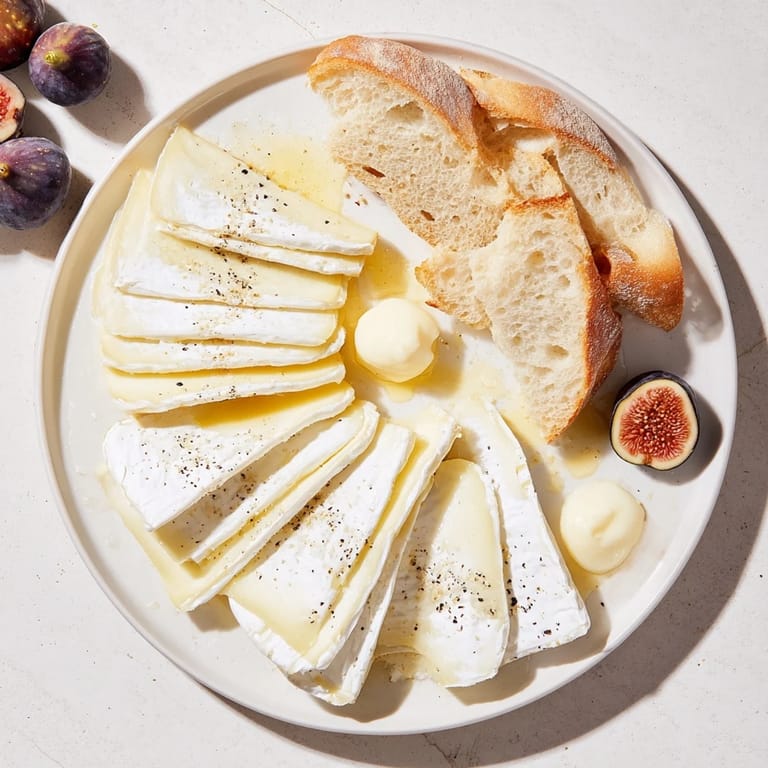
Save I discovered the magic of a proper French cheese board during a rainy afternoon in a small Parisian bistro near the Seine. The waiter arrived with a simple wooden platter—nothing fussy, just perfectly sliced baguettes, three distinct cheeses fanned with such care they looked like edible art, and a few glistening figs. That moment changed how I thought about entertaining. No elaborate cooking required, just intention, quality ingredients, and the confidence to let them speak for themselves.
I remember preparing this board for my sister's book club, worried it seemed too simple. But watching everyone lean in, breaking off pieces of warm baguette, spreading a touch of mustard on a slice of Brie, then adding a fig—suddenly there was conversation, laughter, and that unhurried ease that only happens when people feel genuinely welcomed. That platter taught me that restraint is a form of generosity.
Ingredients
- 2 long fresh French baguettes: Quality matters here—look for a baguette with a crisp crust and an open crumb structure. It should have a gentle give when you press it lightly. Cut them diagonally into thin, even slices about quarter-inch thick; this isn't just prettier, it actually makes them more pleasant to eat
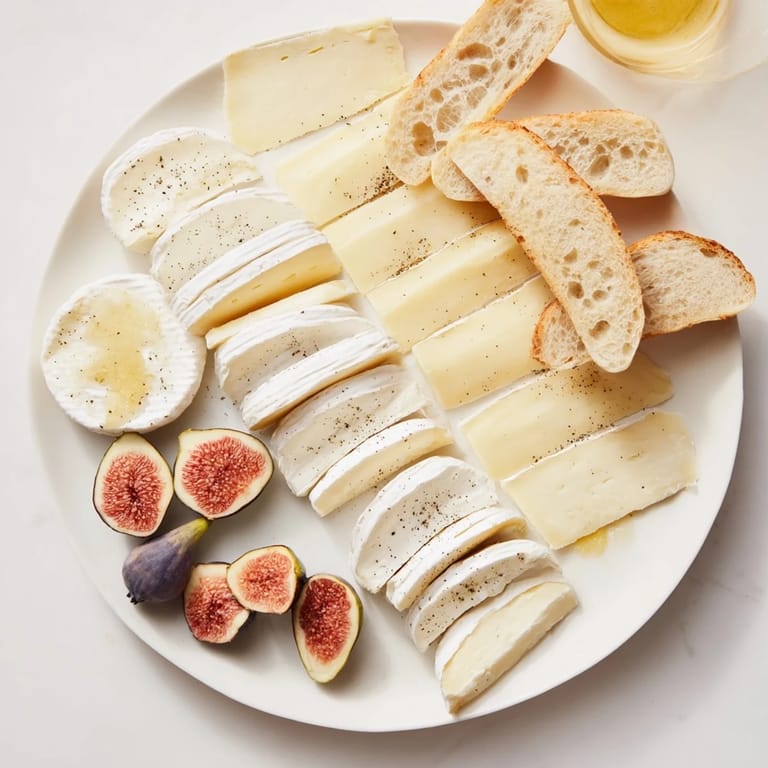
- 150 g Brie cheese, sliced and fanned: Let it sit at room temperature for twenty minutes before slicing so it cuts cleanly without tearing. The slight softness is part of its charm
- 150 g Comté cheese, sliced and fanned: This is the workhorse cheese—nutty, firm enough to slice beautifully, sophisticated without being pretentious. Keep it separate from the Brie for visual drama
- 100 g Chèvre (goat cheese), sliced: The bright, tangy presence that makes people stop and say "oh, that's interesting." A little goes a long way
- 12 fresh figs or grapes: Figs are ideal—their soft sweetness against creamy cheese is a revelation. Choose figs that are just ripe, yielding slightly to pressure but not falling apart
- 50 g unsalted butter, softened: Use the best butter you can find; people taste the difference immediately. Softened means it spreads like a dream onto warm bread
- 2 tbsp high-quality honey: This is your accent note. Drizzle it over Brie and it becomes something transcendent. Raw or lightly heated honey has more character
- 1 tbsp whole grain Dijon mustard: Those little seeds are flavor bombs. Whole grain is crucial—it's less sharp than smooth mustard and more visually interesting
- Flaky sea salt and freshly ground black pepper, to taste: Don't skip the freshly ground pepper. Pre-ground has lost its volatile oils; fresh pepper tastes like someone actually cares
Tired of Takeout? 🥡
Get 10 meals you can make faster than delivery arrives. Seriously.
One email. No spam. Unsubscribe anytime.
Instructions
- Slice Your Baguettes with Intention:
- Using a sharp bread knife, cut the baguettes diagonally into thin, even pieces—about a quarter inch thick. The diagonal cut gives more surface area and looks deliberate. Arrange them along the edge of your large platter, leaving space between slices so the arrangement feels curated, not crowded. This breathing room is what makes it feel intentional rather than desperate to fill space
- Fan Your Cheeses Like You Mean It:
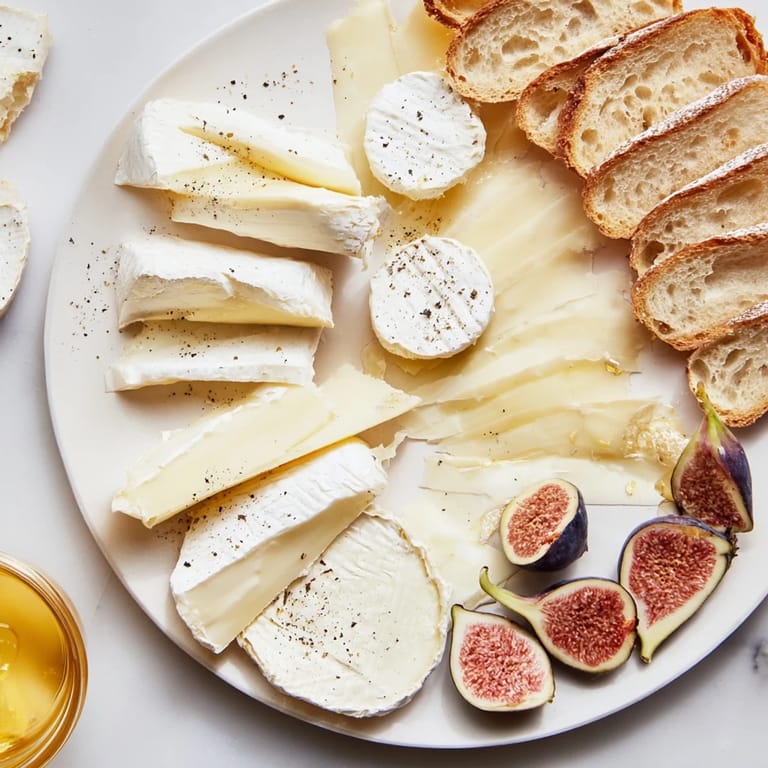
- Start with the Brie: slice it into quarter-inch pieces and overlap them in a gentle arc, each slice slightly offset from the last. The overlap should feel like the cheeses are leaning into each other. Do the same with the Comté in its own section, keeping varieties visually separate. For the goat cheese, slice it into rounds or leave it in small wedges. Step back and look—you want defined sections with breathing room between them
- Nestle the Sweet Elements:
- Arrange your figs or grapes in small clusters, perhaps two or three together, positioned to echo the curves of the cheese. Let them sit in the open spaces like they belong there. Figs especially look beautiful when you leave some whole and halve others, showing off their pink interiors
- Position Your Condiments with Care:
- Place small ramekins of softened butter, honey, and mustard on the platter, or create artful small dollops directly on the surface if you prefer a more minimalist look. The honey especially should catch the light. If you're confident, you can drizzle a small amount directly on the Brie section
- Season Lightly and Serve with Confidence:
- Sprinkle a touch of flaky sea salt across the cheeses—not everywhere, but in strategic places. A few grinds of fresh pepper adds sophistication. Taste a small piece yourself first if you're nervous, then set it before your guests and step back. Encourage them to build their own bites; half the joy is the choice
 Save
Save I learned this lesson when a friend mentioned, almost offhand, that my cheese board changed how she thought about hosting. She said it showed her that you could be generous and elegant without stressing yourself into exhaustion. That comment mattered more to me than any compliment about the food itself. The board became a symbol of giving people your best without giving yourself an ulcer.
The Art of the Cheese Board
A great cheese board tells a story without saying a word. The story here is one of confidence—confidence in quality ingredients and the power of simplicity. In French bistro culture, there's no apology for a charcuterie board or cheese platter. It's not a starter in the sense of "we're rushing through this"; it's a destination, a moment to pause and appreciate. When you arrange a board like this, you're inviting people into that same mindset. You're saying: let's slow down, let's taste things carefully, let's enjoy each other's company without distraction.
Building the Perfect Bite
This is where guests truly understand what you've created. Encourage them to experiment with combinations. Brie with fig and honey. Comté with mustard. Goat cheese on warm baguette alone. The beauty is that everyone's perfect bite is different, and that's the entire point. Some people will want butter on their bread first; others won't. Some will prefer the cheese barely warmed by the bread, others will pile it high. There are no rules because you're not in a restaurant—you're in someone's home, and that's infinitely more valuable.
The Pairing Question
Serve this alongside something that honors its refinement. A chilled glass of Sancerre with its crisp minerality is traditional for good reason, or Champagne if you want to feel celebratory. Even a light, fruity wine works beautifully. If you're not serving alcohol, a sparkling water with a twist of lemon is honest and elegant. The accompaniment matters less than the intention behind it.
- Pour wine while the cheese is still being arranged; let people sip while they build their bites, creating a natural rhythm to the meal
- If figs are out of season, ripe pears or sliced apples work with Brie almost as well—the sweetness and slight tartness are what matter
- A few fresh herb sprigs (thyme or rosemary) laid across the board add color and a whisper of fragrance without being showy
 Save
Save This board is proof that sometimes the most sophisticated thing you can offer is your time spent choosing good ingredients and arranging them with care. It's French elegance distilled into its essence: quality, restraint, and the confidence to let simplicity shine.