 Save
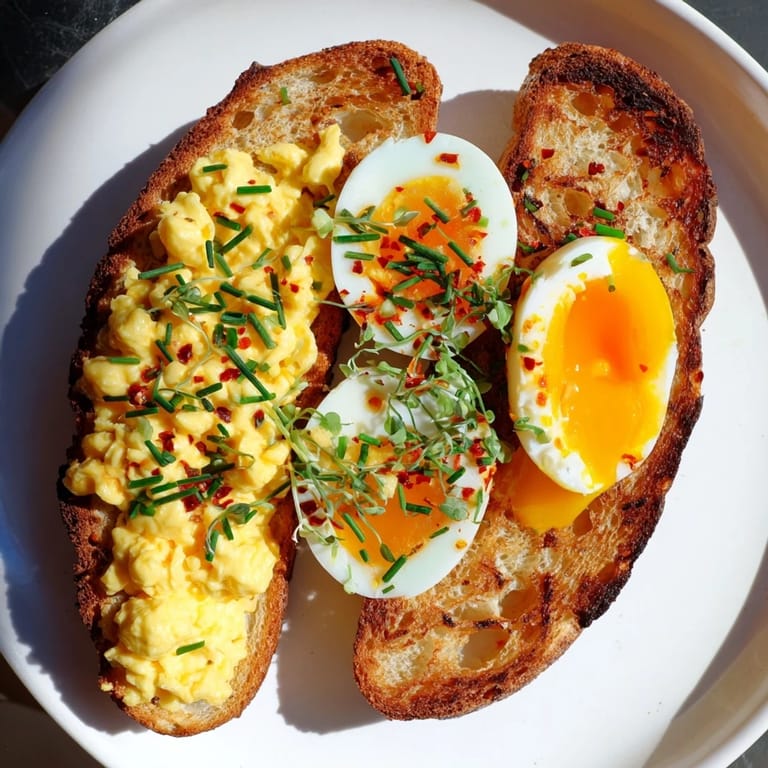
Save There's something almost meditative about the moment you crack three eggs into different pans, each one destined for its own technique. I stumbled onto this egg flight idea on a lazy Sunday when I had time to actually pay attention to what I was cooking instead of rushing out the door. The beauty of it is that you're not making three separate dishes—you're creating a conversation between different textures and temperatures on a single slice of toast, each bite shifting the experience entirely.
I made this for a friend who claimed eggs bored them, and watching their face shift from skepticism to genuine delight was worth every pan I had to wash. They kept asking why the scrambled part felt different from the runny part, and I realized that's exactly the point—this dish celebrates what makes each egg preparation special instead of settling for just one.
Ingredients
- Sourdough or country-style bread: Use a thick slice because thin bread will collapse under the weight of three egg preparations; the tang of sourdough cuts through the richness beautifully.
- Large eggs: Three separate eggs let you showcase scrambled, soft-boiled, and fried techniques simultaneously; room temperature eggs cook more evenly than cold ones.
- Unsalted butter: You're using it in two different pans, and the gentle flavor lets the eggs shine instead of competing with them.
- Olive oil: Just a teaspoon for the fried egg creates better browning on the whites while keeping the yolk tender.
- Salt and freshly ground black pepper: Season each egg preparation as it cooks rather than all at once at the end, so flavors develop properly.
- Chives, chili flakes, microgreens: These aren't mandatory, but they add visual life and little flavor pops that make the dish feel intentional.
Tired of Takeout? 🥡
Get 10 meals you can make faster than delivery arrives. Seriously.
One email. No spam. Unsubscribe anytime.
Instructions
- Toast the bread:
- Heat your oven to 350°F and toast a thick slice of bread on a baking sheet for 5–7 minutes until the exterior is golden and crispy but the inside still has some give. This is your foundation, so don't skip it.
- Soft-boil the first egg:
- Bring water to a boil in a small pot, gently lower in your first egg, and set a timer for 6½ minutes—this is the sweet spot for a jammy yolk that oozes slightly. Transfer immediately to ice water, then peel and halve it.
- Scramble the second egg:
- Heat half a tablespoon of butter in a nonstick skillet over medium-low heat, whisk your second egg with salt and pepper, then pour it in and stir gently with a spatula until it's just set but still creamy. The low heat is key here—scrambling fast over high heat turns eggs tough.
- Fry the third egg:
- Wipe out your skillet, add the remaining butter and olive oil, and crack in your final egg over medium heat. Let the whites set for 2–3 minutes while the yolk stays liquid, then season it.
- Assemble and serve:
- Place your toasted bread on a plate and divide it into thirds lengthwise, arranging each egg preparation on its own section so the flavors and textures stay distinct. Scatter your garnishes across the top and eat it warm.
 Save
Save The first time I nailed the timing on all three eggs simultaneously, I felt an odd sense of accomplishment that seemed silly for a breakfast dish—until I realized it wasn't about the technical skill, it was about creating something deliberate and thoughtful for myself on a random Tuesday morning. That's when food stops being fuel and becomes a small act of care.
The Egg Flight Philosophy
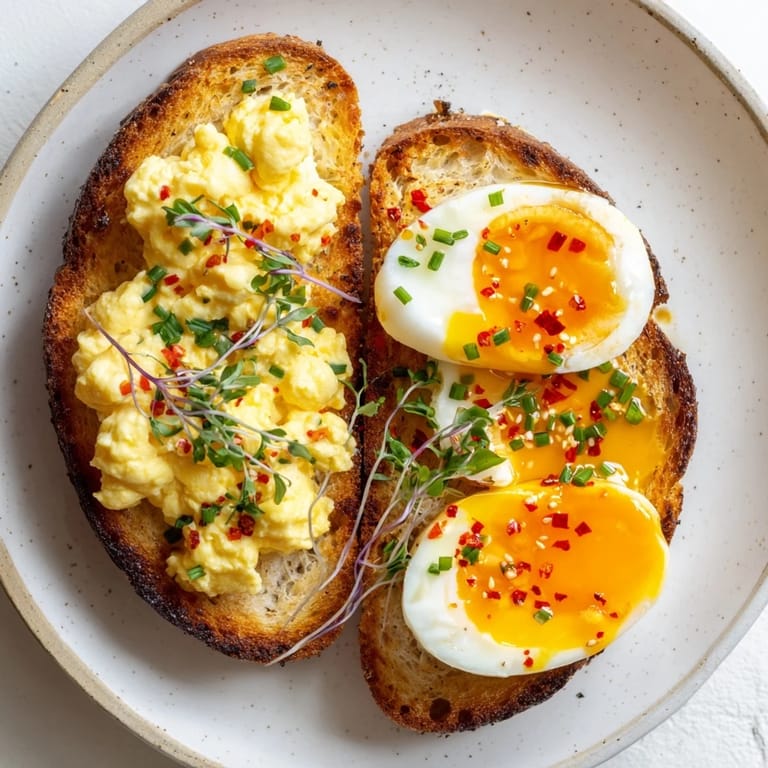
This dish works because it honors every possible way you might want to eat an egg rather than forcing you to choose. The scrambled portion gives you comfort and familiarity, the soft-boiled adds elegance and a hint of surprise with that runny center, and the fried egg brings drama with its crispy edges and bright yolk. Together on one slice of toast, they tell a complete story instead of three incomplete ones.
Timing and Temperature Management
The secret to nailing this dish is accepting that you can't cook everything at the same speed or heat level. Start your soft-boiled egg first since it takes the longest, toast your bread while the egg cooks, and time the scrambled and fried eggs so they're both done within seconds of each other. It sounds complicated but it's actually less chaotic than trying to do everything at once.
Variations and Flavor Builds
Once you master the basic three-egg approach, you can layer in extras that shift the entire experience. Smoked salmon underneath adds smokiness, avocado slices bring creaminess that softens the richness of three yolks, and sautéed spinach adds earthiness that grounds the whole thing. The toast can be gluten-free or whole grain, regular butter can be swapped for ghee, and the garnish layer is really where you make it yours.
- Add a small handful of wilted greens or fresh herbs between the toast and eggs for an extra texture layer.
- A drizzle of hot sauce or truffle oil on top transforms the flavor profile entirely without changing the technique.
- Make it a meal by serving with fresh fruit and coffee, treating breakfast like it deserves proper time and attention.
 Save
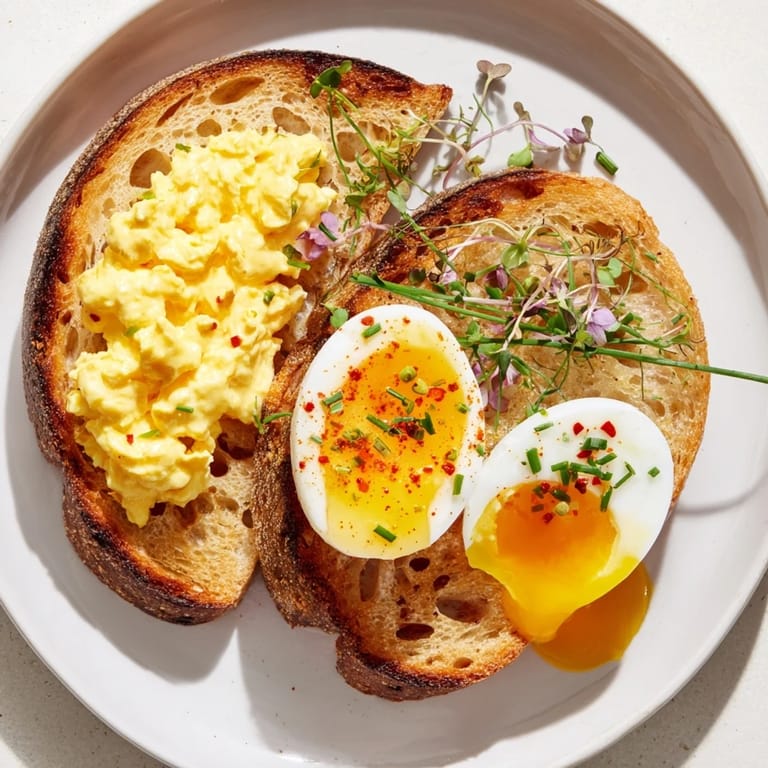
Save This recipe is proof that breakfast doesn't need to be complicated to feel special. Make this when you want to taste all the different ways eggs can be, on the same plate, in the same sitting.
Recipe FAQs
- → How do you achieve the perfect soft-boiled egg?
Boil water, gently lower the egg in, and cook for exactly 6½ minutes. Immediately transfer to ice water to stop cooking and make peeling easier.
- → What is the best bread choice for this toast?
Sourdough or country-style bread works best due to their sturdy texture and flavor that complements the eggs.
- → Can I prepare the eggs ahead of time?
Soft-boiled eggs can be made earlier and cooled, but scrambled and fried eggs are best prepared fresh for optimal texture.
- → What garnishes enhance the dish?
Chopped fresh chives, chili flakes, and microgreens add both color and subtle layers of flavor.
- → Are there alternatives for dairy or gluten sensitivities?
Use gluten-free bread and substitute butter with plant-based oils or margarine to accommodate dietary needs.