 Save
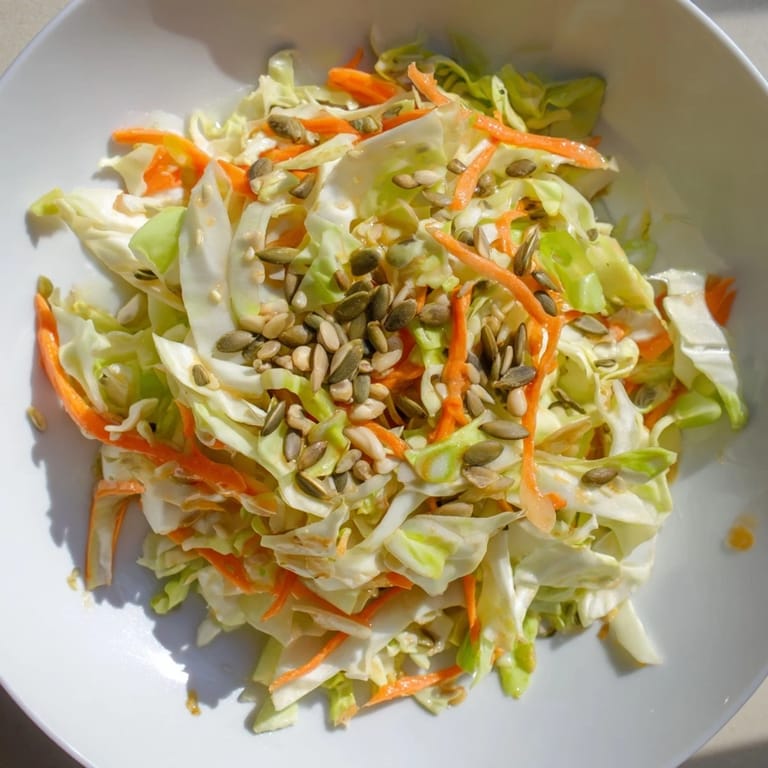
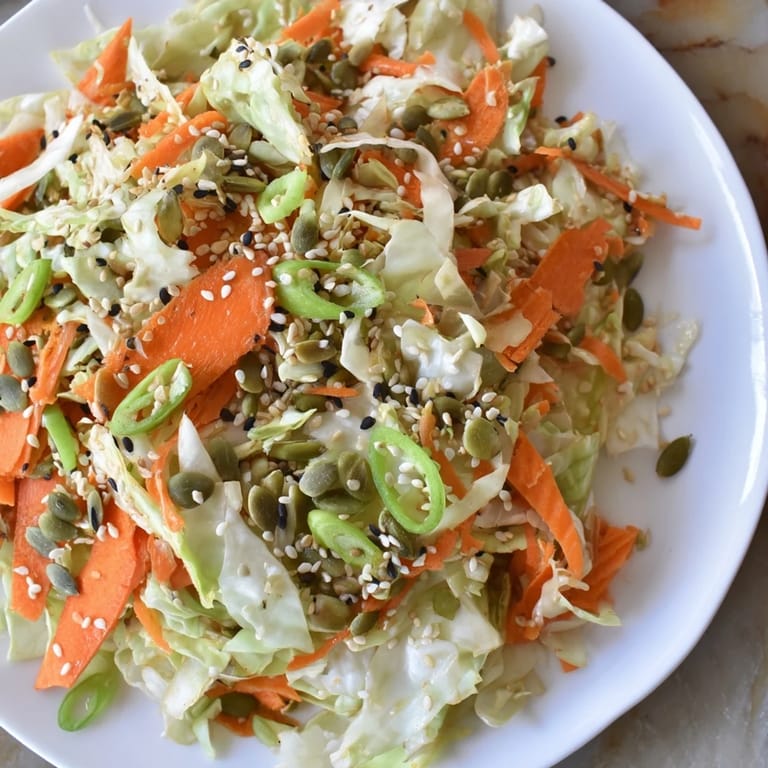
Save There's something oddly satisfying about discovering that the part of cabbage everyone throws away is actually the best part. I was prepping vegetables one afternoon when I realized the dense core, usually destined for the compost, had a uniquely crunchy texture and subtle sweetness that regular leaves couldn't match. That small realization led me to build an entire salad around it, layering in sesame oil and seeds until what started as waste became the star of the plate.
I made this for a potluck once where everyone brought something heavy and warm, and I showed up with a big glass bowl of bright, gingery slaw. By the end of the night it was completely empty while half the casseroles sat untouched. One person asked for the recipe right there with a full mouth, which felt like winning.
Ingredients
- Cabbage cores, shredded (2 cups): This is where the magic lives, the dense heart that gives you actual bite and texture that won't wilt even after sitting in dressing.
- Green cabbage leaves (1 cup): These add color and a lighter crunch that balances the hearty cores.
- Carrot, julienned (1 large): The sweetness here plays beautifully against the sharp vinegar and sesame.
- Green onions (3): A bright finishing touch that brings a gentle sharpness without overwhelming.
- Toasted sesame oil (3 tbsp): Use the good stuff here, the kind that smells like a warm kitchen—it's the backbone of everything.
- Rice vinegar (2 tbsp): Gentler than distilled vinegar, it lets the other flavors come through instead of shouting over them.
- Soy sauce or tamari (1 tbsp): Choose tamari if you need gluten-free, and don't skip this salty element.
- Maple syrup or honey (1 tbsp): Just enough sweetness to round out the sharp edges without making this a dessert.
- Fresh ginger, grated (1 tsp): The smell of ginger hitting the warm sesame oil is worth the recipe alone.
- Garlic, minced (1 clove): One is enough—you want it to whisper, not shout.
- Toasted sesame seeds (3 tbsp): Toast them yourself if you can, the difference is real.
- Pumpkin seeds (2 tbsp): Lightly toasted, these bring an earthy richness and keep the whole thing from being too delicate.
- Sunflower seeds (1 tbsp): A small amount adds another layer of texture without taking over.
Tired of Takeout? 🥡
Get 10 meals you can make faster than delivery arrives. Seriously.
One email. No spam. Unsubscribe anytime.
Instructions
- Prep your vegetables:
- Shred the cabbage cores on the fine side of a box grater or with a sharp knife, cutting them thin enough that they'll drink in the dressing but still hold their structure. Julienne the carrot so it cooks evenly with the other vegetables, and slice the green onions thin so they distribute throughout rather than sitting in chunks.
- Build the dressing:
- In a small bowl, whisk the sesame oil with rice vinegar first so they start to emulsify, then add soy sauce and maple syrup and keep whisking until you can see the slight shimmer of something coming together. Stir in the ginger and garlic last, so their heat doesn't cook off.
- Bring it all together:
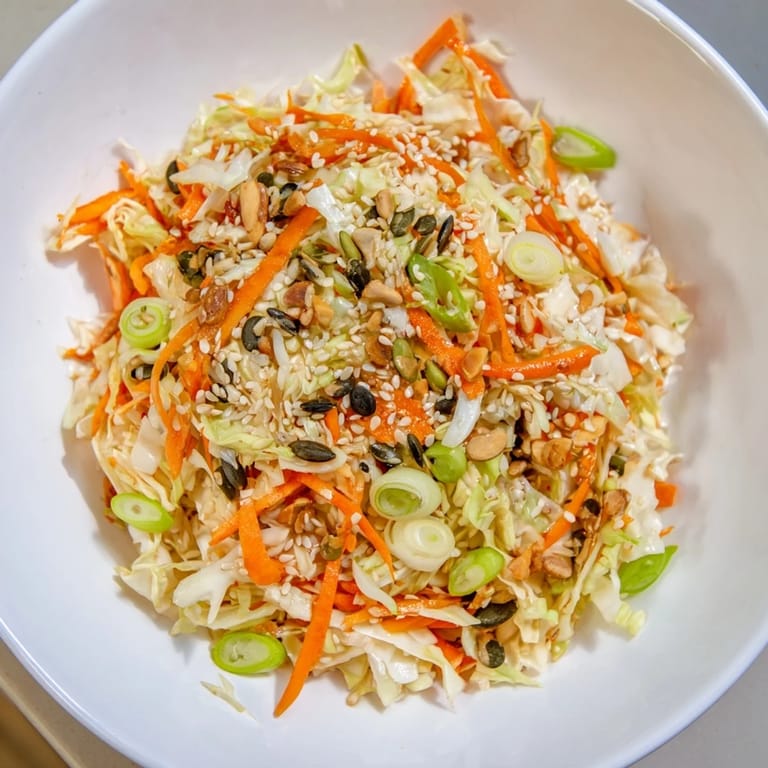
- Toss the shredded vegetables in a large bowl, then pour the dressing over and really work it through with your hands or tongs, making sure every strand gets coated. The vegetables will start to soften just slightly and release their own juices, which is exactly what you want.
- Add the seeds and let it rest:
- Sprinkle most of the sesame, pumpkin, and sunflower seeds over the slaw and toss gently so they don't break into powder. If you like, reserve some seeds for a fresh garnish right before serving, which keeps them from getting too soggy.
- Wait a little, then serve:
- Let the salad sit for at least 10 minutes so the flavors start talking to each other, but don't let it sit so long that the crunch completely disappears. Serve it chilled or at room temperature, depending on what else you're eating it with.
 Save
Save My neighbor tasted this once and spent ten minutes asking if I put some kind of special ingredient in it, convinced there was something I wasn't telling him. It was just good vegetables treated with respect and sesame oil that actually smelled like sesame. Sometimes the best food is just that simple.
Why This Slaw Breaks the Rules
Most slaws are side dishes that show up, do their job, and fade into the background. This one is built around texture and real flavor, the kind of thing that can be a light lunch on its own or a companion to something richer. The cabbage core isn't a gimmick—it's genuinely better than the leaves for this, denser and more satisfying, and knowing that you're using something that would normally be waste gives the whole thing a different feeling.
Making It Your Own
The beauty of this recipe is that it handles variations really well. If you want heat, add thinly sliced red chili or a drizzle of chili oil after everything else comes together. Fresh cilantro or mint stirred in at the last minute brings a completely different energy, and I've made it both ways depending on what mood I'm in or what else is on the plate.
Storage and Next-Day Eating
This salad keeps for a few days in the refrigerator, though the texture will soften slightly as it sits—which some people actually prefer because the flavors get deeper. If you're making it ahead, you can hold the dressing separate and toss everything together right before serving, or just embrace the softer texture and eat it as is.
- Store it in an airtight container if you've already dressed it, and it'll be good for up to three days.
- If you reserved seeds for garnish, add them just before serving so they stay crisp.
- This is one of those salads that tastes good at almost any temperature, so don't stress about whether to serve it cold or room temperature.
 Save
Save There's something grounding about a salad this honest, where you can taste each ingredient and the way they talk to each other. Make it once and you'll understand why I stopped throwing away cabbage cores.
Recipe FAQs
- → What gives the slaw its nutty flavor?
The toasted sesame oil and a mix of toasted sesame, pumpkin, and sunflower seeds provide a rich, nutty taste that complements the fresh vegetables.
- → Can I substitute the soy sauce for allergies?
Yes, coconut aminos can be used as a gluten-free and soy-free alternative without compromising flavor.
- → Is it necessary to use cabbage cores specifically?
Cabbage cores add a unique crunchy texture and fiber content, but green cabbage leaves can be used for added color and crunch if desired.
- → How can I add a spicy kick to this dish?
Incorporate sliced red chili or a dash of chili oil to introduce heat and depth to the slaw’s flavor profile.
- → What is the best way to serve this dish?
Allow the slaw to rest for 10 minutes after tossing to let flavors meld, then serve chilled or at room temperature for optimal freshness.