 Save
Save I still remember the first time I arranged a noodle board for friends—it was meant to be casual, but something magical happened when everyone gathered around that platter. The vibrant vegetables caught the light, the noodles glistened with sesame oil, and suddenly we were all leaning in, building our own perfect bites, dipping into different sauces, laughing between mouthfuls. That moment taught me that food doesn't always need to be complicated to feel special. Sometimes the most memorable meals are the ones where everyone gets to participate in the creation, choosing their own adventure with flavors and textures.
I made this board for my sister's birthday dinner last spring, and I watched her face light up when she saw it. She'd been stressed about hosting, and I wanted her to feel like she could relax and enjoy her guests. The beautiful arrangement did something unexpected—it set the tone for the whole evening. People naturally slowed down, tasted things mindfully, tried combinations they wouldn't have thought of. By the end of the night, everyone was asking for the recipe, not for the individual ingredients, but for the feeling of it all.
Ingredients
- Rice noodles or soba noodles (300 g): The foundation that holds everything together—rice noodles are delicate and light, while soba brings an earthy sophistication. I learned to rinse them well and toss with sesame oil immediately after cooking, or they'll clump together stubbornly.
- Sesame oil (1 tbsp): Just a touch is all you need. This isn't the cooking oil; it's the finishing touch that makes everything taste intentional and connected.
- Cooked chicken breast (200 g), thinly sliced: Poach it gently in broth instead of boiling to keep it tender. I used to make it dry until I learned that patience and low heat make all the difference.
- Cooked shrimp (150 g), peeled and deveined: Buy pre-cooked if time matters more than impressing someone with your shrimp skills. They're there for texture and elegance, not to steal the show.
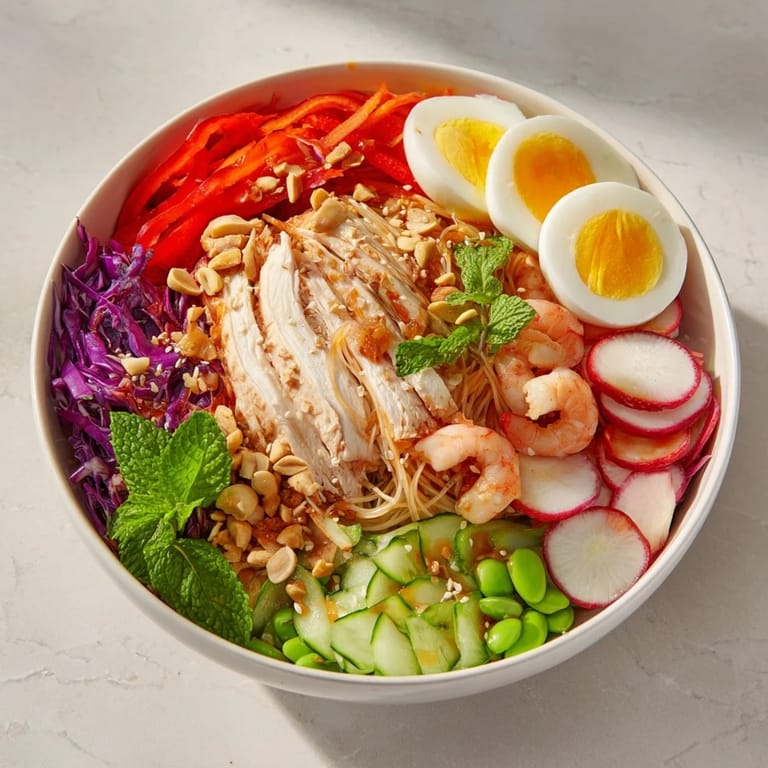
- Boiled eggs (2), halved: A soft-boiled egg with a runny yolk is a game-changer—it becomes a sauce of its own when you break into it during eating. Hard boiled works too, but soft-boiled feels more luxurious.
- Julienned carrots (1 cup): The sweetness and crunch are non-negotiable. A mandoline makes this effortless, and your fingers will thank you.
- Cucumber, thinly sliced (1 cup): Cooling and refreshing, these slices should be thin enough to bend slightly. Cut them just before serving so they stay crisp.
- Red bell pepper, julienned (1): Raw and crunchy, adding color that photographs beautifully and tastes bright and fresh.
- Red cabbage, thinly sliced (1 cup): It holds its color and crunch longer than any other vegetable on the board, which is why I always include it.
- Cooked and shelled edamame (1 cup): Nutty and filling, these little pods add protein if you're leaning vegetarian, and they're a textural surprise that people reach for.
- Radishes, thinly sliced (4): I was skeptical about radishes until one friend mentioned they taste like peppery water in the best way. They cut through richness with grace.
- Scallions, sliced (2): The green parts add mild onion flavor without overpowering. Slice them fresh right before serving for the sharpest taste.
- Fresh cilantro leaves (1/4 cup): If you love cilantro, this is your moment. If you're in the camp that thinks it tastes like soap, keep it separate so you're not the villain at your own dinner party.
- Fresh mint leaves (1/4 cup): Mint brings an unexpected coolness that makes people pause and ask what that flavor is. That's when you smile knowingly.
- Roasted peanuts, chopped (1/4 cup): The crunch everyone craves. Toast your own if you have time—the smell alone is worth it.
- Toasted sesame seeds (2 tbsp): Toasted, not raw. There's a world of difference, and you only need this small amount to add that nutty depth.
- Lime wedges: Squeeze these over everything. Lime is the secret weapon that makes every single bite taste more alive.
- Soy sauce (1/3 cup): The familiar comfort of umami. Use low-sodium if you're watching salt, or tamari if gluten is a concern.
- Spicy peanut sauce (1/3 cup): Store-bought is fine, or make your own if you want to control the heat. This is the sauce people usually come back to.
- Hoisin sauce (1/3 cup): Sweet and savory simultaneously, it appeals to people who want richness without heat.
- Sweet chili sauce (1/3 cup): The bridge between heat and sweetness. It's the friend that gets along with everyone at the table.
Tired of Takeout? 🥡
Get 10 meals you can make faster than delivery arrives. Seriously.
One email. No spam. Unsubscribe anytime.
Instructions
- Prepare your noodles with care:
- Bring a pot of water to a rolling boil and cook your noodles according to package timing—don't rush this or they'll be mushy, don't abandon them or they'll overcook. Drain them completely, then run cool water through them until they feel refreshed. While they're still warm, toss them gently with that sesame oil. You'll hear it sizzle slightly and smell something wonderful. This step keeps them from becoming one solid clump, and it seasons them subtly from the inside out.
- Become a knife artist with the vegetables:
- Wash and prep your vegetables one at a time, thinking about consistency as you cut. Julienne means thin matchsticks—carrots and peppers should look elegant and delicate. Slice cucumbers and radishes paper-thin so they're almost translucent. Red cabbage wants thin ribbons. The mandoline is your friend here if you have one, but a sharp knife and a steady rhythm work just as well. Arrange them on paper towels as you finish so they stay dry and crunchy.
- Gather your proteins with intention:
- If you're cooking chicken, poach it gently in broth rather than boiling—it'll be tender instead of dry. Shrimp can be store-bought cooked, which saves time without sacrificing quality. Soft-boil your eggs for a runny center that becomes sauce, or hard-boil them if that's your preference. Pat everything dry before it touches the board so nothing looks wet or sad.
- Compose your platter like you're painting:
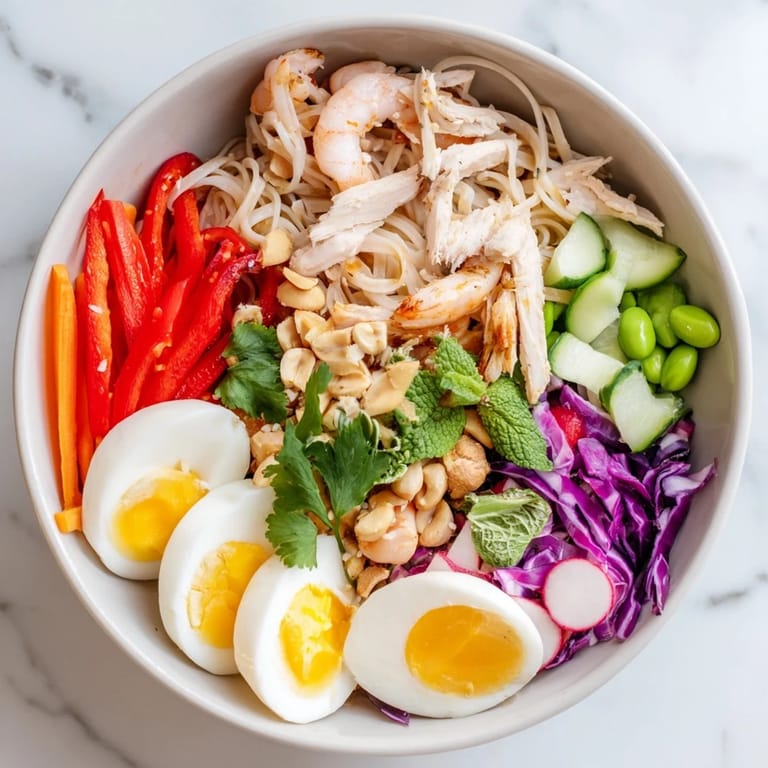
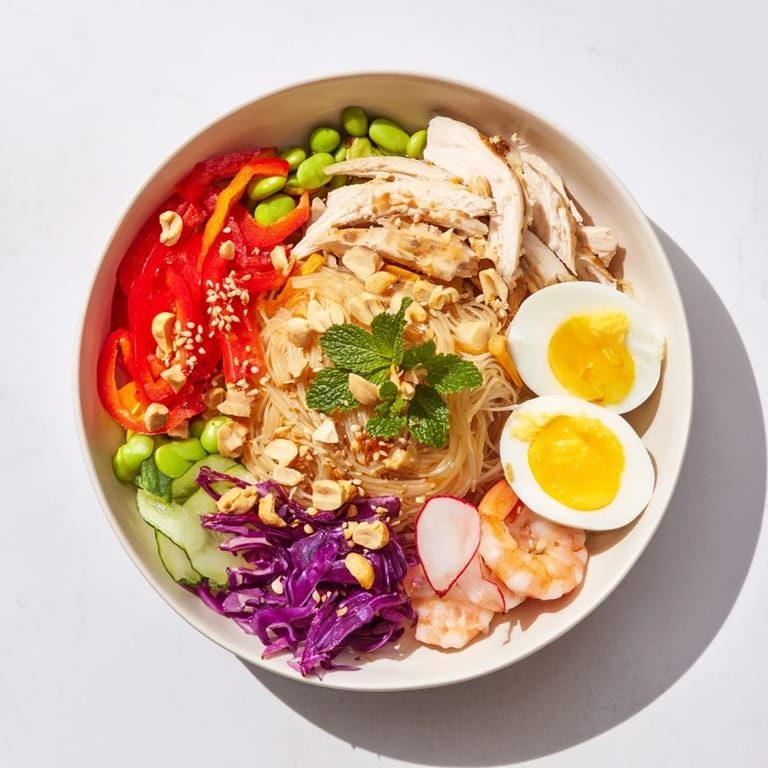
- Start with your large board or platter—this is your canvas. If you have a divided bowl with four sections, place it in the center; otherwise, use four small bowls nestled in the middle. Now comes the fun part: arrange your noodles in one section, creating a small nest or pile. Group your proteins in separate areas—chicken here, shrimp there, eggs elsewhere, tofu if using it. Stand back and look at the colors. The red cabbage should talk to the red pepper. The green herbs should have their own moment. Fill gaps with cucumber, carrots, radishes, edamame. Sprinkle cilantro, mint, peanuts, and sesame seeds across the whole thing like you're giving it a blessing. Everything should look intentional, like you knew exactly what you were doing.
- Fill your sauce center with personality:
- Divide your center bowl into quarters if it's a divided one, or fill four small bowls with your four sauces. Pour soy sauce in one, peanut sauce in another, hoisin in the third, sweet chili in the last. They should look distinct and inviting, like little promises of flavor adventure.
- Let the final touches shine:
- Place lime wedges around the board where they catch the light. Scatter any remaining herbs in empty spaces. Step back and look at what you've made. You've created something that tastes amazing and looks like it belongs in a magazine. That feeling right there—that's why we do this.
- Serve with the invitation to play:
- Bring the board to the table and tell your guests to make their own bowls, combining noodles, protein, vegetables, and sauce in whatever ratio makes them happy. There's no wrong combination, only different adventures. Watch their faces as they discover their favorite bite.
 Save
Save One evening, a friend who usually orders takeout because she thinks cooking is intimidating made this board for her book club. She texted me afterward saying that plating it herself made her feel like a chef, and when her friends complimented her, she felt proud in a way that just grilling chicken never made her feel. That's when I realized this recipe isn't just about food—it's about permission to feel creative and capable.
Why This Works as a Sharing Meal
There's something about a board that invites conversation in a way a plated meal doesn't. Everyone's focused on their own combinations, their own choices, and somehow that creates space for connection rather than competition. I've noticed that people eat slower, taste more deliberately, and actually talk to each other instead of rushing through courses. The vegetarian guest doesn't feel like an afterthought because they can build something as satisfying as anyone else. The person who hates cilantro doesn't make an awkward announcement because they simply skip it. It's inclusive without being complicated.
Building Your Perfect Bite
The beauty of a noodle board is that there's no single correct way to eat it. Some people load noodles into a bowl and drizzle sauce over everything. Others pick up each vegetable individually, dip it, and enjoy the purity of one flavor at a time. I've watched people layer chicken, cucumber, and mint together, dip in peanut sauce, and call it their new favorite thing. The best bites are the ones you invent yourself, the unexpected combinations that shouldn't work but absolutely do. That's the magic of this meal—it teaches you to trust your own palate and preferences.
- Try mixing the sweet chili with the peanut sauce for a complexity that neither has alone
- A squeeze of lime over protein changes everything—suddenly it tastes lighter and more alive
- The softest part of your noodles nest holds sauce the best, so hunt for those pieces if you want maximum flavor
Adapt It for What You Have
This recipe sounds fancy, but it's actually forgiving in the best ways. Don't have shrimp? Use extra tofu and nobody will notice you made an adjustment. Missing mint? Cilantro alone is plenty. The vegetables are suggestions, not rules—use whatever's in your crisper drawer. I've made this with leftover roasted vegetables, blanched broccoli, sliced apple for sweetness, and even shredded zucchini. The structure remains the same: noodles, protein, vegetables, sauce, garnish. Fill it with what makes you happy and what you have on hand. That's not cutting corners; that's cooking with wisdom.
 Save
Save This recipe has become my answer to the question, "What do you cook when you want to feel confident and impress people without stress?" I hope it becomes yours too.
Recipe FAQs
- → What types of noodles work best for this dish?
Rice noodles or soba noodles are ideal as they absorb flavors well and maintain a pleasant texture.
- → Can the proteins be substituted for vegetarian options?
Yes, firm tofu can replace chicken and shrimp for a fully vegetarian-friendly platter.
- → How should the dipping sauces be served?
Serve the sauces in a divided bowl placed centrally on the board, each in separate sections for variety and ease of dipping.
- → Are there any suggested garnishes to enhance flavor?
Fresh cilantro, mint leaves, roasted peanuts, toasted sesame seeds, and lime wedges add brightness and texture to the dish.
- → What are some tips to keep noodles from sticking together?
After cooking, rinse noodles under cold water and toss with sesame oil to prevent them from clumping.