 Save
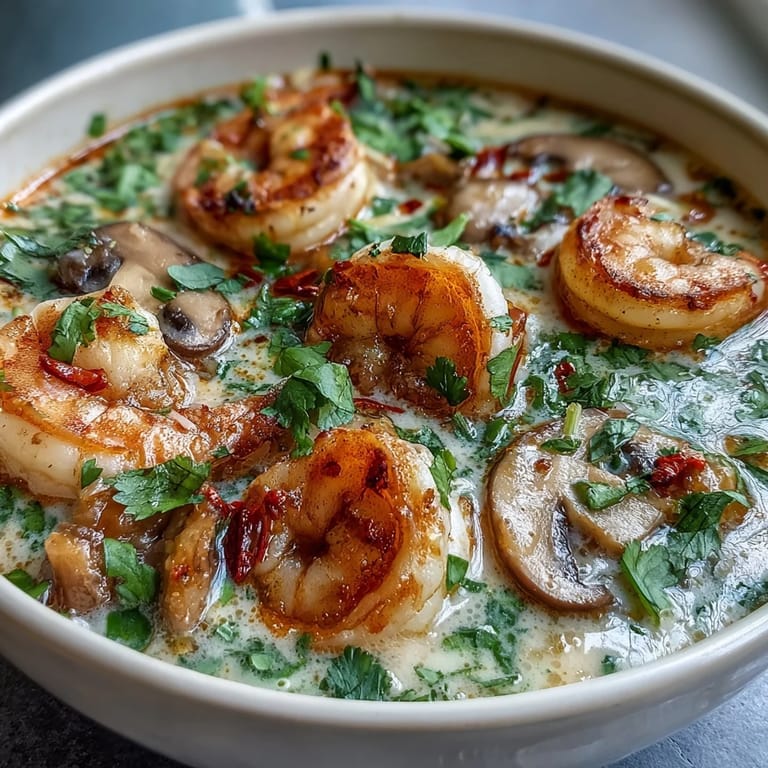
Save My kitchen filled with steam one rainy afternoon when a friend texted asking if I could make something warming but not heavy. I had coconut milk in the pantry, fresh shrimp thawing, and a jar of Thai red curry paste that had been calling for a purpose. Within minutes, the smell of lemongrass and ginger took over everything, and I realized I was making something that felt both exotic and deeply comforting. That first bowl, shared over conversation and laughter, became the reason this soup now appears on my table whenever I want to feel transported without leaving home.
I made this for my partner during a particularly cold spell when we'd both been stuck indoors too long. The moment the bowls hit the table, something shifted in the room. We stopped scrolling, stopped thinking about our to-do lists, and just existed in that warm, fragrant moment together. That's when I understood this soup wasn't just dinner—it was a small ritual of taking care of each other.
Ingredients
- Large raw shrimp (350 g / 12 oz): Look for shrimp that smell oceanic and briny, not fishy, and peel them yourself if you have time—the shells make incredible stock for next time.
- Lemongrass (2 stalks): This is the backbone of the flavor, so don't skip it or substitute with lemon zest; smash the stalks hard to release the oils hiding inside.
- Kaffir lime leaves (4): If you can't find them fresh, frozen works beautifully, though fresh leaves add a brightness that's hard to replicate.
- Garlic (3 cloves): Mince it fine so it dissolves into the broth rather than sitting as little chunks.
- Onion (1 small): A thin slice means it softens quickly and spreads its sweetness throughout the pot without becoming mushy.
- Mushrooms (100 g / 3.5 oz): Use whatever you have—button, cremini, or shiitake all work, though shiitake adds an earthiness that feels especially comforting.
- Red chili (1 small): Slice it lengthwise and remove some seeds if you're sensitive to heat, or leave them in if you want the full fireworks.
- Fresh ginger or galangal (1 thumb-sized piece): Slice it thin and don't peel it—the skin holds flavor, and thin slices are easier to fish out later.
- Coconut milk (400 ml / 14 oz): Full-fat is non-negotiable here; it's what makes the broth taste like something you'd order at a proper Thai restaurant.
- Chicken or vegetable broth (500 ml / 2 cups): If you have homemade stock, this is your moment to use it, though store-bought works just fine.
- Thai red curry paste (2 tbsp): A good curry paste has depth and complexity, so buy from a trustworthy brand if you can.
- Fish sauce (2 tbsp): It smells intense in the bottle, but trust the process—it's what gives the soup its umami backbone.
- Lime juice (1 tbsp plus more): Use fresh limes; bottled juice tastes tinny and won't give you that bright finish.
- Sugar (1 tsp): This small amount balances the heat and acidity, creating harmony rather than one note dominating.
- Fresh cilantro: Some people have a genetic quirk that makes it taste soapy, so don't force it on anyone who objects.
- Green onions: Slice them at the last moment so they stay crisp and add a fresh crunch to each bite.
- Lime wedges: Serve these on the side so people can squeeze them into their bowl and adjust the tartness to their preference.
Tired of Takeout? 🥡
Get 10 meals you can make faster than delivery arrives. Seriously.
One email. No spam. Unsubscribe anytime.
Instructions
- Awaken the aromatics:
- Heat oil in your pot over medium flame, then add the onion, garlic, lemongrass, ginger, and chili for 2-3 minutes, stirring occasionally. You'll know you're doing it right when your kitchen smells like a Thai market—that moment when your nose registers five things at once and your mouth starts watering.
- Deepen the curry flavor:
- Stir in the red curry paste and let it cook for a full minute, moving it around so it doesn't stick to the bottom. This step is crucial; the heat helps the curry paste release its complex spices and oils.
- Build the broth:
- Pour in the coconut milk and broth slowly, stirring to combine, then add the kaffir lime leaves if using. Bring everything to a gentle simmer—you want lazy bubbles, not an aggressive boil that breaks apart the delicate flavors.
- Cook the mushrooms:
- Let them soften for about 5 minutes until they've absorbed some of the broth's color. They'll taste completely different from their raw state, almost sweet in their own way.
- Add the shrimp:
- Slip them in and watch closely for the moment they turn from translucent gray to opaque pink, about 2-3 minutes. Overcooked shrimp becomes rubbery, so timing matters here.
- Season to taste:
- Add the fish sauce, sugar, and lime juice, then taste it. This is your chance to adjust—if it needs more tang, add lime; if it feels one-dimensional, a touch more fish sauce helps; if it's too spicy, a pinch of sugar softens the edges.
- Remove solids:
- Fish out the lemongrass stalks, ginger slices, and lime leaves with a spoon or slotted spoon. These have done their job and would be unpleasant to bite into.
- Serve with intention:
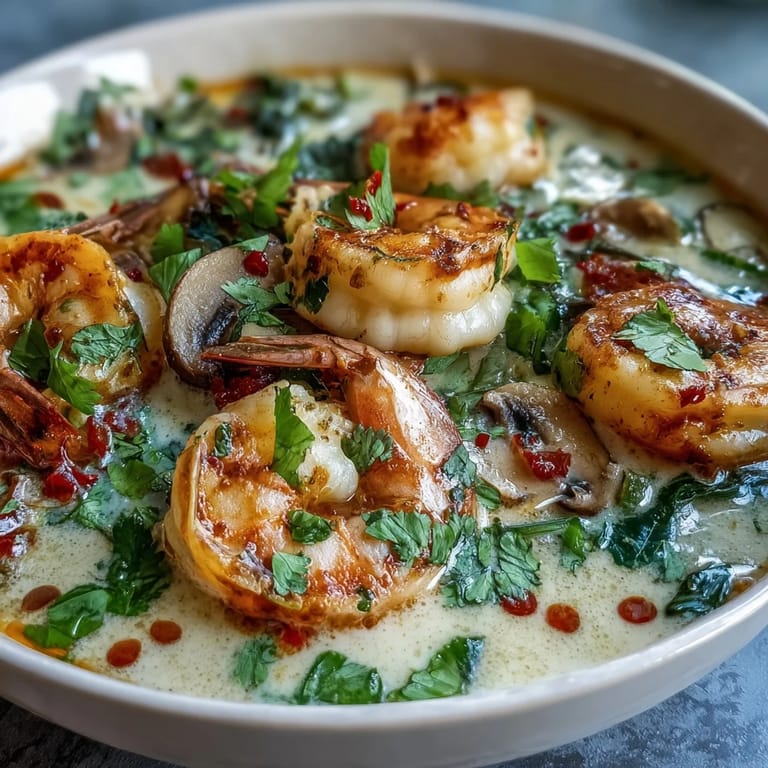
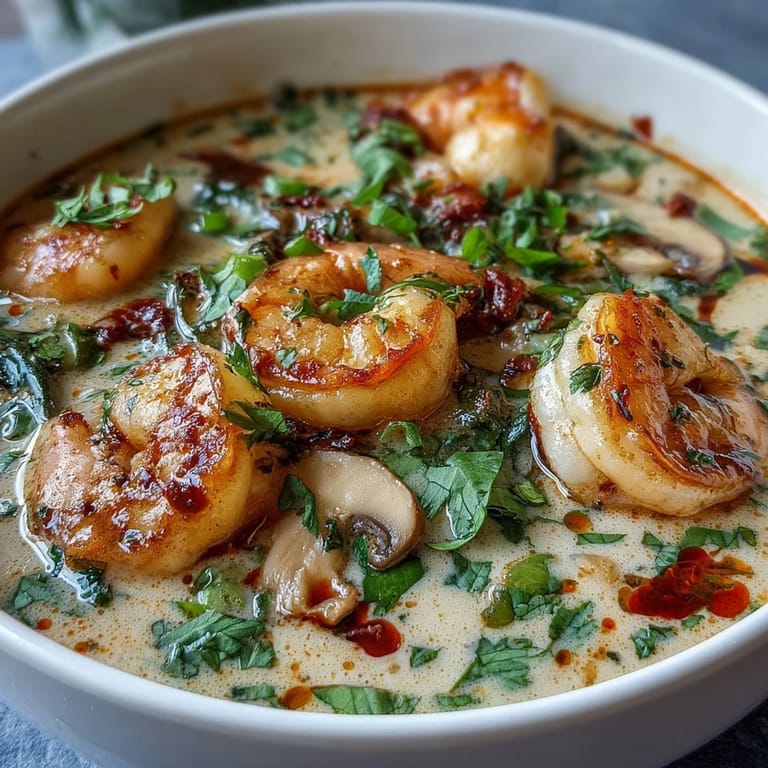
- Ladle the soup into bowls, leaving space at the top for garnish, then scatter cilantro and green onions over each serving and tuck a lime wedge on the rim. Let people customize the final squeeze and taste.
 Save
Save A colleague once told me she'd never had proper Thai soup, and when she tasted this one, her eyes went wide in that way that meant the flavors were bigger than what she'd expected. She went home and made it twice that week, then texted me photos of her family eating it. That's when I realized this recipe wasn't precious or complicated—it was just honest food that brought people together.
The Soul of Lemongrass
Lemongrass is what separates this from ordinary shrimp soup—it's floral and bright and slightly sweet in a way that makes the broth feel alive. The first time I cooked with it properly, I learned to smash the stalks instead of leaving them whole, which releases the oils and lets the flavor permeate everything. Some recipes tell you to discard it, but I think it deserves more respect than that.
Why Coconut Milk Matters Here
There's a difference between using coconut milk and using cheap coconut-flavored milk powder, and this soup demands the real thing. Full-fat coconut milk creates a silky broth that coats your mouth with richness, while the light version leaves you feeling like something's missing. I learned this the hard way by trying to cut calories once, and the soup tasted hollow. Now I embrace the fat, knowing it's what makes this feel like an indulgence rather than a restriction.
Tasting and Adjusting as You Go
Thai food is built on the principle of balance—heat against acidity, salt against sweetness—and this soup is no exception. Rather than following the measurements blindly, taste as you build, trusting your palate over a recipe card. I keep the lime, fish sauce, and sugar on the counter so I can make small adjustments until the broth sings instead of shouts.
- If it tastes flat and one-note, add a bit more fish sauce to wake everything up.
- If the heat feels overwhelming, a pinch of sugar and a squeeze of lime juice will round it out and make it feel balanced instead of aggressive.
- Remember that the flavors will intensify slightly as you serve and people adjust their bowls with lime wedges, so start conservatively and add more boldness from there.
 Save
Save Every time I make this soup, I'm reminded that some of the best meals don't require complicated technique or hard-to-find ingredients—they just need attention and respect for what you're creating. It's become the dish I reach for when I want to show someone I care through food.
Recipe FAQs
- → Can I make this soup spicy?
Absolutely. Adjust the heat by adding more sliced red chili or increasing the red curry paste. Start with half the amount and taste as you go.
- → What's the best substitute for fish sauce?
Soy sauce works well for a vegetarian version. You can also use mushroom soy sauce for a deeper umami flavor that mimics fish sauce.
- → Can I use frozen shrimp?
Yes, thaw frozen shrimp completely and pat them dry before adding to prevent the broth from becoming watery. Cook time remains the same.
- → How long does this soup keep?
Store in an airtight container for up to 3 days. Reheat gently over medium-low heat to prevent the coconut milk from separating.
- → Can I make it ahead of time?
Prepare the broth base up to 2 days ahead. Add shrimp and fresh garnishes just before serving to maintain their texture and vibrant flavor.
- → What vegetables work best?
Mushrooms add great texture, but baby corn, bell peppers, bamboo shoots, or snow peas also complement the flavors beautifully.