 Save
Save There's something about the smell of roasted red peppers that pulls me back to a Sunday afternoon when my neighbor brought over three enormous homegrown peppers, still warm from her garden. She stood in my kitchen describing how she'd charred them under the broiler while we talked about everything except cooking, and suddenly I was inspired to turn them into something more than just a side dish. This soup was born from that moment—a way to stretch those precious peppers into something that could feed us both with comfort and warmth.
I made this for my coworker Maria who'd been going through a rough patch, and watching her face light up at that first spoonful reminded me why simple food matters. She asked for the recipe immediately, and now whenever I see her, she mentions making it on a Tuesday night when she needed something gentle and real. That's when I knew this soup had become more than just lunch—it was a small act of kindness that lived in her kitchen too.
Ingredients
- Red bell peppers (3 large, roasted): These are the soul of the soup, bringing natural sweetness and that gorgeous color that makes people want a second bowl before they even taste it.
- Cannellini beans (2 cans, drained and rinsed): They provide heartiness without heaviness, and rinsing them really does make a difference in keeping the broth clear and clean-tasting.
- Yellow onion (1 medium, diced): The foundation that builds flavor quietly—don't skip the caramelization step, even though it takes just a few minutes.
- Garlic (2 cloves, minced): A minute in hot oil transforms it from raw to mellow, which is when the whole pot starts smelling like comfort.
- Carrot and celery (1 each, diced): These aren't just texture—they're the backbone that makes this feel like real cooking, not shortcuts.
- Vegetable broth (4 cups): Use something you'd actually drink on its own, because it becomes the voice of the entire soup.
- Smoked paprika (1 teaspoon): This ingredient changed everything for me—it adds depth that makes people wonder what your secret is.
- Dried thyme (1/2 teaspoon): Just enough to whisper Mediterranean in the background without shouting.
- Crushed red pepper flakes (1/4 teaspoon, optional): Keep these within reach if you like heat, but the soup sings without them too.
- Olive oil (1 tablespoon): Quality matters here more than quantity—it's the first flavor that touches the vegetables.
- Salt and black pepper: Taste as you go; the seasoning is the difference between okay and memorable.
Tired of Takeout? 🥡
Get 10 meals you can make faster than delivery arrives. Seriously.
One email. No spam. Unsubscribe anytime.
Instructions
- Warm the foundation:
- Heat that olive oil over medium heat until it shimmers, then add your diced onion, carrot, and celery. Listen for the gentle sizzle and watch the onions turn translucent over about 5-6 minutes—this is when your kitchen starts to smell like something good is happening.
- Invite the garlic:
- Add your minced garlic and let it cook for exactly one minute, just until it's fragrant and the sharp rawness softens into something sweet. Don't walk away during this minute, because the line between perfect and burned is thinner than you'd think.
- Build the color:
- Stir in your roasted red peppers along with the smoked paprika, thyme, and red pepper flakes if you're using them. Cook for two minutes so the spices wake up and the peppers start releasing their essence into the oil.
- Bring it together:
- Add your drained beans and vegetable broth, then bring everything to a boil before dropping the heat to a simmer. Let it bubble gently uncovered for 15 minutes—the soup will deepen in color and the flavors will start to know each other.
- Make it creamy:
- This is where the immersion blender becomes your best friend; blend until the soup is smooth and velvety, or work in batches with a regular blender if that's what you have. Either way, you'll be amazed at how luxurious it becomes without a drop of cream.
- Find your balance:
- Taste it now and add salt and pepper until it tastes like the best version of itself—not too timid, not too bold, just right for your palate.
- Serve with intention:
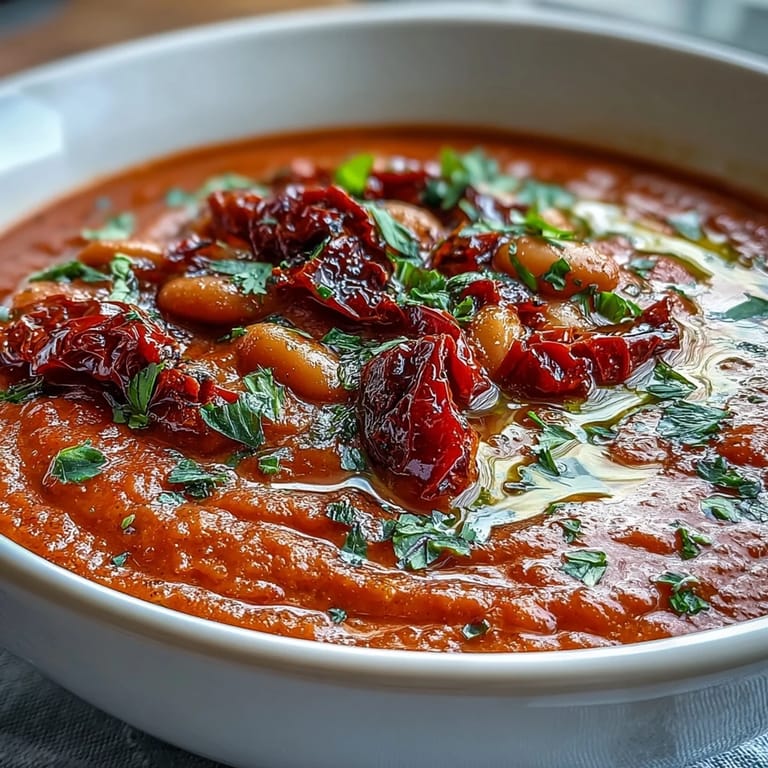
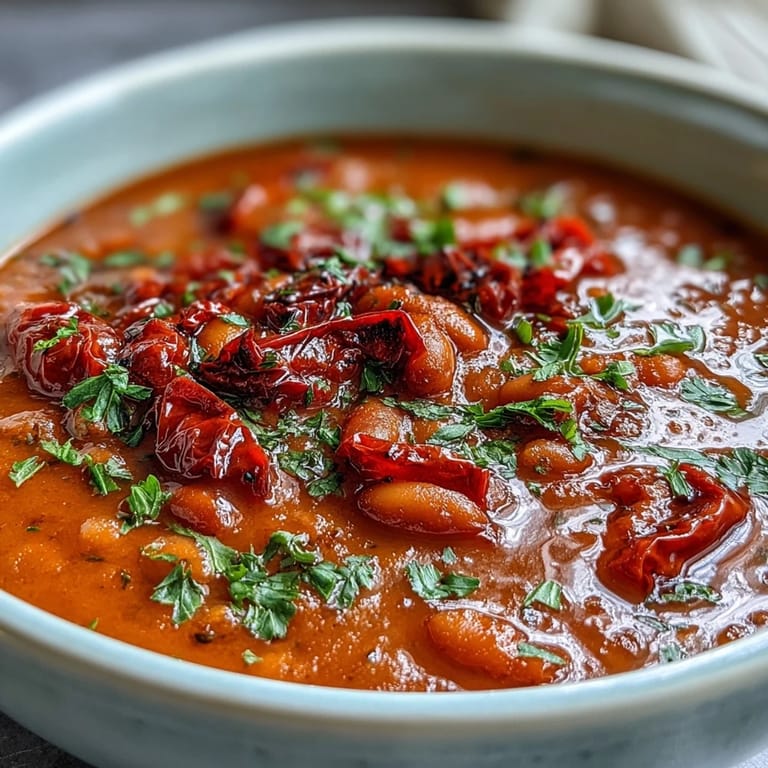
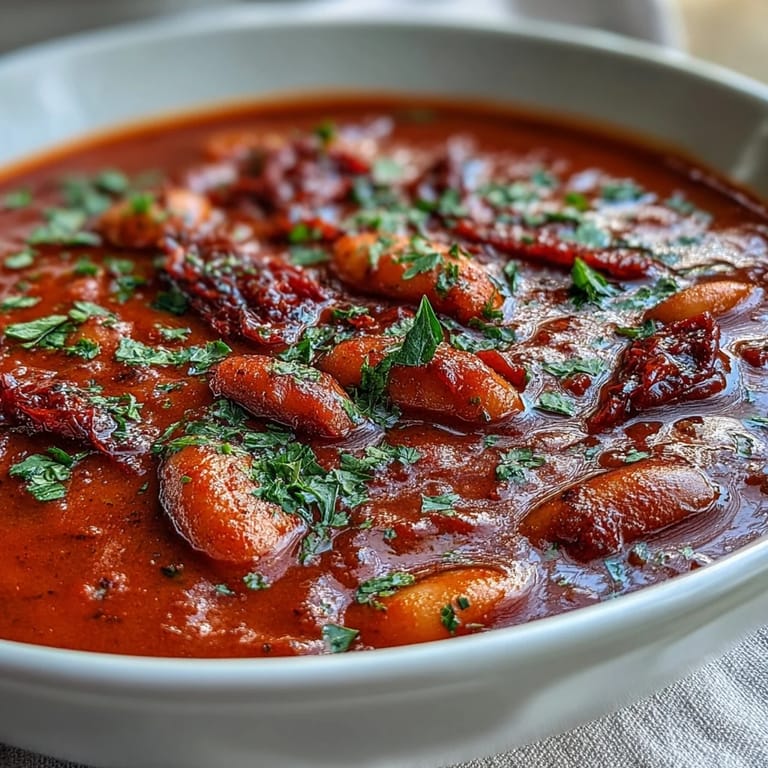
- Ladle it into bowls while it's hot, top with fresh parsley and a drizzle of excellent olive oil, and add crusty bread if you want to turn it into something people will remember.
 Save
Save The first time someone told me they made this soup for their sick child and watched him actually finish the whole bowl, I understood that feeding people well is its own kind of medicine. Now whenever someone asks what I'm making, and I say this, they always ask to try it, and somehow it tastes different each time depending on who's sitting at the table.
The Beauty of Roasted Peppers
There's a reason roasted peppers taste so different from raw ones—the heat transforms their sugars and softens their edges into something almost jammy. I used to buy them jarred until I learned that roasting your own takes barely more effort and tastes like you made real choices in your kitchen. The char adds a subtle smokiness that broth alone could never give you, and once you taste that difference, you'll want to roast your own peppers forever.
Why This Soup Stays Smooth
The immersion blender is the unsung hero here—it breaks down the beans and peppers into something silky without overworking the soup into gluey submission. If you're blending in batches, always let the soup cool slightly first and never fill your blender more than halfway, because hot liquid expanding is messier than any other kitchen mistake I've made. The result is worth the caution though: a soup that feels elegant and purposeful without any pretension.
Making It Your Own
This soup is a canvas that respects your preferences instead of fighting them—add a splash of coconut milk if you want tropical creaminess, or stir in a spoonful of pesto if you want brightness. Some mornings I add kale at the end just to sneak in extra green, and other times I let it be exactly what it is. The beauty is that it tastes different based on what your body needs and what your mood wants.
- A splash of good balsamic vinegar adds complexity that makes people ask what your secret ingredient is.
- Fresh basil stirred in at the end creates a completely different soup that still feels like itself.
- If the soup feels too thick, warm broth is always your answer—never water, which dilutes all your hard work.
 Save
Save This soup has become my answer to almost everything—when someone needs comfort, when I want to feel capable in the kitchen, when I'm curious about what simple ingredients can do when they're treated with respect. Make it often enough and it becomes muscle memory, something you can make without thinking too hard, which is exactly when the best cooking happens.
Recipe FAQs
- → How do I roast red peppers at home?
Char whole peppers under a broiler until blackened, then steam in a covered bowl for 10 minutes to loosen skins. Peel off skins before chopping.
- → Can I use other beans instead of cannellini?
Yes, Great Northern or navy beans work well as substitutes and provide a similar creamy texture.
- → What is the best way to achieve a creamy texture without cream?
Pureeing the soup thoroughly with an immersion or countertop blender creates a smooth, creamy consistency naturally.
- → How can I adjust the spice level?
Modify or omit the crushed red pepper flakes to control the heat to your preference.
- → What garnishes complement this soup?
Fresh parsley, a drizzle of extra virgin olive oil, and crusty bread enhance both flavor and presentation.