 Save
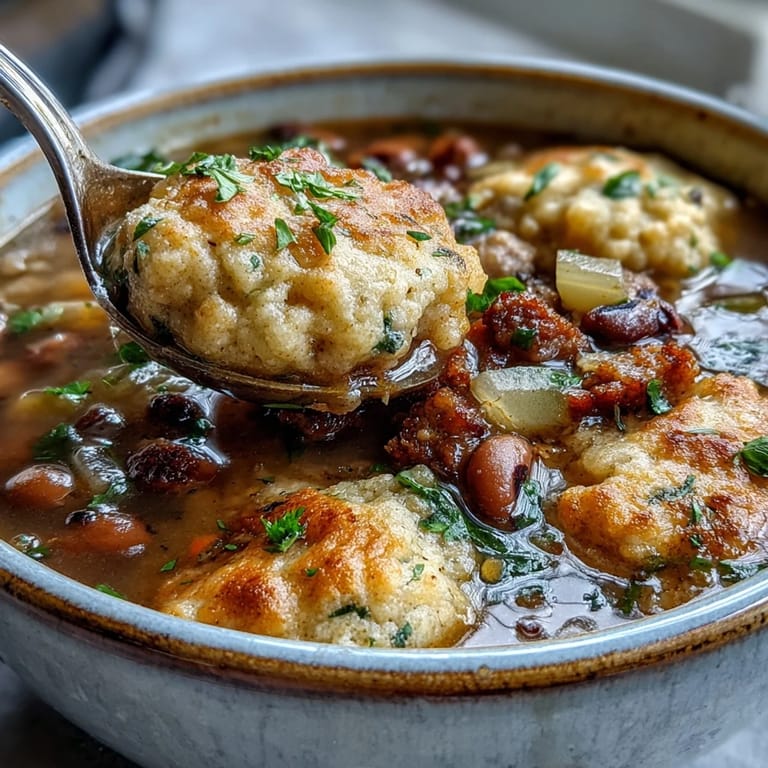
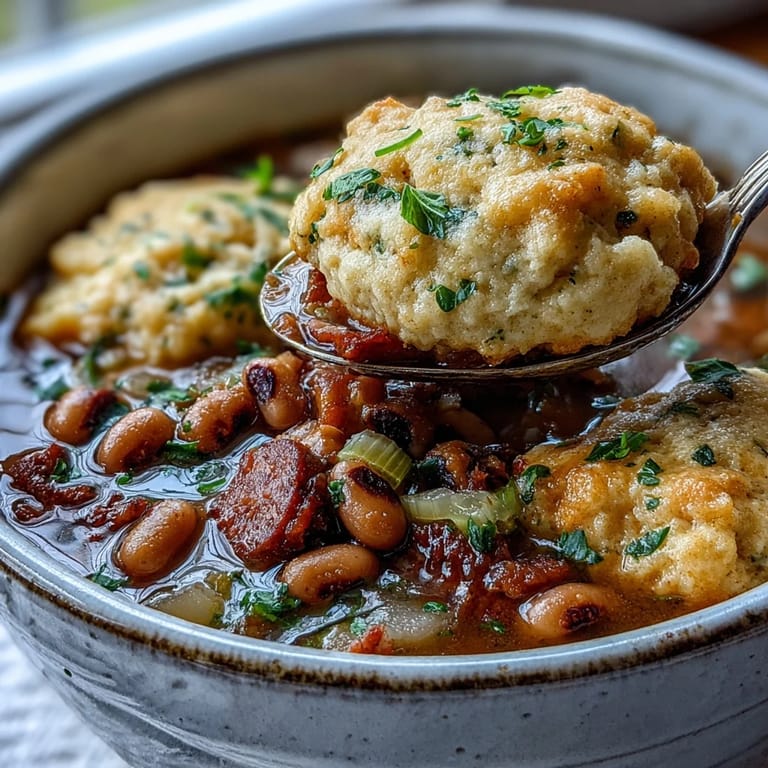
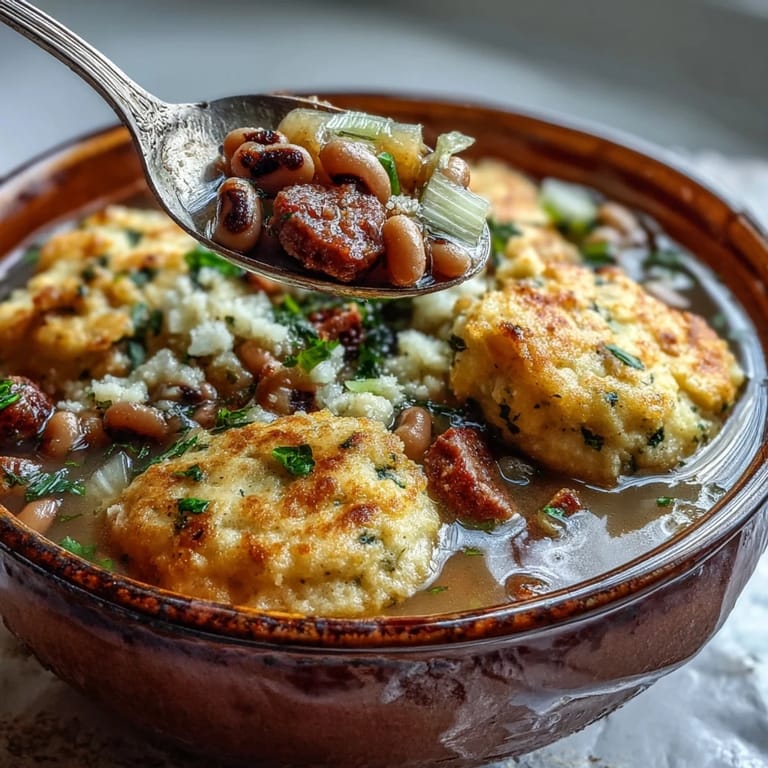
Save There's something about the sound of sausage hitting hot oil that signals comfort is coming. My neighbor knocked on the door one chilly evening with a craving for something warm, and I found myself reaching for black-eyed peas and smoked sausage—two pantry staples that somehow promised more than their humble ingredients suggested. What emerged from that pot, crowned with pillowy dumplings, became the kind of dish people ask about weeks later. The stew itself is forgiving and honest, but those cornmeal dumplings are where the magic happens, soaking up every savory note while staying impossibly light.
I made this for my cousin during a surprise visit, and he sat at the kitchen counter for nearly an hour after finishing, just talking and watching the steam rise from the pot. That's when I knew this wasn't just another weeknight dinner—it was the kind of meal that gives people permission to slow down.
Ingredients
- Smoked sausage (12 oz): The backbone of flavor here, so choose quality—andouille or kielbasa work beautifully if you want to branch out, and the smoke in the casing does half the seasoning work for you.
- Black-eyed peas (2 cans): Rinse them thoroughly under cold water to wash away the tinny canning liquid and let their subtle earthiness shine through.
- Olive oil (2 tablespoons): Just enough to build a proper base without making the stew greasy or heavy.
- Yellow cornmeal (1/2 cup): This is what makes the dumplings different—it adds a subtle sweetness and slight grittiness that flour alone cannot deliver.
- Buttermilk (3/4 cup): Don't skip this or substitute it lightly; the acidity tenderizes the dumplings in ways regular milk cannot, creating that cloud-like texture.
- Onion, garlic, celery, carrot, bell pepper: The aromatic foundation that builds depth—don't rush this step, as these vegetables need time to soften and meld with the oil.
- Chicken broth (4 cups): Low-sodium lets you control the salt and taste the actual flavors you're building, rather than fighting against an oversalted broth.
- Smoked paprika (1/2 teaspoon): A non-negotiable accent that echoes the sausage's smokiness and rounds out the spice profile beautifully.
- Thyme, cayenne, bay leaf: Thyme brings earthiness, cayenne adds heat if you want it, and the bay leaf ties everything together with subtle sophistication.
Tired of Takeout? 🥡
Get 10 meals you can make faster than delivery arrives. Seriously.
One email. No spam. Unsubscribe anytime.
Instructions
- Brown the sausage first:
- Slice your sausage into thin rounds and let the heat work—you want those edges to turn deep golden and release their oils into the pot. This takes about five minutes and is non-negotiable; rushing this step means losing flavor.
- Build the aromatic base:
- Once the sausage is set aside, add your onion, garlic, celery, carrot, and bell pepper to the same pot with its rendered fat. Watch them soften and become translucent over five to seven minutes—this is where the stew's backbone is built.
- Simmer the stew:
- Pour in your broth, add the black-eyed peas along with thyme, paprika, peppers, and bay leaf, then bring everything to a boil before dropping the heat to low. Let this bubble gently uncovered for twenty-five minutes, which gives the flavors time to meld while you prepare the dumplings.
- Make the dumpling dough:
- In a separate bowl, whisk flour, cornmeal, baking powder, baking soda, and salt together, then stir in melted butter and buttermilk just until combined—overworking this dough makes dense, tough dumplings instead of fluffy ones. The batter should look shaggy and slightly lumpy, and that's exactly right.
- Season and prepare for dumplings:
- Fish out the bay leaf and taste your stew, adjusting salt and pepper as needed before the dumplings go in. This is your last chance to balance the flavors without disturbing the cooking dumplings.
- Drop and steam the dumplings:
- Using a spoon or small ice cream scoop, drop two-tablespoon portions of batter directly onto the simmering stew, spacing them so they have room to puff up. Cover with a lid and reduce heat to low, then resist every urge to peek for twenty to twenty-five minutes—lifting the lid releases steam and deflates your dumplings.
- Serve with care:
- Let the pot rest for a minute or two after the dumplings finish cooking, then ladle into bowls, making sure each serving gets both stew and dumpling. A scatter of fresh parsley on top adds color and a bright herb note that cuts through the richness.
 Save
Save There was a moment when my friend pulled a dumpling apart and steam rose from its center, completely golden and tender, and he just smiled without saying anything. Sometimes the best meals are the ones that remind us why we cook in the first place.
Choosing Your Sausage
The sausage you choose shapes the entire personality of this dish, so take a moment to think about it rather than grabbing whatever's closest. Smoked sausage is the classic choice and what this recipe was built around, but andouille brings a deeper Creole spice, and kielbasa offers a different textural bite. I've even used chorizo when I wanted something with more heat, and while it shifts the flavor profile, it still works beautifully because the black-eyed peas are humble enough to play second fiddle to whatever star you choose.
The Dumpling Question
People often ask if they can skip the dumplings or swap them for something else, and technically they can, but they'd be missing the point. The dumplings aren't just a topping—they're a textural and flavor contrast that makes the entire dish feel complete and special. If you can't have gluten, you could experiment with a gluten-free flour blend and slightly less liquid, though the cornmeal is essential to keeping them from tasting like a straight substitute.
Making It Your Own
This recipe has enough structure to guide you but enough flexibility to bend toward what your pantry or cravings offer. I've made it vegetarian by removing the sausage, using vegetable broth, and bumping up the smoked paprika to keep that savory depth intact. Some nights I add extra cayenne because my mood demands heat, other times I keep it gentle for friends who prefer milder flavors.
- If you don't have buttermilk, whisk regular milk with a splash of lemon juice or vinegar and let it sit for five minutes—it won't be identical but it's close enough to work.
- Fresh herbs like parsley, chives, or even a tiny bit of fresh thyme scattered on top at the end add brightness that cuts through the richness.
- Leftover stew (and dumplings, if any survive) keeps beautifully in the refrigerator for three days and actually tastes better the next day when flavors have settled.
 Save
Save This is the kind of meal that wraps around you like a warm embrace, the kind that makes you feel taken care of even if you're the one doing the cooking. Once you make it once, it becomes part of your repertoire for good.
Recipe FAQs
- → Can I use dried black-eyed peas instead of canned?
Yes, soak 1 cup dried peas overnight, then simmer for 60-75 minutes until tender before adding to the stew. Adjust cooking time accordingly.
- → What type of sausage works best?
Andouille adds authentic Cajun flair, kielbasa provides mild smokiness, or use any smoked sausage. Vegetarian versions can omit sausage entirely and add extra smoked paprika.
- → Why shouldn't I lift the lid while dumplings cook?
Steam is essential for fluffy dumplings. Lifting the lid releases heat and moisture, resulting in dense or undercooked centers. Trust the 20-25 minute cooking time.
- → Can I make this dish ahead?
Prepare the stew base up to 2 days in advance and refrigerate. Add fresh dumplings when reheating, as they don't store well once cooked.
- → How can I make this gluten-free?
Replace all-purpose flour with a 1:1 gluten-free baking blend in the dumplings. Verify sausage and broth are certified gluten-free.
- → What sides complement this stew?
Collard greens, cornbread, or a simple green salad balance the richness. Crisp white wine like Sauvignon Blanc cuts through the savory flavors.