 Save
Save There's a moment in every cook's life when a single bowl of soup changes everything. Mine came on a rainy Bangkok evening years ago, sitting in a tiny street-side restaurant where the chef moved with such ease between steaming pots that I couldn't help but watch. The aroma that escaped from his kitchen was impossibly complex—coconut, curry, lime, all dancing together in a way that made me forget I'd been tired just moments before. When that soup arrived in a simple ceramic bowl, I understood immediately why people travel thousands of miles just to eat one more bowl of this exact thing. Now, whenever I make Thai coconut curry soup at home, I'm chasing that same magic—and honestly, my kitchen version has become something entirely its own.
I once made this soup for my neighbor who'd just moved in, and I remember standing in her kitchen while it simmered, both of us leaning over the pot trying to identify each layer of scent. She kept saying it smelled like travel, like adventure, like somewhere far away—and by the time we poured it into bowls, she'd already asked for the recipe. That's when I realized this soup isn't just about feeding yourself; it's about creating a moment where people feel transported, cared for, and just a little bit spoiled.
Ingredients
- Chicken breast or thighs (400g): Thighs stay juicier if you're not timing it perfectly, but either works—just slice thin so they cook quickly and stay tender in the broth.
- Mushrooms (200g): Shiitake gives earthiness and complexity, but button mushrooms work too and are forgiving if your market doesn't have anything fancy.
- Carrots (2 medium): Julienne them thin so they cook at the same pace as everything else and don't end up tough while you're waiting for the chicken.
- Red bell pepper (1 small): Adds sweetness and color without overpowering—cut it thin and it'll be tender without becoming mushy.
- Baby spinach or bok choy (100g, optional): The spinach wilts in seconds at the end, adding brightness and nutrients you won't even notice eating.
- Spring onions (2): Save these for garnish—they add a fresh, sharp note at the very last second that ties everything together.
- Fresh ginger (1 tablespoon): Grate it from fresh root, not from a jar; your nose will know the difference, and so will your soup.
- Garlic (3 cloves): Mince it fine so it releases into the oil quickly and flavors the whole pot, not just your individual bite.
- Lemongrass (2 stalks, optional): Bruise it by crushing gently with your knife handle—this releases the oils without shredding it into your broth.
- Kaffir lime leaves (4, optional): These look like tiny green feathers and they're worth tracking down for their almost impossible-to-describe citrus flavor.
- Red curry paste (2 tablespoons): This is where your spice level lives—start here and adjust up if you're brave or down if you're cooking for someone's first time.
- Coconut milk (800ml): Full fat makes it luxurious; light makes it less heavy—pick what feels right for your day.
- Chicken broth (500ml): Use good broth here; it's not hidden under other flavors, so quality matters.
- Fish sauce (1 tablespoon): This smells absolutely rank in the bottle, but it's the secret ingredient that makes everything taste like it came from a restaurant kitchen.
- Brown sugar (1 tablespoon): A tiny bit of sweetness balances the spice and salt—never underestimate how much a small touch matters.
- Lime juice (1 lime): Fresh lime is non-negotiable here; bottled won't give you that brightness you're after.
- Fresh cilantro: Tear it by hand right before serving so it doesn't bruise and lose its delicate flavor.
- Fresh red chili (optional): Slice it thin if you want heat without completely overpowering your bowl.
Tired of Takeout? 🥡
Get 10 meals you can make faster than delivery arrives. Seriously.
One email. No spam. Unsubscribe anytime.
Instructions
- Build your flavor foundation:
- Heat a large pot over medium heat and add a splash of oil, then sauté your ginger, garlic, and lemongrass for about a minute until the kitchen smells like Thailand. You'll notice the sharp ginger smell soften and become almost sweet—that's when you know you're ready for the next step.
- Wake up the curry paste:
- Stir in your red curry paste and let it cook for another minute, stirring constantly so it doesn't stick or burn. The paste will go from a thick blob to something that coats the pot and releases all its aromatic oils into the oil.
- Cook your protein:
- Add your sliced chicken and stir it around for 2 to 3 minutes, making sure each piece gets coated with that curry-infused oil. The chicken will start to look opaque at the edges, which is perfect—it'll finish cooking in the broth.
- Pour in the liquid and vegetables:
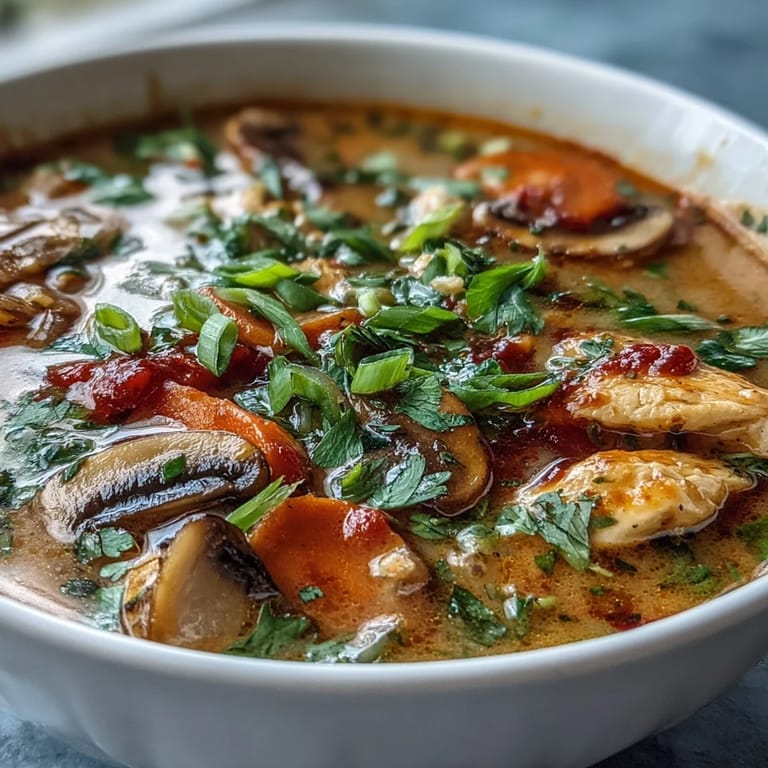
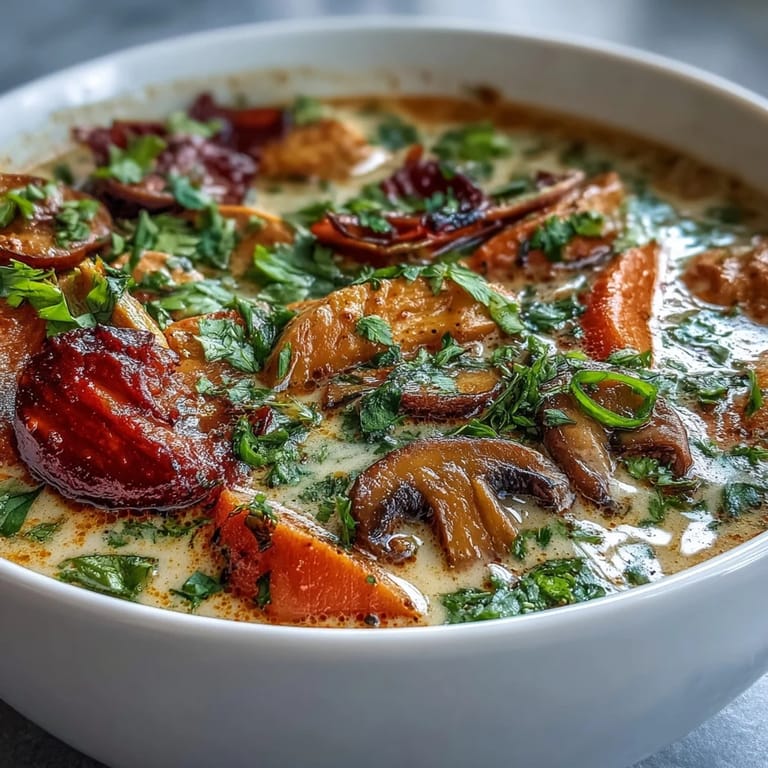
- Add your coconut milk and chicken broth, then slide in the kaffir lime leaves (if using), carrots, mushrooms, and red bell pepper. The broth will come alive instantly, turning a gorgeous golden color, and you'll already be excited about what's about to happen.
- Simmer gently until everything is tender:
- Bring it to a gentle simmer and cook for 10 to 12 minutes, just until the chicken is cooked through and the vegetables have lost their raw edge but still have some texture. Resist the urge to crank the heat—this soup needs time to let flavors merge, not time to boil aggressively.
- Season and balance:
- Stir in your fish sauce, brown sugar, and fresh lime juice, then taste and adjust. This is where you're really cooking—if it needs more spice, add a bit more curry paste; if it's too spicy, add a pinch more sugar or lime juice.
- Add your greens and finish:
- If you're using spinach or bok choy, add it now and let it wilt for 1 to 2 minutes—you're not trying to cook it to death, just warm it through so it becomes part of the broth.
- Plate and garnish:
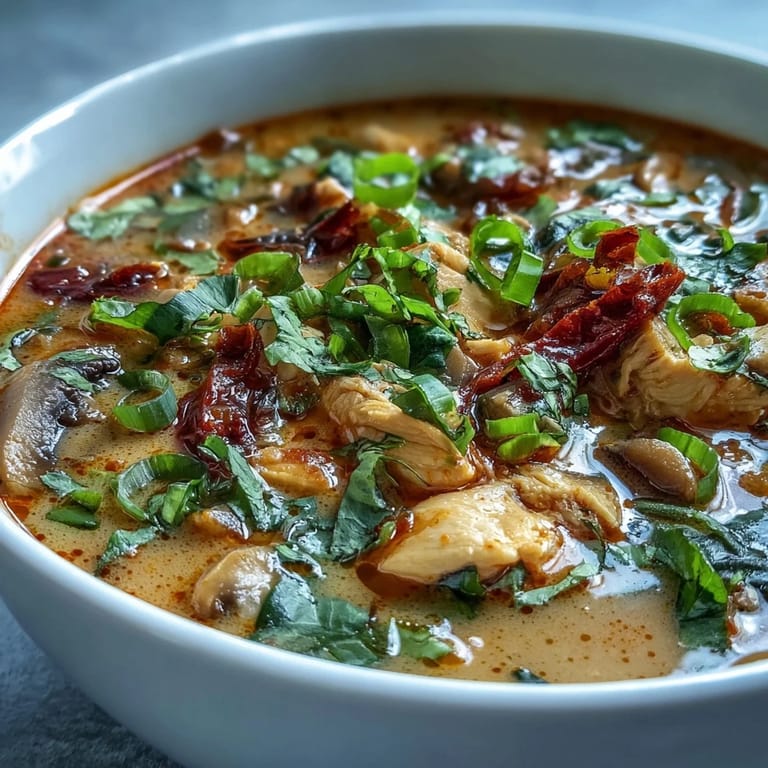
- Fish out the lemongrass stalks and kaffir lime leaves, ladle the soup into bowls, and shower the top with fresh spring onions, cilantro, and a few slices of fresh chili if you're feeling bold. Hand lime wedges on the side so everyone can brighten their bowl to their own taste.
 Save
Save What I didn't expect when I started making this soup regularly was how it became a language between me and my friends—a way of saying I care without having to say much at all. Someone going through something rough, a celebration that needed warmth, a quiet Tuesday when the world felt too loud: somehow this soup was always the right answer. Now I keep curry paste stocked like other people keep coffee, because I've learned that having the ability to make something this delicious and comforting is a kind of gift you give to yourself as much as to anyone else.
The Magic of Building Aromatics
The first minute of cooking this soup is where everything gets decided, even though nothing dramatic happens yet. You're just toasting ginger and garlic in oil, but you're also releasing all those compounds that make Thai food taste like Thailand—and once they hit your nose, your brain starts getting ready for something special. This isn't a step you can rush or skip; your whole broth is built on this foundation, and spending the full minute here means the difference between soup and something transcendent.
Why Coconut Milk Matters
I used to think all coconut milk was the same, and I made exactly the same mistake twice before it finally clicked. Full-fat coconut milk creates this silky, luxurious broth that coats your mouth in the best way, while light versions let you taste the individual ingredients more clearly—neither is wrong, but they create completely different experiences. The choice really depends on whether you want comfort-through-decadence or comfort-through-balance, and I've learned that the best version is honestly whatever you're in the mood for that particular day.
Customizing Your Heat Level and Personal Touches
This soup is endlessly adaptable once you understand the core technique, which means you can make it exactly the way you want it every single time. Some days I add extra curry paste and fresh chili because I need something that makes me sit up straighter; other days I pull back on the heat and lean into the coconut creaminess because I'm looking for pure comfort. The absolute non-negotiables are fresh lime juice at the end and spring onions for garnish—everything else is negotiable, and that's what makes this soup so brilliant.
- Swap the chicken for shrimp if you're in a seafood mood, or use firm tofu if you want something plant-based—just adjust your cooking time slightly.
- If you can't find kaffir lime leaves or lemongrass, the soup is still magnificent; you'll just be tasting pure curry and coconut instead of those extra layers of complexity.
- Serve it with jasmine rice or rice noodles on the side if you want to make it heartier and turn it into something you can really settle into.
 Save
Save This soup has become one of my most-made meals because it asks so little and gives so much—a quick weeknight dinner that tastes like you've been cooking all day, a canvas for whatever vegetables you have hanging around, and a way to travel to somewhere warm without leaving your kitchen. Make it for yourself, make it for someone else, and watch how something this simple becomes something people remember.
Recipe FAQs
- → Can I make this soup vegetarian?
Yes, replace chicken with firm tofu and use vegetable broth instead of chicken broth. Substitute fish sauce with soy sauce or tamari to maintain the savory depth.
- → How spicy is this curry soup?
The spice level is moderate with 2 tablespoons of red curry paste. You can reduce to 1 tablespoon for milder heat or increase to 3 tablespoons for more intensity.
- → Can I use light coconut milk?
Yes, light coconut milk works well though the soup will be less creamy. Full-fat coconut milk provides a richer texture and more luxurious mouthfeel.
- → What vegetables work best in this soup?
Mushrooms, carrots, and bell pepper are excellent. You can also add bamboo shoots, snap peas, or baby corn for varied textures and flavors.
- → How long does this soup keep?
Store in an airtight container in the refrigerator for up to 3 days. The flavors develop and deepen overnight. Reheat gently on the stove.