 Save
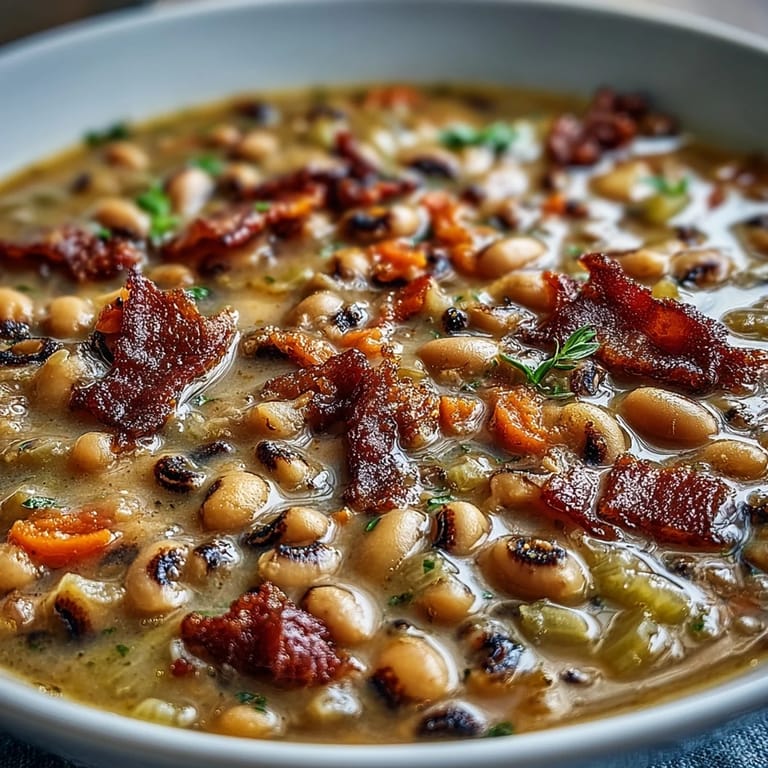
Save There's something about a pot of black-eyed peas simmering on the stove that stops time in the kitchen. My grandmother used to make this soup on lazy Sunday afternoons, and I'd sit on a stool by the counter watching the bacon fat shimmer as she tossed in the vegetables. The smell alone—bacon, thyme, and that earthy sweetness of the peas—would fill the whole house, drawing everyone toward the kitchen like a spell. Years later, I realized this wasn't just comfort food, it was her way of saying I love you without saying much at all. Now when I make it, I understand why she never rushed the simmering part.
I made this for my neighbor last winter when she was dealing with a rough patch, and watching her face light up when she took that first spoonful reminded me why cooking for people matters. She came back three days later asking if I'd teach her, and we ended up making it together in my kitchen while her kids played in the living room. Something about the steam rising from the pot and the rhythm of chopping vegetables made everything feel a little lighter for both of us.
Ingredients
- Smoked bacon, 8 oz diced: This is your flavor foundation, so don't skimp or use the thin stuff—you want substantial pieces that crisp up and give you real bacon bits at the end.
- Black-eyed peas, 2 cups dried (soaked) or 3 cans: If you have time, soak dried peas overnight because they'll have a better texture and absorb the broth flavors more completely, but canned works beautifully when life gets busy.
- Yellow onion, 1 medium chopped: The onion is your sweetness anchor—don't skip it or rush the sauté step.
- Carrots, 2 medium diced: Carrots add natural sweetness and body to the broth, so make sure they're cut into similar-sized pieces for even cooking.
- Celery, 2 stalks diced: Celery is the quiet hero here, adding depth without announcing itself—use the pale inner stalks if possible, they're more tender.
- Garlic, 3 cloves minced: Don't let the garlic burn in the bacon fat or it'll turn bitter; add it after the vegetables have softened and you'll get sweet, mellow garlic flavor.
- Low-sodium chicken broth, 6 cups: Low-sodium gives you control over the final salt level, which matters more than you'd think when you're tasting as you go.
- Bay leaf, 1: Fish this out before serving or your guests will find it—trust me, that's not a fun surprise.
- Dried thyme, 1/2 tsp: Thyme is earthy and herbaceous without being loud, which is exactly what this soup needs.
- Smoked paprika, 1/2 tsp: This is what gives you that campfire-smoke quality even though there's no campfire involved.
- Black pepper, 1/4 tsp freshly ground: Fresh ground pepper tastes completely different from the pre-ground stuff—it's worth keeping a pepper mill nearby.
- Salt, to taste: Hold back until the very end because the bacon and broth already have salt, and you can always add more.
- Fresh parsley, 2 tbsp chopped: Optional but genuinely transformative—it adds a bright finish that cuts through the richness of the bacon fat.
Tired of Takeout? 🥡
Get 10 meals you can make faster than delivery arrives. Seriously.
One email. No spam. Unsubscribe anytime.
Instructions
- Render the bacon until it sings:
- Dice your bacon into pieces roughly the size of a pea and lay them out in your pot over medium heat. You're not rushing this—let them get crispy and golden, about 6 to 8 minutes, because this is where your flavor begins. The rendered fat is liquid gold, so save every drop.
- Build your vegetable base:
- Toss your chopped onion, carrots, and celery into that bacon fat and let them soften for 5 to 6 minutes, stirring occasionally so nothing sticks. You'll know they're ready when the onions turn translucent and the whole pot smells like home cooking.
- Wake up the garlic:
- Add your minced garlic and let it toast for just one minute—this takes it from raw and sharp to sweet and mellow. The aroma will tell you it's ready before your timer does.
- Combine everything and bring to heat:
- Stir in the black-eyed peas, broth, bay leaf, thyme, smoked paprika, and black pepper, then turn the heat up until you see a rolling boil. Once it's bubbling, you're halfway there.
- Let it simmer low and slow:
- Cover the pot, reduce heat to low, and let it bubble gently for 30 to 35 minutes if you used dried peas, or just 20 minutes if you used canned. The peas should be completely tender and the broth should taste like it's been melding together all day.
- Season and finish:
- Fish out the bay leaf, then taste a spoonful and add salt gradually until it feels right to you. Ladle into bowls and crown each one with some of that reserved crispy bacon and a scatter of fresh parsley.
 Save
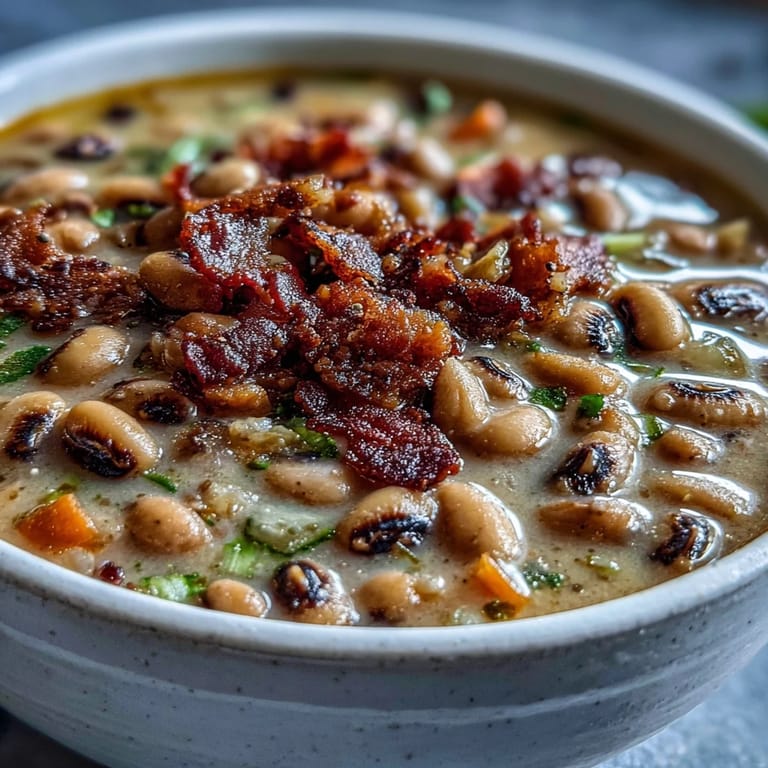
Save There was a moment during my first winter making this regularly when I realized it had become the thing people asked for instead of asking what I was cooking. That's when I stopped thinking of it as just a recipe and started thinking of it as a conversation—every bowl is different based on who's eating it and what they need that day.
The Soul of Southern Cooking
This soup carries something essential from Southern kitchens—the idea that the best food comes from patience and simple ingredients treated with respect. Black-eyed peas have been feeding people through good times and hard times for generations, and bacon fat is what turns good into unforgettable. When you cook this soup, you're not just following steps; you're participating in a tradition that understands food as a kind of language.
Stretching Your Batch and Variations
One full pot of this soup feeds six people as a main course, but I've learned it's even better stretched a little. Add a handful of chopped kale or collard greens in the last 10 minutes and suddenly you have something even more substantial, and if anyone's vegetarian, you can make a second pot without the bacon and add a small splash of liquid smoke instead. The beauty of this recipe is that it's sturdy enough to handle changes without losing its soul.
Serving and Storage Wisdom
Serve this soup in deep bowls with crusty bread or cornbread on the side—the bread soaks up the broth in a way that makes the whole meal feel complete. Leftovers keep beautifully in the refrigerator for up to four days, and honestly, the flavors deepen overnight, so make extra on purpose.
- If you're making it ahead, don't add the fresh parsley until you're reheating and serving—it stays bright that way.
- The soup freezes well for up to three months if you transfer it to containers and cool it completely first.
- When you reheat, do it slowly over medium heat so the peas don't break down further and get mushy.
 Save
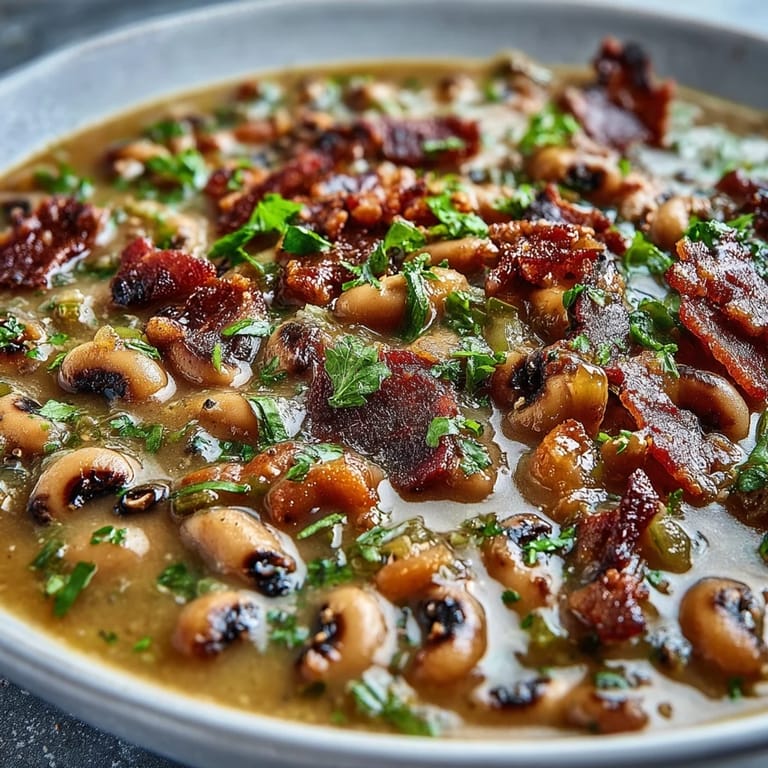
Save This is the kind of soup that doesn't need to be fancy or complicated to be exactly what someone needs. Make it and watch what happens.
Recipe FAQs
- → Can canned black-eyed peas be used instead of dried?
Yes, canned black-eyed peas can be rinsed and added later in the cooking process to reduce simmer time while maintaining texture.
- → What can be used to replace bacon for a vegetarian version?
Omitting bacon and using vegetable broth with a dash of liquid smoke helps replicate the smoky flavor without meat.
- → How should the vegetables be prepared for this dish?
Onions, carrots, and celery are diced finely and sautéed in bacon fat or oil until softened, bringing out their natural sweetness.
- → Why is the bay leaf added to the broth?
Bay leaf adds a subtle herbal depth and enhances the overall aroma during the simmering process.
- → How can this dish be served for best enjoyment?
It pairs wonderfully with cornbread or crusty bread, making the meal complete and satisfying.