 Save
Save The first time I truly understood baklava was watching my neighbor in Istanbul layer tissue-thin phyllo with the kind of patience I didn't know I possessed. She moved so deliberately—brush, fold, brush again—and when I asked if it was difficult, she just smiled and said the pastry would tell me what it needed. Years later, I recreated that moment in my own kitchen, and suddenly all those layers of butter and nuts and honey made sense as more than just dessert; they were a conversation between my hands and the dough.
I made this for a dinner party on a whim, convinced I'd somehow ruin it, but the golden-brown edges and the way the honey pooled in the diamond cuts silenced all my doubts. My friend took one piece and didn't speak for a full minute—not because something was wrong, but because she was too busy tasting every layer. That's when I realized baklava isn't about impressing people; it's about giving them a reason to pause.
Ingredients
- Phyllo dough (16 sheets, thawed): The paper-thin foundation that becomes shatteringly crisp when butter-kissed and baked; let it rest at room temperature so it cooperates without tearing.
- Unsalted butter (150 g, melted): The golden thread connecting every layer, so don't skimp on quality—it's what gives baklava its signature richness and that irresistible crunch.
- Hazelnuts (100 g, finely chopped): Earthy and slightly sweet, they're the backbone of the filling and toast just enough during baking to deepen their flavor.
- Pistachios (100 g, finely chopped): The jewel that makes this baklava unmistakably Turkish, with a subtle earthiness that plays beautifully against the honey.
- Granulated sugar (100 g for filling): Balanced against the nuts so the filling isn't cloying, just sweet enough to complement without overwhelming.
- Ground cinnamon (1 tsp, optional): A whisper of warmth that ties everything together—I've learned never to skip this, even when the recipe says optional.
- Water (120 ml for syrup): The base that carries the honey into every crevice when poured hot over hot baklava.
- Honey (150 g): The soul of the dessert, turning from liquid gold to sticky amber as it soaks through the layers.
- Granulated sugar (100 g for syrup): Balances the honey's sweetness and creates a syrup that clings to every piece.
- Lemon juice (1 tsp): The secret brightener that cuts through richness and adds a subtle complexity you can't quite identify.
Tired of Takeout? 🥡
Get 10 meals you can make faster than delivery arrives. Seriously.
One email. No spam. Unsubscribe anytime.
Instructions
- Prepare your stage:
- Preheat the oven to 180°C (350°F) and brush your 20x30 cm baking pan generously with melted butter—this is your insurance policy against sticking. Keep your butter nearby and your phyllo covered with a damp towel so it doesn't dry out while you work.
- Lay the foundation:
- Place 4 sheets of phyllo in the pan, brushing each one with butter as though you're painting a delicate surface—the butter should be thin but visible. You'll notice the sheets will overlap and bunch slightly; that's perfect and adds to the texture.
- Make your filling:
- While your foundation sets, combine the hazelnuts, pistachios, sugar, and cinnamon in a bowl, stirring until the nuts are evenly coated and the mixture smells warm and inviting. This is the part where your kitchen fills with that intoxicating aroma.
- First layer of nuts:
- Sprinkle one-third of the nut mixture evenly over your phyllo base—don't be shy, but don't pile it up either. Even distribution means every bite will have that perfect balance of pastry to filling.
- Build the middle:
- Layer 4 more phyllo sheets, buttering each one just as carefully as the first stack, then scatter another third of the nut mixture across the top. You're creating a sandwich now, and each layer matters.
- Repeat and finish:
- Add the remaining 4 phyllo sheets and the last of the nut filling, then top with the final 4 sheets, buttering the top layer generously so it turns that gorgeous mahogany brown. Run your hand lightly over the top to feel how delicate the whole thing is.
- Score with intention:
- Using a sharp knife, cut the pastry into diamonds or squares before baking—this matters because it helps the syrup penetrate and makes serving effortless. I use long, confident strokes rather than sawing motions to keep the layers intact.
- Bake to golden perfection:
- Bake for 35–40 minutes until the top is mahogany brown and the edges are deeply golden; you'll know it's ready when the kitchen smells like caramelized butter and toasted nuts. Don't open the oven door too early—the baklava needs steady heat to transform.
- Prepare the syrup:
- While the baklava bakes, combine water, honey, sugar, and lemon juice in a saucepan, bring it to a boil, then reduce to a gentle simmer for 10 minutes. The syrup should be slightly thickened and fragrant, and importantly, it should stay warm.
- The crucial moment:
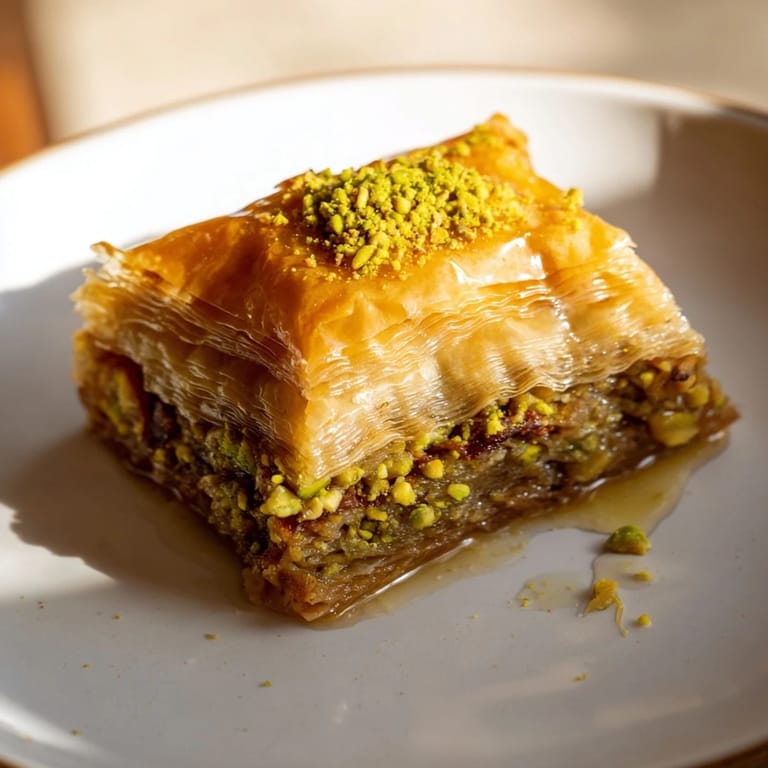
- The instant your baklava comes out of the oven, pour the hot syrup evenly over the hot pastry—this is the magic moment where everything binds together. The contrast of temperatures is what makes the syrup soak in while keeping the top crispy.
- Let it rest:
- Allow the baklava to cool completely at room temperature before serving, giving the syrup time to soak into every layer and for the flavors to deepen. Patience here pays off—the baklava actually improves as it sits.
 Save
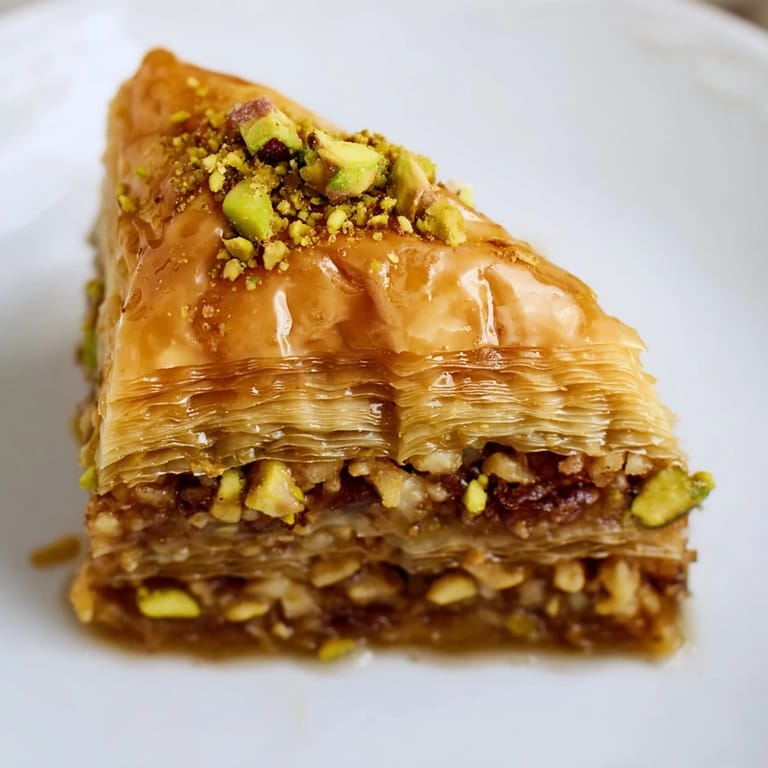
Save There's something almost ceremonial about that moment when you slice into a cooled piece of baklava and hear the phyllo shatter, then watch the honey catch the light as it drips down your fingers. I realized then that this dessert wasn't just food—it was a small ritual, a reminder that some things are worth taking time for.
Why Phyllo Demands Respect
The first time my phyllo tore, I panicked and tried to patch it, convinced the whole baklava would fall apart—but it didn't, and that taught me something important about trusting the process. Phyllo is actually more resilient than it looks; a tear here or there adds character and doesn't affect the final result. What matters is keeping it cold, keeping it moist, and moving with intention rather than haste.
The Syrup Timing Secret
I used to make the syrup ahead of time, thinking I was being efficient, but one evening I poured lukewarm syrup over cooled baklava and wondered why it tasted somehow muted and didn't have that glossy finish. The next time, I made the syrup right as the baklava came out of the oven, and the difference was startling—suddenly every layer glistened and the honey seemed to sing. Temperature matters because it determines how the syrup moves through the pastry and how deeply the flavors marry together.
Storing and Serving Your Masterpiece
One of baklava's best tricks is that it actually improves over a day or two as the flavors meld and the syrup distributes itself throughout every layer. Keep it in an airtight container at room temperature, and you'll have a reason to sneak a piece every time you open the kitchen cupboard.
- Chilling the baklava for 30 minutes before cutting makes the layers less likely to shatter and the pieces more uniform—though honestly, imperfect shards taste just as good.
- Serve it with strong coffee or tea, which cuts through the richness and balances the sweetness in a way that makes you want another piece.
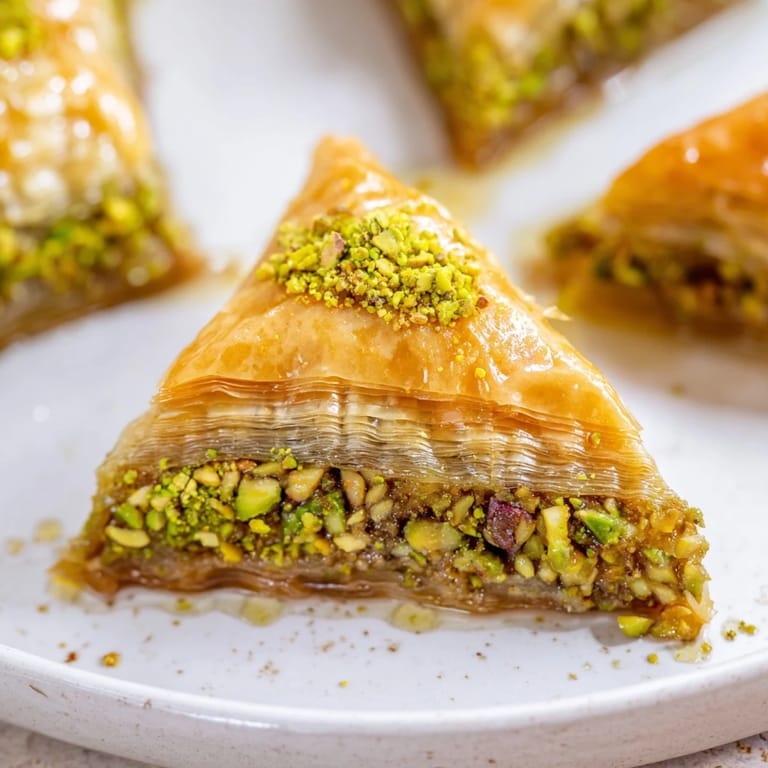
- If you want to make it feel special, dust the serving plate with a few chopped pistachios for color and a subtle flavor echo.
 Save
Save Making baklava is an act of slowing down in a world that's always rushing. Every layer, every brushstroke of butter, every careful pour of golden syrup is a small meditation that ends with something luminous on the plate.
Recipe FAQs
- → What type of nuts are used in this dish?
Finely chopped hazelnuts and pistachios form the rich, aromatic filling.
- → How is the phyllo dough prepared before baking?
Phyllo sheets are layered in groups, each brushed generously with melted butter for crispness and flavor.
- → What is the purpose of the honey syrup?
The warm honey syrup is poured over the hot pastry to provide sweetness and a glossy finish that soaks deeply.
- → Can the nuts be substituted?
Yes, walnuts can replace hazelnuts if preferred, maintaining a pleasant texture and flavor.
- → How should this dessert be stored?
Store in an airtight container at room temperature for up to five days to preserve freshness and texture.
- → Any tips for easier slicing?
Chilling the baked pastry before cutting helps achieve cleaner slices and prevents crumbling.