 Save
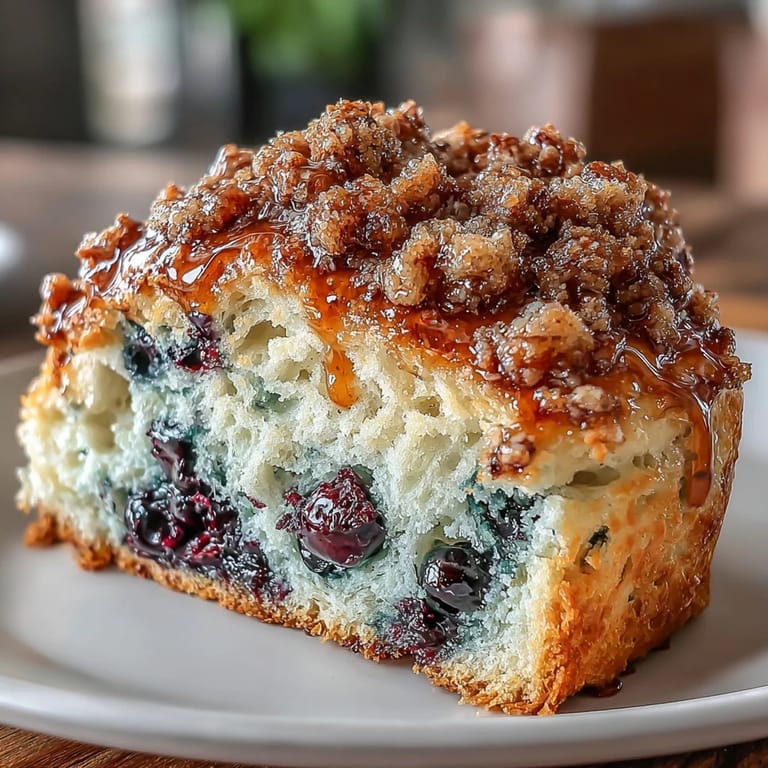
Save Last Tuesday morning, I had a cup of sourdough starter sitting in the fridge—the kind you neglect between baking projects—and suddenly I was struck with the thought: what if I stopped treating it as waste and started treating it as treasure? That afternoon, my kitchen smelled like butter and vanilla, and by the time golden scones emerged from the oven with their jewel-like blueberry centers, I understood why people keep starter alive for generations.
My friend Sarah showed up unannounced one Saturday with her two kids, and instead of panicking about having nothing to offer, I had these scones cooling on the rack. Watching their faces light up as they discovered the pockets of blueberry—and hearing them ask if I could make them every weekend—that's when I realized this wasn't just a way to use up starter, it was actually something special enough to request.
Ingredients
- All-purpose flour (2 cups / 240 g): The foundation that gives structure without heaviness; I always whisk it with the leavening agents to distribute them evenly.
- Granulated sugar (1/4 cup / 50 g): Just enough sweetness to let the blueberries shine, not so much that it masks the subtle tang from the sourdough.
- Baking powder (2 tsp) and baking soda (1/2 tsp): This combination wakes up the discard and creates the tender crumb everyone will fight over.
- Fine sea salt (1/2 tsp): A small amount that somehow makes everything taste more like itself.
- Unsalted butter, cold and cubed (1/2 cup / 115 g): The cold butter is non-negotiable—it creates those delicate layers that make scones worth making instead of just buying.
- Sourdough discard, unfed and cold (1 cup / 240 g): Use the discard from your starter before you feed it; the cold temperature keeps everything tender and the sourness adds complexity.
- Heavy cream (1/3 cup / 80 ml, plus more for brushing): This is what separates these from dense, dry scones—the cream makes them cloud-like inside.
- Large egg (1): Acts as both binder and glaze ingredient; it helps everything hold together while browning beautifully.
- Vanilla extract (1.5 tsp): A quiet flavor that rounds everything out and makes people wonder what your secret ingredient is.
- Fresh blueberries (1 cup / 150 g): Frozen works too if you keep them icy and don't thaw them; the burst of tartness is essential to the whole experience.
- Coarse sugar for topping (2 tbsp, optional): This catches the light and gives an inviting crunch before you even taste the tender interior.
Tired of Takeout? 🥡
Get 10 meals you can make faster than delivery arrives. Seriously.
One email. No spam. Unsubscribe anytime.
Instructions
- Heat your oven and prep:
- Set the oven to 400°F (200°C) and line your baking sheet with parchment paper—this prevents sticking and gives you more even browning on the bottoms. Getting this done first means you're ready the moment your dough is formed.
- Combine dry ingredients:
- Whisk flour, sugar, baking powder, baking soda, and salt together in a large bowl until everything is distributed evenly. This whisking step is quieter and more thorough than just stirring, catching any lumps in the baking soda that could create bitter spots.
- Work in the cold butter:
- Cut the cold cubed butter into the flour mixture using a pastry cutter, fork, or your fingertips until it looks like coarse crumbs with some pea-sized pieces still visible. The texture should remind you of damp sand—uneven texture is actually your friend here, creating pockets that become tender layers.
- Whisk the wet mixture:
- In a separate bowl, whisk sourdough discard, heavy cream, egg, and vanilla until combined but not overworked. You'll notice the mixture is thick and slightly tangy—that sourness is already working its magic.
- Gently unite wet and dry:
- Pour the wet ingredients into the dry and stir with a spatula just until the flour is moistened, which takes about 15-20 seconds. The dough should look shaggy and imperfect; this is exactly right, and overmixing at this point is the enemy of tender scones.
- Fold in the blueberries:
- Carefully fold in the blueberries with a few gentle strokes, trying to keep them whole so they burst and distribute color throughout rather than smashing into a compote. A few crushed berries are fine and actually add pockets of flavor.
- Shape the dough:
- Turn the dough onto a lightly floured surface and gently pat it into a 7-inch (18 cm) circle about 1 inch (2.5 cm) thick. Handle it as little as possible—think of it like you're persuading it into shape rather than kneading it.
- Cut into wedges:
- Use a sharp knife or bench scraper to cut the circle into 8 wedges, like you're cutting pizza, and place them on the parchment paper with a little space between each one. This spacing allows the heat to circulate and crisp the sides while keeping the centers tender.
- Add the finishing touches:
- Brush the tops lightly with heavy cream and sprinkle with coarse sugar if you have it; this creates a beautiful golden crust and adds subtle crunch. Even without the topping, they'll bake beautifully.
- Bake until golden:
- Bake for 20-22 minutes until the tops are deep golden brown and a skewer inserted into the center comes out clean. Every oven is different, so start checking around the 18-minute mark.
- Cool gently:
- Let the scones rest on the baking sheet for 10 minutes—this helps them set without becoming dry—then transfer to a wire rack. They're best eaten warm or at room temperature within a few hours.
 Save
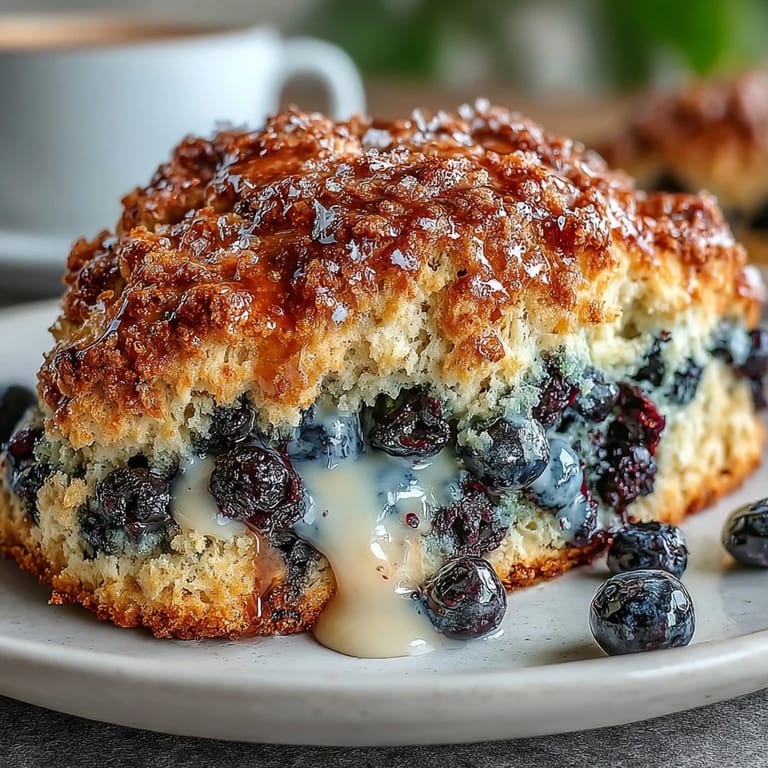
Save There's something almost magical about the moment when someone bites into a still-warm scone and their eyes get that surprised look—that moment when they taste the butter, the blueberries, and something they can't quite place (that's the sourdough doing its thing). It reminded me that the best recipes are the ones that make people slow down and actually taste their breakfast.
The Sourdough Discard Secret
Using sourdough discard instead of buttermilk or yogurt is genuinely a game-changer, though I didn't understand why until I'd made these a few times. The discard adds a subtle sourness that's almost imperceptible but makes the whole thing taste more interesting, more complex, more like something you'd order at a good café. It also creates a slightly more tender crumb because the acids in the starter break down the gluten just enough to make everything softer without affecting the rise.
Why Cold Butter Really Matters
I used to cut corners here by using softened butter, and the scones always came out dense and uniform rather than tender and flaky. The cold butter doesn't fully blend into the dough the way soft butter does—instead, it stays in small pieces that create steam pockets as they melt during baking, which is literally how you get those delicate layers that make people close their eyes when they bite in. Now I keep my butter in the freezer specifically for scone day, and I can feel the difference in my hands from the first squeeze.
Making Them Your Own
The beauty of this base recipe is that it welcomes changes without falling apart. I've made these with lemon zest (1 teaspoon stirred into the dry ingredients), with raspberries when blueberries weren't in season, with a handful of fresh rosemary once when I was feeling adventurous. Each variation taught me something about balance and flavor, and none of them failed—they all became reasons someone would ask me to make them again.
- Try adding 1 teaspoon of lemon zest to the dry ingredients for a brightness that makes the blueberries pop even louder.
- If you want to get fancy, serve them with clotted cream or lemon curd and watch your reputation for hospitality go through the roof.
- Store leftovers in an airtight container and they stay soft for 2 days, though honestly they're best eaten the day they're baked when the butter is still singing.
 Save
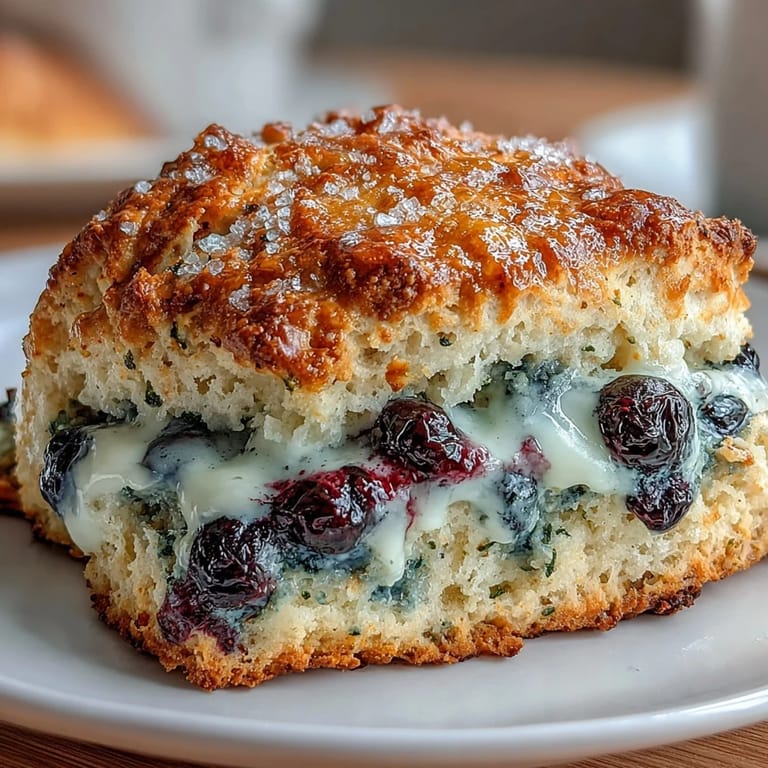
Save These scones have become my answer to the question 'what should I make' on mornings when I want to feel like I've accomplished something without spending all day in the kitchen. They're proof that the most delicious recipes often come from solving small problems, like what to do with sourdough discard, and turning them into something people actually ask for.
Recipe FAQs
- → Can frozen blueberries be used in the scones?
Yes, frozen blueberries work well. Add them directly without thawing to avoid excess moisture in the dough.
- → How does sourdough discard affect the scones' texture?
Sourdough discard adds a gentle tang and moisture, contributing to a tender crumb and subtle depth of flavor.
- → Is it necessary to chill the butter before mixing?
Cold butter creates flaky layers by releasing steam during baking, essential for tender scones.
- → Can I add flavor variations to the dough?
Yes, adding lemon zest or vanilla enhances aroma and brightness without overpowering the berries.
- → What is the best way to store these scones?
Store scones in an airtight container at room temperature for up to two days to maintain freshness.