 Save
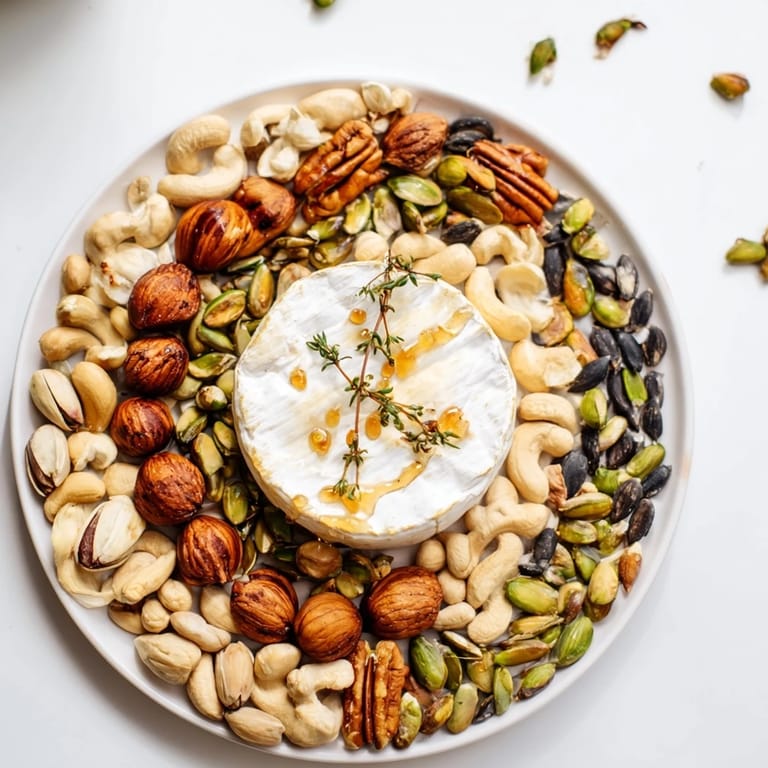
Save A friend challenged me to design something that would make people slow down at a party, and suddenly I was sketching spirals on a wooden board with nuts instead of thinking about appetizers. The Labyrinth started as a joke—what if the journey to the cheese mattered as much as the destination?—but watching guests trace the winding path with their eyes before their hands even moved convinced me I was onto something. It feels playful and intentional at once, like you're completing a small puzzle just by eating.
I made this for a small dinner where someone mentioned they were tired of the same charcuterie boards. As people arrived and saw the spiral of colors leading inward, the mood shifted—suddenly everyone was leaning in, pointing out which nut they'd follow first. That single moment of genuine excitement told me this wasn't just about arranging ingredients; it was about creating an experience at the table.
Ingredients
- Raw almonds, roasted cashews, pistachios, pecan halves, hazelnuts (40 g each): Each brings its own texture and flavor—the almonds are your neutral base, cashews add richness, pistachios give that beautiful green, and pecans bring earthiness. Roasting them lightly yourself takes five minutes and makes them taste infinitely better than pre-roasted, but only if you're willing to watch them carefully.
- Pumpkin seeds, sunflower seeds, black sesame, white sesame, flaxseeds (varying amounts): Seeds are the threads that tie the maze together visually—they fill gaps and create definition between nut types. Toasting them together for two minutes in a dry pan wakes up their flavor and keeps them fresh longer.
- 180 g soft-ripened cheese (Brie, Camembert, or plant-based): This is your centerpiece, your reward, your reason for the whole thing. Pick one that feels a little luxurious because this is the moment someone actually reaches the middle.
- Dried cranberries or cherries (2 tbsp): These are small pops of color and sweetness that break up the earthiness of nuts—use them sparingly or they'll dominate visually.
- Fresh herbs like thyme or rosemary (2 tbsp): A whisper of green on top of the cheese makes it feel intentional, and the fragrance matters more than you'd think.
- Honey or agave (1 tbsp): A thin drizzle isn't decoration—it's the final clue that something special is waiting.
Tired of Takeout? 🥡
Get 10 meals you can make faster than delivery arrives. Seriously.
One email. No spam. Unsubscribe anytime.
Instructions
- Set your stage:
- Start with a clean, spacious board—something large enough that the spiral doesn't feel cramped. Lightly pencil in your maze if you want to, though honestly, free-handing it looks more organic. The pencil mark will barely be visible once you start building anyway.
- Map out your first line:
- Pick your starting nut or seed and lay them single-file along the outer edge, creating the first loop of the spiral. Work slowly here—the first line sets the tone for everything that follows, and straightness matters less than intention.
- Build the spiral inward:
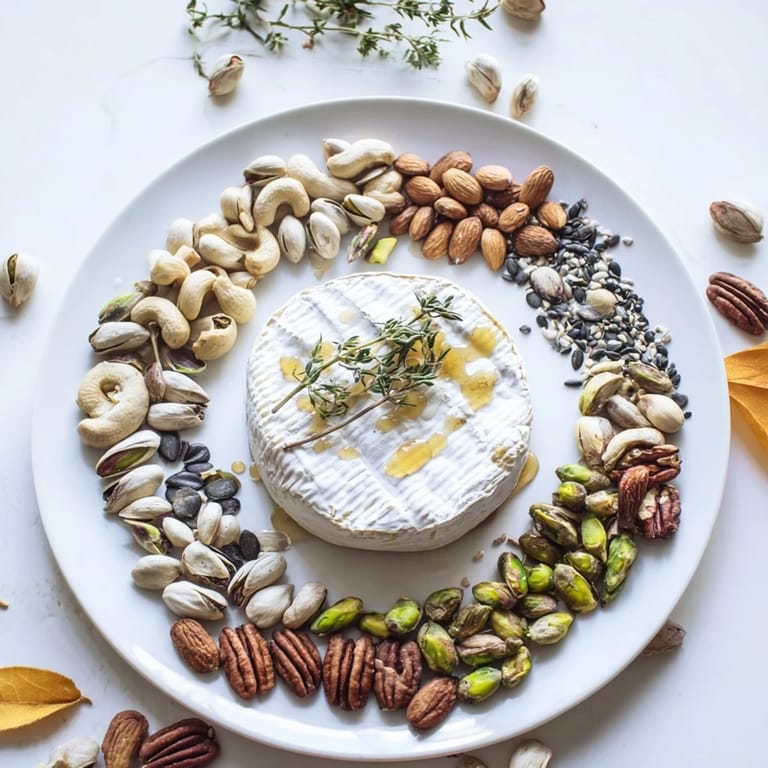
- Switch to a different ingredient for the next line, then alternate as you spiral toward the center. You're looking for color contrast and textural variety—almonds next to sesame seeds, then cashews, then pumpkin seeds. Every shift should feel deliberate.
- Fill the gaps:
- Once the main spiral is laid down, you'll have spaces between lines and possibly some awkward pockets. Toss in your dried cranberries, flaxseeds, or smaller nuts to create visual continuity and make the path feel complete.
- Crown the cheese:
- Place your cheese wheel gently at the very center. Crown it with a few fresh herb leaves and a whisper of honey drizzled across the top—this is the moment the whole thing shifts from pretty to irresistible.
- Final arrangement:
- Step back and look at the whole board. Does the spiral feel balanced? Are there any sad gaps? If so, add a few more seeds or nuts where they feel natural. This is also the moment to decide if you want to add crackers around the outside edge for texture.
 Save
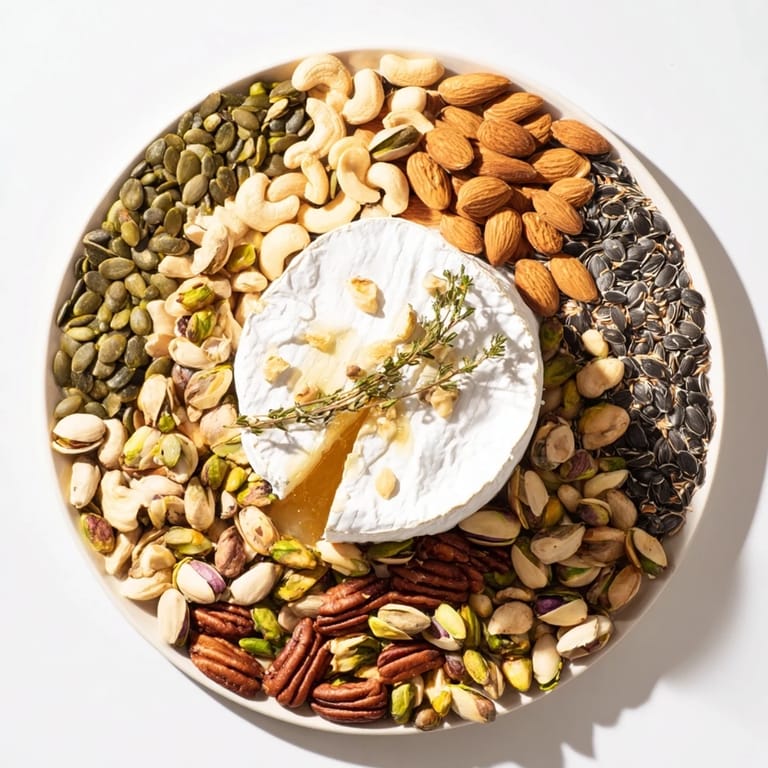
Save What struck me most was watching someone's face the first time they reached the cheese at the center—there was this small moment of triumph, like they'd solved something, even though the answer was always right there waiting. That's when I realized this isn't just appetizer design; it's a tiny, delicious game.
Why the Spiral Matters
A traditional spread is honest and straightforward, but something about the spiral makes people engage differently. Your guests become participants instead of passive eaters, and that tiny shift in attention makes the flavors feel more memorable. I've watched people trace the path with their fingers before they've even touched anything, planning their route like it's genuinely important. That's the quiet magic of the labyrinth—it adds theater to a simple arrangement.
Building Your Own Labyrinth
The beauty of this design is that it's completely flexible. You're not locked into specific nuts or seeds—swap them based on what you have, what's in season, or what you're genuinely in the mood for. I've made versions with roasted chickpeas, candied pecans, and black and white sesame seeds; I've seen versions with edible flowers tucked between nut lines. The structure is the spine; your instincts are the flavor. The only rule that matters is that there's contrast—texture against texture, color against color, so the path reads clearly to someone looking at it.
Serving and Pairing Ideas
This works best as a centerpiece that lingers, not something that disappears in five minutes. Serve it alongside a crisp Sauvignon Blanc, a sparkling cider, or even a light rosé—something that won't overpower the delicate cheese. If you're adding crackers around the outer edge, keep them in a small bowl nearby rather than embedding them in the board itself; they stay crunchier that way. The whole thing is meant to be grazed on slowly, the kind of appetizer that keeps people talking and reaching back for just one more handful.
- Add a small knife or spreader so guests can cut thin slices of cheese to carry through their personal maze routes.
- If you're prepping ahead, keep the cheese unwrapped on the board but loosely tented with plastic wrap in the fridge for up to four hours.
- For a vegan version, seek out nut-based cheese wheels that have that soft, spreadable quality without the dairy.
 Save
Save The Labyrinth is proof that restraint and intention can transform the ordinary into something guests actually remember. It's the kind of appetizer that makes people smile the moment they see it.
Recipe FAQs
- → What nuts and seeds are used in this appetizer?
It includes almonds, roasted cashews, pistachios, pecan halves, hazelnuts, pumpkin seeds, sunflower seeds, black and white sesame seeds, and flaxseeds.
- → Can the cheese be substituted for dietary preferences?
Yes, a plant-based cheese wheel can be used to make it suitable for vegan guests.
- → How is the labyrinth formed on the serving platter?
Single-file lines of nuts and seeds are arranged in winding paths that spiral toward the cheese in the center.
- → Are there suggestions for additional garnishes?
Fresh herbs like thyme or rosemary and a drizzle of honey or agave add aroma and sweetness, with dried cranberries or cherries for color.
- → What tools help in assembling the labyrinth?
A large serving platter or cheese board, small forks or cocktail picks, and optionally a pencil to sketch the labyrinth design.
- → Is this appetizer gluten-free?
Yes, if gluten-free nuts and seeds are chosen, the dish is suitable for gluten-free diets.